The narcissist fears being inferior whereas the borderline fears being abandoned. It is a whole lot more than this, so listen to see what you think you are or have dealt with. Both are manipulative but in different ways. It is complex and exhausting but important to understand the difference.
Now here you go again You say you want your freedom Well who am I to keep you down? It’s only right that you should Play it the way you feel it But listen carefully to the sound Of your loneliness Like a heartbeat, drives you mad In the stillness of remembering what you had And what you lost And what you had And what you lost
Thunder only happens when it’s raining Players only love you when they’re playing Say, women, they will come and they will go When the rain washes you clean, you’ll know
Now here I go again, I see the crystal visions I keep my visions to myself It’s only me Who wants to wrap around your dreams, and, Have you any dreams you’d like to sell? Dreams of loneliness, Like a heartbeat, drives you mad, In the stillness of remembering What you had, And what you lost, What you had, And what you lost
Thunder only happens when it’s raining Players only love you when they’re playing Say, women, they will come and they will go When the rain washes you clean, you’ll know You will know, Oh, you’ll know
Written by: Stephanie Nicks Album: New Jersey 1983 Released: 1983
One day, while driving in the car and listening to the song, I heard that “Players only love you when they’re playing.” I went to my office and played the entire song again and understood the importance of this song to narcissism. Of course, I had heard this song 100 million times before, but like all good music, well, with me, I often listen to the beat – or the sadness – and not always the lyrics. Or, I hear them but don’t piece it together. Until you have been with a “player” the word doesn’t mean a whole hell of a lot to you. You just don’t get it. When you have, the song suddenly takes on new meaning.
I think she wrote this song while in a trauma bond with someone that she loved very much and on the precipice of coming back to reality, she hit the revenge button and wrote of her anger toward this piece of shit that dumped her. Now he hears it every time it is sung on the radio. Does he roll his eyes, or take stock in himself?
I enjoy listening to Dr. Gabor Maté’s advice on life, his life, what he has been through to get to this place of experiential knowledge. I use this video in my course for therapists to discuss the topic of people pleasing. I hope you will enjoy it.
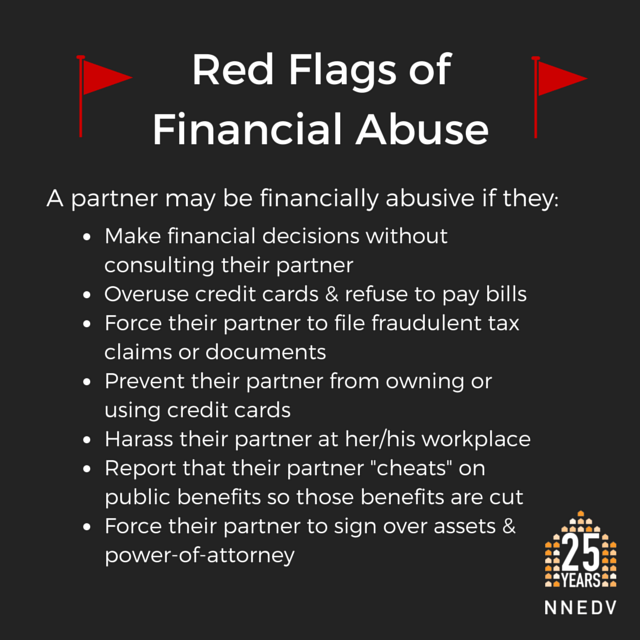
How do I see this with men (and women who have more than the narcissist) who are survivors? They are robbed of all their money in court during a divorce.
With women, they are signing legal documents without reading – because they are being pushed into signing through on-going manipulation in the household. They have learned to just do whatever he says.
All survivors will have experienced some trauma symptoms during or after the pathological love relationship (PLR/Pathological Love Relationship = her terms for having a narcissistic abuse partner)
37% have high ACE scores related to adverse childhoods; their trauma usually falls between moderate PTSD-c-PTSD ++ and higher. These survivors may have the history most associated with codependency. (I have not seen PTSD with the majority of my survivors, except when they meet Criteria A, in the DSM 5, measured with testing, and this is generally when they are with an Anti-Social PD, not a NPD ).
63% have low ACE scores and many did not have adverse childhoods. Their trauma was created in the pathological love relationship and usually falls between mild/moderate PTSD. These survivors have the history most associated with super traits of personality (super traits explained in her training).
All survivors have atypical trauma related to the effect of cognitive dissonance on their trauma. (This is what I am seeing).
Most of the time I am working with the 37% and I would say this is 99% of my survivor population. My thoughts are that if I were going to conduct research, I would want to strictly focus on survivors of Narcissistic Personality Disorder. I think this will show some interesting nuances. Sandra L. Brown has written a number of books, that you can find on the internet. If you are a therapist reading this, her workshop is on PESI. This study is referenced on my Resource page above. Please note, this study focused solely on women who were survivors.
Above is the video of this song, below are my translations as to what I believe the words mean when I look at them in the context of a narcissist. Not sure if this is what he was thinking, but I suspect it could be. I feel like this song is his way of telling us how he redirected himself in the process of moving forward after a narcissist. Take a look and see:
Now and then I think of when we were together,
Like when you said you felt so happy you could die,
Told myself that you were right for me, (Love Bombing)
But felt so lonely in your company, (Trauma Bond)
But that was love and it’s an ache I still remember.
You can get addicted to a certain kind of sadness,
Like resignation to the end, (Trauma Bond)
Always the end,
So when we found that we could not make sense,
Well you said that we would still be friends,
But I’ll admit that I was glad that it was over. (Self-Realization – Healthy Detachment)
But you didn’t have to cut me off, (Discard)
Make out like it never happened,
And that now we’re nothing,
And I don’t even need your love, (Trauma Bond)
But you treat me like a stranger,
And that feels so rough,
No you didn’t have to stoop so low,
Have your friends collect your records, (Discard)
And then change your number, (Discard)
I guess that I don’t need that though,
Now you’re just somebody that I used to know, (Healthy detaching process)
Now and then I think of all the times you screwed me over
But had me believing it was always something that I’d done (Gaslighting)
And I don’t wanna live that way
Reading into every word you say (Romantic Delusion)
You said that you could let it go
And I wouldn’t catch you hung up on somebody that you used to know…
Movies are my favorite tool for helping a client to understand what I am talking about. All of the films below show a relationship with a NPD, in different ways. Some of the films below are shown in the Marquee above.
There are so many articles about Narcissism on the internet. It is easy to lump someone into a category when “narcissistic traits” may seem to be prevalent in many other diagnoses. This is the reason why it is inappropriate to diagnose someone who is not in the room. Often times, I will hear people talking about their partner and I realize they may have TBI or PTSD. They may also have Depression or some other mental health condition. Addicts DO seem to be narcissistic but this is because they are putting the addiction before the family, job or partner. Below are some things to be aware of. No one should diagnose anyone unless they are a psychological professional and they are in the room with this person. Even then, we don’t necessarily tell the person, unless we are going to do treatment on them or they seem open to listening.
Narcissistic traits vs. personality disorder – As mentioned above, the traits can be seen in a myriad of diagnoses and so it might not be the personality disorder. We are all egotistical and so there are times when we can seem like narcissists to others.
Another personality disorder. In my practicum, I worked with a woman who had Histrionic Personality Disorder. Now, I can recall her narcissistic traits, but it was way more drama. The men who have begun to see me for a Narcissistic partner, generally seem to be Borderline. Anti-Social Personality Disorder is really what is going on in the movie “Gaslight.”
I have had people tell me that a mentally ill person was a “narcissist” or that the addict was a “narcissist,” for example. Those traits will surface from these types of other diagnoses. Which comes first though? What will they be like on medication or clean and sober? This is something that we can’t answer until it happens. I try to empathize with the mentally ill person – who is not in treatment – when explaining to my clients or to people in general. With an addict, I will say “Oh, they are an addict. And the fix is their priority, not you or anyone else, which makes them seem like a narcissist.” Mentally ill people often feel bad about the strain caused on their families by their illness.
Is the man/woman angry due to undisclosed sexual abuse or because of a traumatic brain injury or PTSD? I try to dig deep when I hear a man come into my office who says he was told he was a narcissist. Women aren’t generally told this for some reason. If we find out what is really going on, then we can treat the problem and find a solution. If a man is coming into my office and addressing his own narcissism by taking responsibility for this, that is usually a good sign. I would like to say that most likely they are not as the narcissist does not take responsibility. It is always everyone else’s fault.
Women will often ask “Am I a Narcissist,” thinking it is genetic or maybe it wasn’t my mom or maybe it wasn’t my husband/boyfriend, maybe it was me. There is a study that I have read but I am not convinced yet, I have seen it re-enacted but not inherited.
There are walls put up by the person with PTSD. I specialize in this, and I prepare for the defensiveness when they have it (not always), sometimes they can be quite angry. I never take it personally; they aren’t angry at me or at us as psychotherapists. Their behaviors sometimes can be narcissistic because they are protecting themselves from assumed tragedy, crisis, pending danger. They are angry at all men or all women. They are angry at the perpetrator and their ego shows us a very cocky, know it all, in charge, protector – or a very strong person who is trying to be in control of the world around them. They know this. The narcissist is not aware that they are doing these behaviors, some are conscious though and this is a whole other level.
The narcissist is not aware of their behaviors and how it impacts others. The parent is not concerned about how their children will turn out as adults and how it correlates to the way they raised them. They will talk about their children’s outcomes and will approve or disapprove but do not correlate with themselves and their spouse. They are “bad children”, “they became drug addicts,” “they are a horrible parent,” “they live in the basement because they can’t make it on their own.” I have heard a parent say, “I don’t want them to leave, because I don’t want to be alone.” That is, at least, some acknowledgement of responsibility.
In conclusion, don’t assume the person is a narcissist. If the articles you are reading online, make sense, talk to a therapist to discuss this further. The most important thing is not their diagnosis but how you are handling this relationship, yourself, and what steps should you take to heal and move on in your life. Take a look at my workshop on the “Survivors” page above, which can be found on Udemy.
This week has been a difficult and challenging week for me. I had to trust someone, an attorney, who luckily was able to help me get through one challenge. On another situation, an organization I belong to, decided to strip away my trust by changing their bylaws and not informing their members. I found out by reading about it in the Daily Wire. My local branch had changed their by-laws last year, I voted “No,” because it smelled fishy to me. The chapter regent beat around the bush when I declared my concerns to her after the meeting. She “would get back to me on it, after talking to some people higher up.” She never did. I resigned from the organization this past weekend, after reading this article and knowing that it was correct.
A Frequent Blog of Devotionals Inspired by A Course in Miracles, A Course of Love, The Way of Mastery, Choose Only Love--Plus More . . . with Celia Hales - https://www.amazon.com/author/celiahales