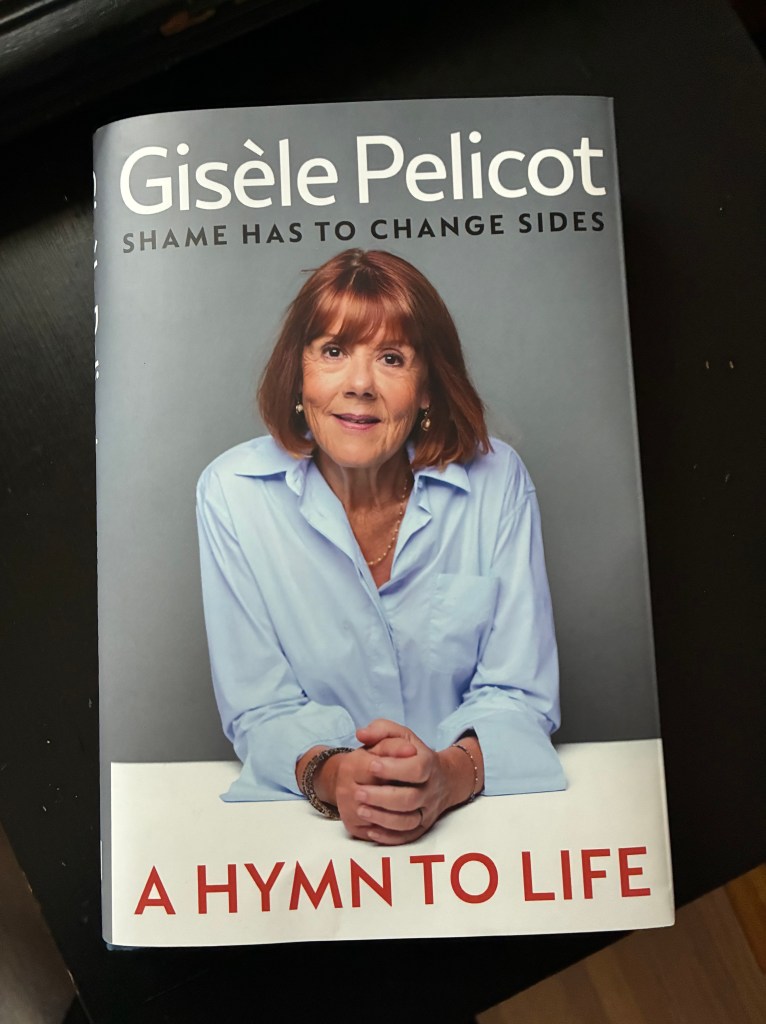
Ms. Pelicot’s story is one that I learned about in the news after the court hearing against her husband and other perpetrators began. She is from France. I was fascinated with the knowledge that she had requested the courtroom be opened to the public at the Palais de Justice. The title “Shame Has to Change Sides,” coincides with this. She had heard this term from a woman’s group, I believe she says in her book. It meant that instead of her facing the humiliation of being alone in the courtroom, with all of her perpetrators, instead, the room would be filled with journalists (from around the world) and women wanting to hear her story. These people, who flocked in daily once the word got out, were now facing the perpetrators, so they could not be anonymous. This was a very brave action on her part, especially as these people would also be witness to the humiliation and degradation that was done to her in more than a decade. The book she writes, “A Hymn to Life,” gives us the details of her fifty year marriage to the “monster.”
You wouldn’t think that writing a paper on religious cults would lead someone to a lifelong spiritual journey. If you didn’t grow up in Ohio or another Mid-west state, in a very isolated and controlled lifestyle, you really wouldn’t make that connection. This is how it happened for me and this is my gratitude to one teacher, for spurring on this moment in a little farm town called Pataskala.
Mr. Marty Dahlman was the P.O.D. teacher (Problems of Democracy) at Watkins Memorial High School. He went on to other things, such as a track coach, vice-principal or principle, I forget which. Once I left Ohio, I didn’t return until 2010, when I began catching up after this long absence at high school reunions. He is now retired from Watkins and writes a blogpost, called Our America – Essays on Politics and American Life.
Can you think of other famous women who prevailed, while or after being married to a Narcissist? It helps to remember, and helps us to stay strong and not give up hope.
Here I have shown you Catherine the Great. She was married to Pytor, a Russian Tsar, for a moment. The royal house conducted a coup d’état, and boom, he was gone. Catherine was Empress of Russia longer than any other monarch in that country.
Eleanor Roosevelt had a husband who embarrassed our country by sleeping with every woman he could get his hands on. While he was a great president in many respects, Eleanor is seen as being the first female president to some. She advised him, gave speeches, travelled the country, held press conferences with women journalists only. She survived by focusing on what she could do and could control, not by what she couldn’t.
Frida Kahlo is a famous Mexican painter, who was married to Diego Rivera, another famous Mexican painter (famous before marrying her). He slept with anyone and everyone, including her sister, before she could not take it anymore. And, before this, (and after) she focused on her art, staying strong despite her many miscarriages and terrible medical issues. She also had her own lovers. In the end, Frida is the one whom Mexicans have in their shop windows, whom they revere so much. Even Mexican restaurants in the U.S., you can find images of her, whereas you will see Diego in California doctor’s offices. She was quite an amazing woman.
And who can forget Princess Diana. A lovely woman, who learned on the day before her marriage that her husband to be was in love with another (who he is married to now). Yet, Princess Diana was more famous, more loved and will be while her husband is the King now and not many people care – except his loyal followers. She did more for the homeless, AIDS, raising awareness about land mines, and many other things. While she had a tragic death, which only made her more of a saint, her memory and contributions will live on. King Charles? Who cares. The world waits for her son and daughter-in-law to take his place. Right now, her ex is nothing more than a token object. A tradition, a bump on the log.
So, who can you think of? Don’t be shy. Comment below with your answer.
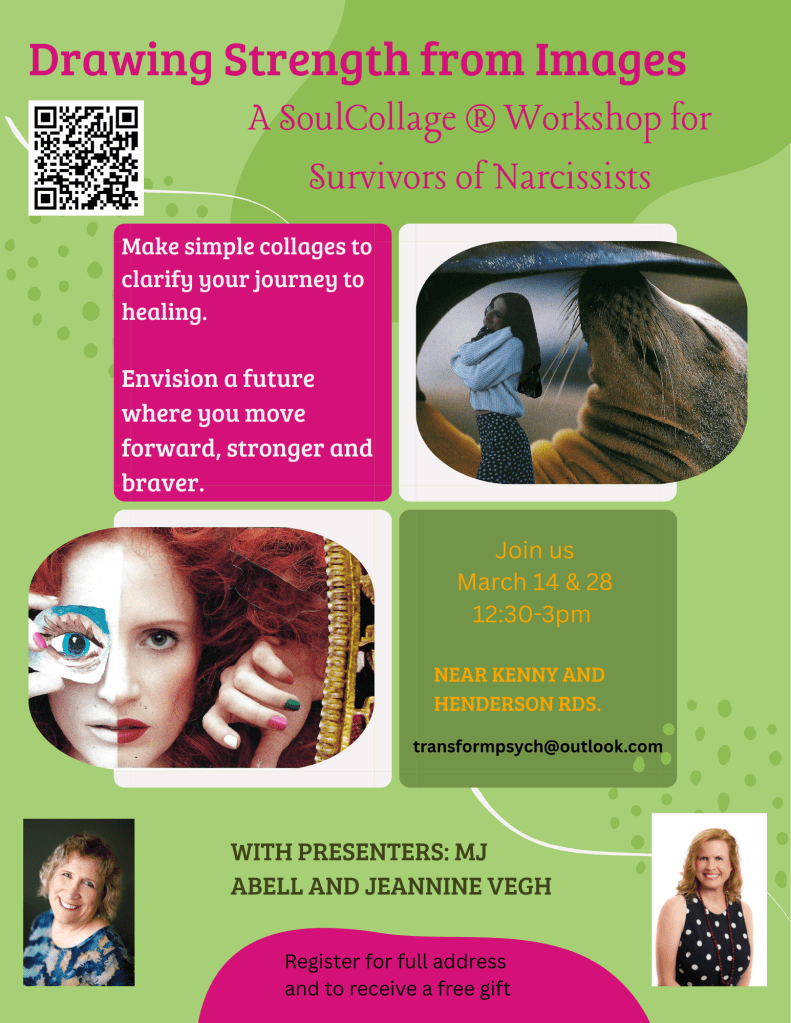
This is a wonderful workshop that I will be co-presenting with MJ Abell who is a Soul Collage Facilitator. There will be materials available to make the cards – which you will take with you, light refreshments and camaraderie with like minded people. If you live in Columbus, I hope to see you there.
Q. Is this in-person? yes
Q. Do I need to be creative or artistic? no, this is not an art class, it is a creative workshop and you will guided to choosing the pictures that are right for you.
Q. Is this therapy? no, it is not group therapy it is a soul collage workshop and I am there only to briefly discuss narcissism, answer your questions and support you in your process.
Q. Do I have to be a survivor or what does this mean? The workshop will encompass people who are victims (still in the relationship), trauma bond (out but hoping to get back in) and survivors (those who are out and no they won’t go back but still want to work on this issue).
Ever since I was a young girl, I reflected on the meaning of God, on spirituality, on life. I tried following the church – as I was expected, but continued to fall short on what I wanted. Answers. I received regurgitated phrases that shed no sense of enlightenment which I sought. In confirmation I was taught how women are punished for Eve’s sin…Why, I had nothing to do with this – I thought. I was told “Because the Bible says so.” Which was exactly how my questions – any of them – were answered at home (with the word Bible exchanged for the word I). Nonetheless, I did not give up hope and continued to search. This began a lifelong journey; reading, workshops, college/grad school, spiritual teachers, all designed to awaken me into the person I am today. Not to mention my own life lessons.
Not one of us has so much faith that we have no doubts; not one of us has such purity that we have no darkness. Within every human attribute there hides somewhere its opposite. (p.18)
This is also mentioned on my “Survivors” page. If you haven’t had a chance to take this workshop and have been meaning to, no better day then the present! There are quite a few videos to watch, learn and grow from. You are welcome to ask me any question you like and I am happy to answer this. If you subscribe to this website, you will also get a coupon to take the course for $9.99! or go to their website now and watch the video that will give you an introduction to the course. You will be glad you did!
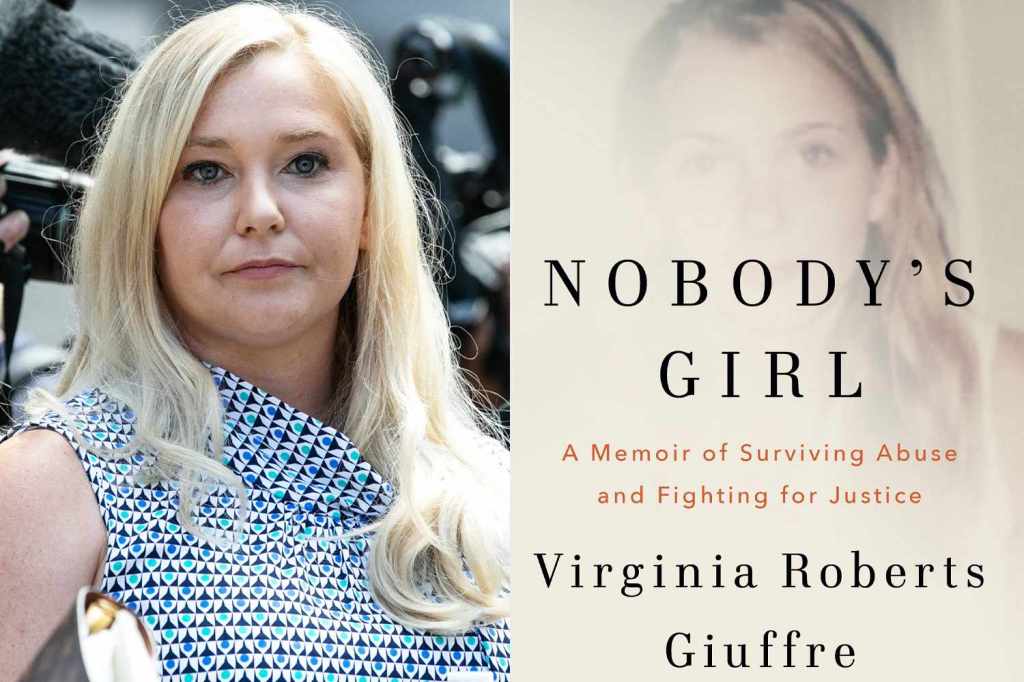
This book was probably the hardest and most challenging book for me to read. Not because of what she suffered, I was a social worker for 8 years and read hundreds of reports about child molest, dealt with clients who were trafficked, girls who were used as prostitutes on the street. It was the “Why” that kept nagging in the back of my head. Why was this incredibly, or seemingly strong woman having a book published posthumously? Why did she die by suicide? As a psychotherapist, I kept searching for answers throughout the book, and I walked away feeling as if I understood what they were.
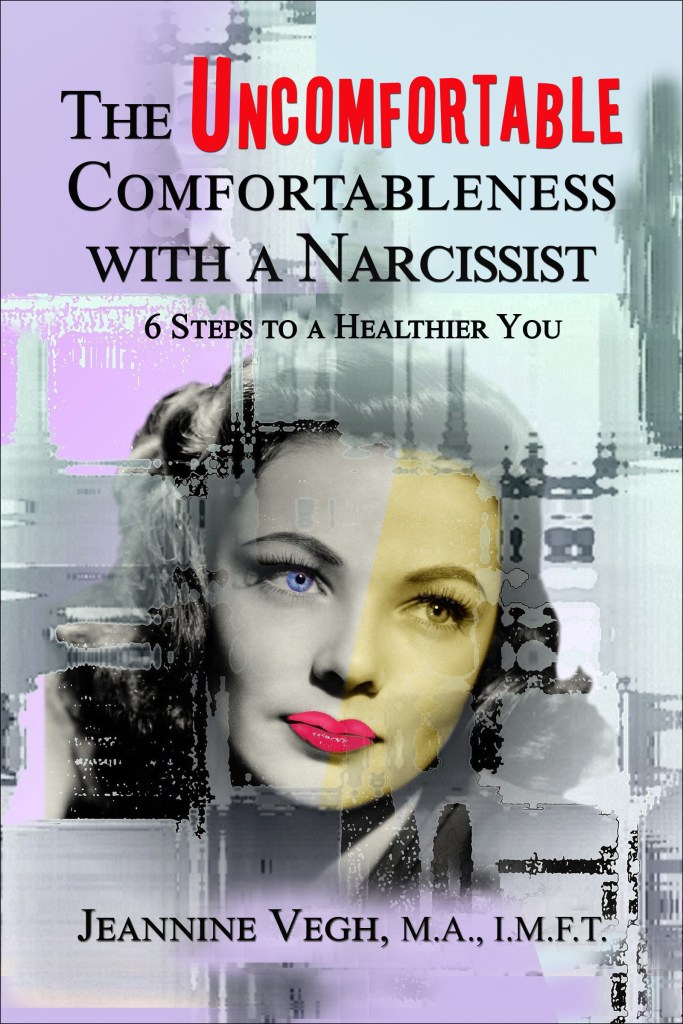
Yesterday morning, 12/1/25, I published an ebook, seen above through Books2Read. Last night, while reading “Nobody’s Girl,” By Virginia Roberts Giuffre, I was caught off guard by a passage she wrote in her book on pages 113-114. I thought to myself, Wow! I wish I had known she wrote this amazing explanation, as it is better than mine. It explains what I am capturing in this title from a survivors perspective. Or, to put it more bluntly “From the horses mouth.” She loved horses, so I think she would appreciate this.
I want to include the passage here for your own discovery and so that you might consider reading her book – to learn more, as well as reading my book for the emotional support. I will come back here, when I am finished reading Nobody’s Girl as I want to pay tribute to this very well written book. For now:
It probably goes without saying that, given what my father and his friend Forrest had done to me when I was a child, being trafficked by Epstein and Maxwell was painfully triggering. To the extent that I saw the two of them as pseudo-parental figures, their disregard for my welfare as they lent me out for sex made me feel a familiar strain of worthlessness. But at times, that familiarity was weirdly comforting. This is complicated to explain, but that echo of past hurts was somehow bearable to me because I’d felt it-and somehow endured it-so many times before. It was like finding myself once more in a room I’d lived in for years. I hated that room, but I knew its contours-the shape of its windows, the nap of its carpet beneath my feet, the click of the door lock when it was thrown. I knew I could exist in that room because I’d existed there before. At that point, at least, this made me feel less afraid.
This is what I am trying to express in my title “The Uncomfortable Comfortableness with a Narcissist.” The familiarity was/is weirdly comforting and Virginia goes on to add how her visual and audio senses are enlisted by her hatred for this comfortableness. The shape of the windows, the nap of the carpet on her feet, the click of the door lock. She knew how to be in that place, as it was so familiar. Since it was so familiar, she wasn’t even as afraid.
In my book, I am helping you to discover the different parts of our self that are employed as our agency is taken away, while we are being lured into a relationship with the narcissist. Unsuspectingly – at first – yet somehow very comforting, very familiar, very Déjà vu. Once you are in, the uncomfortable knowledge that OMG! I am here again. Now what?
No worries, I am providing you with psycho-education to become more conscious of this process, along with six helpful homework assignments to begin re-discovering your sense of self. When you use these tools, along with a psychotherapist of your choosing, whom you can find to support you on this journey, these are the keys to moving forward in your life. To having a healthy relationship and never going back to the uncomfortable comfortableness ever again.
A Frequent Blog of Devotionals Inspired by A Course in Miracles, A Course of Love, The Way of Mastery, Choose Only Love--Plus More . . . with Celia Hales - https://www.amazon.com/author/celiahales



 Jeannine Vegh