In her book, “A Wartime Memoir: Hungary 1944-1945,”Alaine tells about a life changing year that instead of being her downfall, became her life’s purpose. Sitting ducks with a changing guard, from Russian to German on an on-going, what seemed like a never ending basis, she travels from Transylvania (then hoping to remain with Hungary) to Csákvár, in Hungary and back again. In the end, you can imagine the frustration in knowing, if she had never left, her life would have remained simple an innocent.
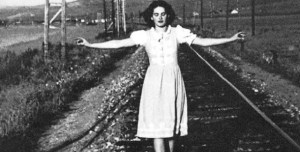 What is beautiful about this book is that she is not talking like a psychologist but instead, goes back in her mind to re-live painfully traumatic experiences at the age of 19, as if she were that age once more. As a psychotherapist myself, I get the sense that she probably never went through her own course of treatment. This is because she continues to repeat over and over “I do not remember…” This is typical of a sexual abuse survivor or someone who was horribly traumatized at a young age and blocks the exact details of the trauma from their mind, for their own “assumed” well-being. Ironic, as she was a psychologist yet even today, people in this profession are closed off to doing their own work. It is important so that they can properly support others without transferring their own pain onto the client or confusing the client’s story with their own. I am not condemning her though because this was more typical of this time period. I grew up with Hungarians (refugees from the revolution), none of whom went into therapy and all of whom went through some of their own harrowing ordeals. Not least of which was fleeing their beloved homeland.
Alaine was born in Kolozsvár, when it was part of the Austro-Hungarian Empire (at this time known as the city of Cluj-Napoca). Now it is Romania and it was in 1944-1945 as well. This was a time of unrest between the Romanians and Hungarians, power struggles on the Romanian part that included violence and discrimination against the Hungarians who lived there. Alaine’s father gave her this male name because of two reasons. One, he did not know French and so unaware that it was a man’s name but Two, his only purpose was finding a name that was not able to be translated into Romanian.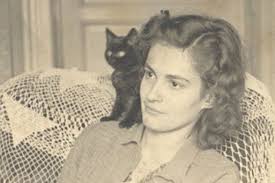
At the onset of 1944, Alaine, at 19, was married to her childhood sweetheart János. Within a few months into their honeymoon period, he gives her gonorrhea. Amazingly, but not surprisingly, it is at this point when he detaches from her and begins to be an emotionally abusive husband. She has the luck of being a strong woman, though terribly naïve. His mother, Mami, happens to work for the Esterházy family, who are of noble origins. It is here that they will go to live and because of him that she follows the family as they escape into Hungary to live and work at another estate, which will be the beginning of the end of Alaine’s life as she knows it. In Csákvar, what seems to bring some peace and safety for a short time, ends up being the front lines, which means constant harassment or torture from either the Germans or the Russians. For women, as with all wars, she and other villagers will be gang raped on what appears to be a daily basis, and at this time, she is under the impression that her husband was executed. The most impressive lines that she writes of her first account of abuse goes like this:
He put the photograph [of she and her husband] on the nightstand and laid me down on the bed. I was afraid he would not give me the picture. When he was done, he took the picture into his hand and showed it to me again…
When she writes, she is not writing like a writer in this book. She states facts, over and over. There are no pictures drawn and yet there is a story being told. Fuzzy memories are re-told and sometimes they are not even in order, so you have to re-read to catch yourself. It is as if you are sitting with her and she is telling you a story. When I got to the line “When he was done,” it came at me so quickly; I had to read it a few times to let it register. “Oh, okay,” I thought, this is how she is protecting herself and the audience. Even though she is not talking like a psychologist, she is consciously protecting throughout the book.
At some point, days, maybe a month or so later, she is escorted to a cellar, with 79 other Hungarians, who are doing their best to survive. They will go through days or months (you are never sure of the timeline but the book is only one year), of not bathing, very little food and at one point no water, ritual defecating and urinating (they can only go outside to do this during the 10 minutes of ceasefire which occurs daily at the same time), as well as lice and natural body odors. She is only with Mami and her dachshund “Filike,” who she holds at her breast, under a coat which no one notices until the end of her time there.
Alaine does spend a lot of time talking about blood and guts and waste, more than any other writer I have seen when it comes to war zones. One does wonder how people use the toilet during these times. When she mentions herself running away from a gang rape sequence, she talks about running through the snow with a slip on and blood being caked on her body and in her panties. She mentions being in the cellar when she pulls her shirt away from her body and a woman notices the skin of a sore coming with it. She is telling us about how you just keep going, no matter what, becoming oblivious to your own vanity.
The war is at the end, in 1945, when this part of her story comes to a close. She returns to Budapest, still without her husband, to be reunited with family; who will then return to Kolozsvár. She is saved from being labeled a whore, as most women will be in this time period, because her family are good people and she finally denies what happened. By this time the gonorrhea and the life conditions she has just endured have taken its toll on her body. She is hospitalized for some time before she will recover and get some of her life back. The irony is that she will never be able to bear a child and this was the fault of her own husband. The sardonic twist is the realization that all those Russian soldiers had went home to their wives passing on her venereal disease to them.
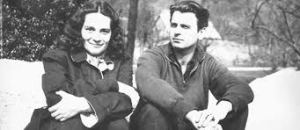 She and János will part ways and soon she will meet her second husband Miklós Mészöly, who went on to become a famous Hungarian writer. Alaine will go on to become the founder of the first children’s hospice program and win two different awards. She receives the Tibor Déry Award in 1992 (for this book, which was written in 1991) and The Middle Cross of the Order of Merit of the Republic of Hungary in 2001. Alaine’s husband dies in 2001 and she will pass six years later.
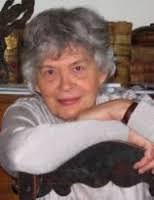
Post-Script: What is horribly frustrating about the book is the writing and translation. Albert Tezla is the translator and having read a great number of translated books from several different countries, this is pathetic. You would almost think he didn’t speak English because the sentences come across as broken and unedited. I believe he is translating word for word, rather than trying to put it together in some organized fashion. It is also possible that Alaine was never edited since Albert was not either. I think this is embarrassing to both the writer and the country itself. While I am not a prolific writer myself and certainly need to be edited, I am self-published and have no professional acclaim to add to my repertoire. I was disappointed to say the least. However, this story, edited or not, annoying with the redundancy or not, needed to be told. What I have noticed when I find anything about women in history, this is so often the case. It is sad because I can’t recall any time when I have seen the same about men.


 We three Leos’ have read your books which were handed down from one to another. First, it was Lia, who once was a little toddler that crossed the border from Hungary in 1956 with mommy and daddy. She was sick and they were granted passage on a plane to get her to America more quickly, I believe from an Austrian camp. Then it was her mother, Marika neni who read it next. Marika neni has told me her story many times of coming to this country. She was a woman I grew up with, who was like an aunt but more of a sister to my stepfather. Lia was our babysitter in my formative years. Marika neni and my stepfather met at Camp Kilmer in New Jersey, when a group of refugees decided on Wheeling for their new home.
 Jeannine Vegh