Abhorrent – the new # in Holywood

Holier than thou Hollywood continues to gain power over our society with their extreme left thinking to over compensate for their anger at the right. Hypocritically speaking out about tolerance and freedom of speech and then firing someone for just that. It is okay for Samantha Bee to disrespect a president’s daughter and call her a F-cking C-nt and for Kathy Griffin to want to decapitate a world leader, or for Joy Behar to trash Christians. All “comedians” but when a well-known, controversial, funny woman Roseanne Barr says something she is fired from her own TV show. Let’s look back at a couple of her more interesting quotes:

Continue reading

Politically Correct Debate for Modern Thinkers

This is quite a fascinating debate series founded by Hungarian born Paul Munk in 2008 out of Toronto, Canada. Interestingly, I learned about this through a client recently. I find that I get many good resources from the people I serve almost as if it were providence. They did make me aware of who won the debate before I saw it, though it wasn’t that hard to figure out as it was quite obvious which side were more gifted in speech and somatic comfort. What is troubling, as always, are Americans abroad. They are just incapable of realizing it isn’t all about them.

Continue reading

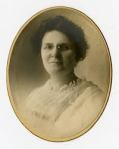
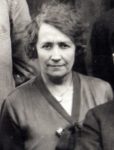
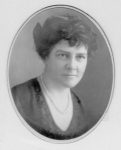
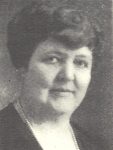
The Honorable Maude C. Waitt – Lakewood, Ohio

Biographical Database of NAWSA Suffragists, 1890–1920
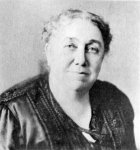
Biography of Maude C. Waitt, b.1878-d.1935

By Jeannine Vegh, M.A., I.M.F.T. Psychotherapist and Author
jkvegh.com and ohiowomenshistory.com

Women’s City Club of Cleveland, Citizen’s League of Cleveland, Women’s Civic League of Lakewood, Ohio Women’s Suffrage Association, Western Reserve Chapter of the Daughters of the American Revolution, Ladies of the G.A.R., City Council of Lakewood, Lakewood Republican Club and Ohio General Assembly – State Senate

Maude Edith Comstock was born on August 11, 1878 in Middlebury, VT. Her parents were Orvis Foster Comstock and Mary Severence (née Hickey). She was the last of seven children but only three survived into adulthood. She met and later married Walter Gustavus Waitt on June 25, 1903 in Melrose, MA. They had a daughter, Doris Ida who was born on March 7, 1909 (died 1995) after moving to Ohio. Doris would go on to wed a year after her mother died and does not appear to have had any children.  Prior to marriage Maude taught in Vermont and then Massachusetts before becoming a principal at a grammar school there. Mr. and Mrs. Waitt would stay married until her death on December 13, 1935.

In 1914, Maude and her husband, moved to Lakewood, Ohio, where suffrage had been on the ballot for the second time in the state and failed. Two years prior, the Ohio Constitution had allowed cities the right to frame their own suffrage charters and create municipal offices. Then, three years after the couple had moved to the area, Lakewood passed municipal suffrage, which allowed women in the district to vote on municipal issues. This passed with the support of Maude, C.E. Kendall, and Bernice Pyke. At the same time, Maude organized citizenship classes to enable new voters from the immigrant pool.

In 1918, she became the Chair of the Lakewood Women’s Suffrage party. She urged women to “do our part in making the world safe for democracy.”  In this position, she sold $800,000 worth of Liberty bonds for the fourth drive. As a result, the Lakewood Press, on October 18, 1918 stated “They [Lakewood Women’s Suffrage party] have demonstrated their capacity to measure up to every obligation of full-fledged citizenship. Only a narrow minded man in this day of wonderful emancipation would seek to deny women the right to National Suffrage.” The article went on to exclaim “here’s to the ladies; once our superiors, now our equals.”

In 1920, Ohio was the fifth state to ratify the nineteenth federal amendment to the constitution. In 1921, Maude was elected to the City Council of Lakewood. One year later, she would resign as she was now one of the first of six women elected to the Ohio General Assembly in the State Senate. Maude was the first woman for the twenty-fifth Senatorial District. She held the title of the Honorable Mrs. Waitt. She would be re-elected in 1926 and 1930 for a four year term limit. During her three terms she sat on the following Senate committees and was the Chair for three of these: 1. Benevolent Institutions (Chair); 2. Prison and Prison Reforms (Chair); 3. Library (Chair); 4. Public Health; 5. Commercial Corporations; and 6. Soldiers and Sailors Orphan’s Home. She also introduced three bills SB 130, SB 138 and SB 252, and these were all signed into law. The first bill, SB 130 dealt with the sale and conveyance of portions of the Cleveland State Hospital. The second bill, SB 138, allowed the state medical board to appoint visiting teachers for recognized schools of nursing. The last bill SB 252 required schools to prevent sudden cardiac arrest (this is now known as Lindsay’s Law).

After a long illness, Maude passed on December 13, 1935 in Lakewood, Ohio. She was fifty-seven years old.

Sources:

“Hulbert Family Tree”. Ancestry, search.ancestry.com/.

Coates, William R. “Biography of Mrs. Maude C. Waitt.” A History of Cuyahoga County and the City of Cleveland, The American Historical Society, Chicago and New York, 1924.

Online Biographies, The American Historical Society, Chicago and New York 1924, http://www.onlinebiographies.info/oh/cuya/wait-mc.htm.

“Ladies Gallery.” The Ohio Statehouse, edited by Ohio Women’s Policy and Research Commission, http://www.ohiostatehouse.org/museum/ladies-gallery?3.

 A card advertising Ms. Waitt’s run for State Senate. A Service of Ohio’s Public Broadcasting Stations. Ohio Ladies Gallery. The Ohio Channel, http://www.ohiochannel.org/video/e-elect-maude-c-waitt.

A Dream and What Became of It. A Service of Ohio’s Public Broadcasting Stations. Lakewood Press 1/1/1921. The Ohio Channel, http://www.ohiochannel.org/video/a-dream-and-what-came-of-it.

The following resources were courtesy of: The Lakewood Historical Society, est. 1952, Jessamyn Yenni, M.A., Curator

Borchert, Jim, and Susan Borchert. Lakewood the First 100 Years. Norfolk, VA, Donning County, 1989.

Butler, Margaret Manor. The Lakewood Story. New York, NY, Stratford House, 1949.

Allen, Florence E., and Mary Welles, compilers. The Ohio Women’s Suffrage Movement: A Certain Unalienable Right. USA, 1952.

“Editorial.” Lakewood Press [Lakewood], 18 Oct. 1918.

League of Women Voters of Lakewood 1922-1967: A Glimpse at the First Forty-five Years. Lakewood, 1968.

Abbott, Virginia Clark, compiler. The History of Women’s Suffrage and League of Women’s Voters in Cuyahoga County, 1911-1945. William Feather Company, 1949.

Thank you to the Ohio History Connection on-site library for their support with Ancestry.


Special Note: This will soon be on a database for the WOMEN AND SOCIAL MOVEMENTS IN THE UNITED STATES, co-published by the Center for the Historical Study of Women and Gender at Binghamton University and the online publisher Alexander Street.

Timeline for the Honorable Maude C. Waitt – Lakewood, OH

1878: Born: Maude Edith Comstock on August  11, 1878,  in Middlebury, VT to Orvis Foster Comstock and Mary Severence (neé Hickey). She was the last of seven children and only three of which survived to adulthood.

1892 – 1896: Attended Middlebury High School. (approximate years)

1896: Normal School department of the Vermont College at Saxton’s River, Windham County. (approximate year)

1900: Became a teacher in Middlebury and then at St. Johnsbury, Caledonia County, and then in Rockland, Massachusetts. (approximate year)

1902: Principal of a grammar school in Rockland, Massachusetts. (approximate year)

1903: Married Walter Gustavus Waitt (aged 25), on June 25th, in Melrose, MA.

1909: Gave birth to Doris Ida Waitt (aged 31), on March 7th, in Fremont, OH.

1912: Ohio Constitution gave cities right to frame their own suffrage charters and create municipal offices.

1912:Women’s suffrage on Ohio ballots but defeated.

1914: Maude and Walter and Doris move to Lakewood, Ohio. She was a school teacher (age 36).

1914: Women’s suffrage on Ohio ballots but defeated again.

1917: Lakewood passes municipal suffrage in part due to Maude, C.E. Kendall, and Bernice Pyke. Women in this district were allowed to vote on municipal issues.

1918: Chair of Lakewood’s Women’s Suffrage party (aged 40).

1918: Sold $800,000 worth of Liberty bonds in the fourth drive as per article Lakewood Press, 10/18/1918.

1921: Elected to City Council of Lakewood (aged 43), resigned a year later as she was elected to the State Senate.

1922: Lakewood League of Women’s Voters is formed by the Women’s Civic League (organized in 1920) after gaining the right to vote. Now the oldest league.

1922: One of the first of six women elected in the Ohio General Assembly as a State Senate. She was a Republican and served three terms (aged 44), which is four years each.

1923: Introduced Senate Bill 130, Senate Bill 138, and Senate Bill 252 – all of which were signed into law.

1926: Re-elected State Senate (aged 48).

1930: Re-elected State Senate (aged 52).

During the three terms sat on these Senate committees –

  1. Benevolent Institutions (chair)
  2. Prison and Prison Reforms (chair)
  3. Library (chair)
  4. Public Health
  5. Commercial Corporations
  6. Soldiers and Sailors Orphans’ Home

1935: Dies in Lakewood, Ohio (aged 57) after a long illness.

__________________________________________________________________

As per The Ohio Channel: Ohio SB 130

Senate Bill 130 dealt with the sale and conveyance of portions of Cleveland State Hospital. The bill was initially passed by the Ohio General Assembly on April 6, 1923, but the Governor at the time did not sign the bill. On April 28, 1923, both the Ohio House and Senate declared the bill “passed – notwithstanding the objections of the Governor.”

And SB 138

Senate Bill 138, sponsored by Sen. Maude Waitt, allows the State Medical Board to appoint visiting teachers for recognized schools of nursing. The bill was passed April 6, 1923.

SB 252 via The Ohio Legislature website which only shows current information.

This is to require schools to prevent sudden cardiac arrest (aka Lindsay’s law).

Special Note: This birthday is based on the Hulbert Family Tree on Ancestry.com. There is a sister before her born on August 11, 1874, known as Ester Maud (w/o and e) and so many biographies incorrectly use a different year. The actual birth certificate of Maude Edith could not be found, only her sister.

Don Draper – Self-help Guru

Since I don’t pay for cable, I have to wait for episodes of good TV programs, from around the world, to come on Netflix. I try to stay off of entertainment news broadcasts so that I have no idea what is going on and can watch it with the same surprises as everyone else. However, I did catch a few news headlines about the end of Mad Men and waited with bated breath to see what I would think of the ending. Needless to say, I was a little perplexed at the thoughts people had about the end of the show. The caption had read something like “Is Don Draper committing suicide?” I rather hoped this would not be the way Matthew Weiner ended the series because it just didn’t feel right to me. It is obvious that Don Draper suffered from Depression, yes, but to commit suicide? Hardly. This man was a survivor, not a victim.

Continue reading

A Dream and What Came of It

The following is an article written by Maude C. Waitt (under her married name Mrs. W.G. Waitt). I found this on The Ohio Channel but as they did not note what paper it came from and I was unable to track this, I could not say which periodical it is from. Having said this, I would say it is from one of the Cleveland, Ohio (Lakewood) newspapers as she lived in Cuyahoga County. Ms. Waitt was the first female state senator. The Ohio Channel did note that the date this was published was on January 21, 1921. I have not edited this save for a missing quotation mark by the paper.

A Dream and What Came of It by Mrs. W.G. Waitt

THE DREAM

Last night I dreamed a dream and beheld a vision.

I thought I stood upon the shores of a great inland lake and a fair and beautiful city stretched before me.

And as I looked I saw in many homes – on many streets groups of earnest faced women who seemed to be intent on studying something. And ever and anon they would lift their eyes to messages which shone with a pure and wonderful radiance.

And after reading these messages their faces were illumined and they returned to their study with renewed zeal.

And as I drew closer I was privileged to read these flaming messages, “Arise, women voters from the North and South and East and West in this your union together – strong of faith and fearless of spirit and pledge yourselves and all that you are to a new crusade, a crusade which shall not end until the electorate of this republic is clean, intelligent American.”

“I pledge myself never to cast a vote for any measure which has not been submitted to my intelligence and ratified by my conscience.”

“Hold fast to those high ideals of public service which have been handed down to you form women who received inspiration from the Holy Fire of Divinity itself.”

And as I stood there curious – but understanding little which I saw I turned and saw at my side an Angel of Light.

And I said to him “What are all these women studying?” And he replied “They are studying the laws of the nation, state and city.”

“But,” I said, “it seems strange to me that they should leave their homes and children to study thus together.”

And he said, “They are leaving their homes and their children that they may learn better how to protect them. It has been revealed to these women that home cannot be contained within the four walls of an individual house – that home is the community and the people who live in it are the family, and the public school is the nursery and upon the welfare of the one depends the welfare of the other. And sadly do they all need the mother touch.”

“But what use do they expect to make of this knowledge,” said I.

“They are building for the new vision where men and women work together, each administering and governing according to his or her special abilities.”

“But are they not satisfied with the long reign of man?” said I. And the angel made reply: “Many women feel that a great share of the evils of society come from one half the human race with only half the intelligence and less than half the moral power making all the laws of the world alone.

“But what does woman feel she can add to the superior knowledge of man gained the long agest through? She expects to bring quicker intuitions, better moral standards and higher ideals.”

“But said I, half in anger, “Who is this new kind of woman who dares to think she can add to the superior knowledge of man?”

“This,” he made reply, “is the new woman citizen and you behold her in preparation to take her place at the council table of the nation.”

“But who is she and from whence did she come?”

And he said: “This is she who at man’s side stood and received with him the primal curse. This is she, who at his side passed the dread angel of the flaming sword went driven from the garden.

“This is she, who unfailing, weariless and unafraid has borne with man the heat and burden of the day.”

“But she is so new, so untried, can she be trusted?” said I.

And he answered thus: “When God sent to earth his only Son in whose arms was he laid? Whose was the breast that nourished Him?”

And the beauteous vision faded and as I slept I dreamed again. And once more I found myself on the shores of the same great inland lake and the same fair and beautiful city stretched before me. And I saw earnest men and women working together and the light of mutual understanding was in their eyes.

And I saw women working in peace and concord and the light of sisterly love was shining in their eyes. And I said to the Angel of Light still standing by my side: “What is this place?”

And he said: “Heaven is found on earth and here is the city of the new vision building by men and women working together. This is the ideal toward which humanity has been struggling the long ages through – this is the city of Lakewood, O.”

AND WHAT BECAME OF IT

Because of this dream, during the month of February, 1921, a new plan for citizenship classes originating with Mrs. Waitt, will be tried out in the City of Lakewood.

Twenty women have consented to become leaders of twenty groups – each of these groups to contain twenty of their friends or neighbors.

For four consecutive weeks in February these groups will meet and discuss questions relative to the State of Ohio. Said discussion to be followed by a talk-fest and a cup of tea.

Un Village Français

A French Village is set in German occupied France, World War II. We are being shown local townspeople being forced to make choices to survive. It is romantic, because there is always love when you are in a traumatic situation. It is not biased and so you see bad Germans and bad French. What is amazing is that the most important thing that you see is people at war. As you watch it, you have to try not to view this from the lens of an educated person who obviously knows what happened during WWII. You must try to behave as ignorantly as the characters are to have an ability to appreciate their choices and empathize with them. Some people you don’t empathize with such as the character Heinrich Müller, who enjoys putting cigarettes out on people. Including the one he loved.

Heinrich and Hortense

Today, I watched the first episode of the third season and was struck by the fact that I felt as I did when I worked in the county government for eight years. In this episode the head of the local government, the prefect (I believe he is called or deputy prefect) is handed a list of Jewish names to round up in the neighborhood. Up until this time, the city of Villenueve was protected and the Jewish people could more or less feel their lives were somewhat safe, although they were unable to run their businesses. In this tiny town, they assumed that the Prime Minister Phillipe Pétain, had the power to protect French Jews from being deported. In this episode we learn that this has now changed. When I worked for the county government our mindset was “What was in the best interests of the children,” until the recession hit. Then it was all about saving money and putting them in the cheapest places. I fought this and all the other changes that were going on until I was put on Administrative Leave for a year and then I finally quit. I quit because their evidence was lies or fabricated stories and I knew I would be fired if I stuck around.  I couldn’t believe that a huge agency like that would be so concerned about me (there were lots of people involved). So while, my personal situation with the government is a far cry from making decisions during World War II, I like putting things into perspective with the here and now.

Marcel Larcher, a communist

When you think of a soldier at war, doing what he or she is told to do, they really don’t have any choices of whether or not they like it. When the “team” loses, suddenly we turn on them, and everyone is punished; whether they really had a choice or not. This is something I keep thinking about as I watch this show. While the character may seem bad, you can recognize a corporate boss; eager to get a promotion. You can see a “company man” who does what he is told. When you are working for corporate America or government, this is how most people behave. Most employees don’t sit down and weigh the consequences of what their boss tells them or how it is going to affect people, business, employees, or the community at large. You just do it because that is what you are told. At the end of the day, you go home to your families and try to forget about what you heard.  I didn’t have a family to go home to, so I went home and thought about my day a little more. That was my problem, I thought too much!

As I have seen a trailer for the seventh and last season, I am aware of the fact that many of these people will be blamed for the choices that they made. Every episode has been and is going to be sad and tragic but that one will be the hardest to endure. The reason is that these characters who have lasted till the seventh season, their lives will have been disrupted to the point of forgetting who they are. Already we are seeing choices that are being made to help a Jewish maid, or a lover, or a business associate who is collaborating to stay alive. They aren’t trying to help a vast number of people though at times they try to get the list, for example, from 20 down to 10.

Daniel Larcher, The Mayor

It is really too bad that most Americans, especially liberals won’t see this TV show. As far as I am aware, the only way you can see it now is if you have MHz Choice which is an international channel you have to pay for and have to know it even exists. I was aware of MHz from PBS when they pretended to collect International Mysteries from around the world. After doing some digging I realized the guy on PBS was lying; all they did was purchase a channel. They had me going though for a while there. American liberals love to blame people and do it so loud that you feel nauseous having to listen to it day after day after day. I feel that most of the time it is very hypocritical and seems to lack in values. I am on the border of the left and right and can never seem to sit on one side.

Jeannine Schwartz

We are in an era now where people are being blamed who had ancestors in the Civil War. They want to take down a statue of a soldier in the South, General Robert E. Lee. He was a man who did his job and because he came from the south, chose this side so he wouldn’t be killing his own family. He was a soldier being asked to lead a team, a side of government. If the south had won, we would want to tear down a statue of General Ulysses S. Grant. I don’t see a need to tear down any statue because I am fond of history. General Lee wasn’t responsible for slavery as Adolph Hitler was responsible for the holocaust. It is apples and oranges; but here in America we are not reasonable people. We allow ignorance to prevail because we feel sorry for them (those in this mindset).

A French Village could teach Americans quite a great deal about having to make choices in a time of war.

Raymond Schwartz

Whether or not they would be able to focus on such a great historical show without finding it racist, I could not say.  The show even shows a shady Jewish character, could Americans handle this? This seems to be the new wave of lying to our children. We educate them with period pieces that have politically correct storylines rather than literal or factual storylines. If North and South, probably one of the last great American TV historical fictions made, were filmed today; it would be such a joke. No doubt they would not be able to create an honest re-make. The actors would complain that they could not do the show because they could not speak the historically accurate lines (which would mean they are terrible actors).

I cannot imagine how tense it must have been to be on the set of A French Village. These actors do not ever come out of character, so that we are able to feel as if we are there; with them. I feel transported into another time and place. I feel tense every moment, wondering what will happen to this person or that. So tense that I had to look it all up online to see who will live and who will die. I just couldn’t keep watching without this sense of relief because it is traumatizing to watch this TV show. I do know what happened and while I try to think like the character, I am not perfect. When you feel like these characters are real people and they actually existed, you know you are hooked and drawn in.

If you have read “The Nightingale,” by Kristin Hannah, published in 2015, you will no doubt appreciate A French Village. I had read it last summer and so it was fresh in my mind. Two completely different stories as Ms. Hannah’s book was a little more biased. I feel it is important that A French Village created a lack of bias so that you can wonder. So that you could have a discussion after watching the show and think a little more deeply about those times.

I grew up with a step-father who took political asylum in the United States in 1956. When I wrote a historical fiction about that time period, it was while I was on leave from the government. It was actually perfect timing to have a sense of communist Hungary. I remember a family member telling me that I was actually on house arrest from my job. At the time, I had no idea why I was being paid to stay at home and do nothing. My father raised me to fear Russians and communists. He told us all kinds of horrible stories. I tried not to be completely biased while writing because I knew some of that was his hatred of people who ruined his life and his family’s lives. As I did research, as most historians due, you read the facts and put together your own interpretation of what you see. This is blended together with the biased interpretations of the people who witnessed. I don’t say biased in a bad way either. No one can ever really know the whole story. A French Village seems to be saying this. They are showing you a broader perspective, 75 years later.

Barre Girl at 55; Do you plié?

If you have ever been one of those women, like me, who has sat by the sidelines for years wishing your mom would have let you be in a ballet class, now there is a new fitness craze created just for you! Barre classes are springing up all over the nation designed to, well, what I call nurture your inner ballerina.

It is hardly a ballet class and yet there is just a hint of it. You will do some plié’s and use first and second position (possibly other positions depending on the instructor) and if you have arthritis setting in, like me, will use the barre more than most people. Mostly you will do planks, downward facing dog, put a ball between your thighs or hold onto it with your back leg in the air. You will do side planks, lift your legs up while in the plank and a lot of other difficult maneuvers (if you are 55). None of this would have been too daunting for me as a 20 year old, back in the 80’s when I was already in advanced yoga and had done gymnastics as a child. It’s a dream class come true a little too late but I am not giving up nor should you. Stick with it and you will begin to have some shape again where the sagging has long begun and if you are young, get going as you will have so much fun!

Continue reading

Winter Ohio Women’s Events at the Museum

The Ohio History Museum will be featuring a few events with regard to women’s history in this winter quarter of 2018.

Thursday, January 11 at 2pm “Our Men and Women in Blue: A Brief History of the Columbus Division of Police.” Retired Deputy Chief Antone Lanata will talk about the history of the Columbus Police Department which began in 1816. It is the largest police department in Ohio. He will also share stories of notable individuals as well as important events in the police departments history.

Saturday, January 13 from noon-12:30 or Sunday, January 28th from 1-1:30pm a staff member will talk about objects collected from the 2017 Women’s March.

Sunday, February 18 from 2-2:30pm “Ohio Criminals,” will feature stories of infamous people such as Anna Marie Hahn. (Rated R, don’t bring children). I would also recommend reading the book “Wicked Women of Northeast Ohio,” by Jane Ann Turzillo. This is definitely a page turner of women who “snapped” from Ohio, though I don’t recommend reading this before bed!

Saturday, March 10 from noon-12:30pm “Nancy Drew, Ohio’s Girl Detective.” Come and learn about “Carolyn Keene,” who is one of many authors but the first and most famous is our very own Mildred Benson (an Ohio transplant from Iowa).

also on Saturday, March 10 from 2-2:30pm “African American Suffragists,” will be discussed by Curator Lisa Wood who will share visual resources and talk about the unique challenges of this women.

Other educational events:

If you would like to learn about quilting, a tradition of American women which helped to keep their families warm at night you can take Crazy Quilting 101. This will be in March, on four Wednesdays the 7th, 14th, 21st and 28th from 6-8 pm. This will cost $80 and $65 if you are a Ohio History Connection member. Advance registration is required and this is done by calling 800-686-1541 or go to ohiohistory.org/learninglab. This class is taught by local artist and historian Robin Schuricht. She will teach hand-stitching techniques as well as on a sewing machine.

History Day Regional Contests will be starting February 24th for grades 4-12, the kids have been actively working on their projects right now and if you would like to be a judge for an event in your region contact Ohio History Day Coordinator Shoshanna Gross at 800-686-6124 or historyday@ohiohistory.org I was a judge last year and found this to be such a thrilling experience. Many Ohio women (in history) were featured as well as other women from around the world by young women on the verge of making history.

At the National Afro-American Museum of Cultural Center in Wilberforce Ohio:

Express yourself Saturdays: Black History Heroes and She-roes on Saturday, February 10 starts at 1pm. There will be a collage-making workshop to express yourself with vintage Life magazines and other materials. This is included in your museum admission and free for Ohio History Connection members.

Also Dr. Sharon Lynette Jones of Wright State University will be giving a talk called “Historically Speaking Lecture Series, Status and Sensationalism: African American Women’s Identities on Reality Shows.”

Inniswood Gardens – Westerville, OH

Grace and Mary Innis as Teens

Thanks to Mary and Grace Innis, two sisters who purchased this property and built a home toward the end of their days, this beautiful landscape exists for our benefit. This property is now know as Inniswoods Metro Gardens. The home where they live, which is now offices and a place to rent for meetings, was first occupied by the two ladies in August of 1961. Mary died five years later and Grace continued to stay there and keep up the property until her death in 1982. The 37 acre property was donated to the city about ten years before she died though (but she remained). I heard that she did this to keep from having property developers move in and rip it up but I don’t know if this is a fact or she just wanted to preserve all the work she had accomplished. Maybe it was both.

Part of the Secret Garden

The park has a secret garden near a children’s play area. It has an area for concerts to be held with a huge lawn surrounding this for about a few hundred people. There is a creek running through the property with what appears to be an original bridge and a modern bridge. It is hard to know what was planted by Grace and what was planted by the city. I had assumed she did all the landscaping but after reading notes in the office library, I saw that this was not the case. As I walked around afterward, I started to look for signs of what might have originally been there vs. volunteer landscapers. It really doesn’t matter, it is just that when I tour a historic area I like to imagine the inhabitants living there and what they might have been looking at.

Lovely sculptures inhabit the property, none of which were probably there when the sisters lived there. One is a sculpture of the two of them as teens in the “Sisters Garden” which is meant to look like a miniature farm. The art piece which struck me the oddest was Sky Woman on a turtle. I believe there is a Native American story behind this as the woman appears to be of this background. There is an Iroquois story book you can get online called “Sky Woman and the Big Turtle.” The tribe was once found along the St. Lawrence River in New York. Perhaps the sculpture was based on this story (I didn’t find a reference to it at the park). I would love to get a smaller version of it though as it is very beautiful and unique. I am sure my friends in the Sand Play Therapists world could have a day discussing this.

A couple of weddings were going on while I was there today and I saw quite a few places that were obviously created just for that purpose. When Grace was alive, she was a part of many horticultural societies and would open her grounds to the public on occasion as well as hosting events here. I recall going to the Park of Roses in Clintonville with my grandmother but I don’t believe she knew about Inniswoods as it was never mentioned.

Unfortunately, they do not allow food there so you can’t consider taking a picnic, nor can you take your animals. However, considering they way people behave in our society today, it makes a lot of sense. This area is a paradise of sorts and a wonderful place to go on a date or just take your kids out for a stroll. If you ever happen to be visiting Northeastern Columbus make sure to plan a day at this park. You won’t be disappointed.

(Note: All photos here grabbed from the Internet)