Approximately 12 million people in the U.S. are living with PTSD, according to the most recent estimates from the Veterans Administration. While effective treatments exist, too many still aren’t getting the help they need and many individuals remain unaware or unsure about seeking care.
This month, help us spread the word: PTSD is treatable, and recovery is possible .Whether someone is a veteran or a civilian affected by traumatic events, evidence-based therapies can make a real difference and can lead to a better quality of life. (This above quote came from Star Behavioral Health a provider service and training center for psychotherapists who work with the military).
There are different types of treatment for PTSD. Some examples are Cognitive Processing Therapy, EMDR, and Prolonged Exposure. As a trained therapist in CPT for PTSD, I can personally attest to symptoms decreasing and clients having a better quality of life from this treatment. I actually log the scores, of all the cases I have worked with, on a spreadsheet and calculate the averages for each of the 12 sessions. For example: I currently show an average starting score, in session one as 54.8 and by session 12, the average final score is 13.35. The score needed to begin treatment is 30 for military and 35 for civilians on the PCL-5 (which is the test given for PTSD). In CPT, we give this test weekly to show evidence of symptoms.
What is important with any treatment is that you are ready to begin and committed to not backing out. Knowing it is going to a be a tough road ahead, but willing to do what it takes to heal from the trauma. If you have a desire to not live with this pain and not stay focused on medications solely, you can survive this – with treatment. Holistic treatment, or an alternative to medications.
This is Psychology 101, Jung and his thoughts used to understand Narcissism. It is the best 30 minutes on this topic that you will find. However, as a caveat, the subtitles are AI generated, so ignore the subtitles – which you can’t turn off. It looks like this person has maybe created this for a psychology class. I hope the whole thing isn’t AI generated but you never know these days. He has listed many references under the video for further research.
Carl Jung is one of my favorite psychologists but he is hard to study. I have seen him speaking on another video and thought to myself “Why didn’t you write your books this way?” LOL. Naturally, he wrote them for academia, for psychology journals and for research and so they weren’t written for the average reader. I find, the best way to learn about his work is from videos like the one above. Reading books where people have translated his work and listening to a video where he is talking to the interviewer directly.
At the end of this video, he talks about healing the self – that is possible for the narcissist. I would argue that it is equally helpful in healing the survivor.
“The privilege of a lifetime is to become who you truly are.” Carl Jung
I wrote the following many years ago, but since I saved it on the Icloud, in one fell swoop, I lost all my dates. I am guessing this was written in the early 2000’s. There are three lists to distinguish between “Batterer,” “Victim,” and “Survivor.” The sentences are sarcastic in the sense that this is how the person is thinking. Meaning, if someone is a batterer, they are going to agree with these sentences and not find anything wrong with it.
It is really important to heal your wounds before speaking to others about psychology. This goes for psychotherapists, psychiatrists, psychologists and even laymen (or non-professionals). Why? Because there is still so much to learn. Because you don’t really understand yet what is going on. Because you have so much anger and are relaying only part of a very biased story. For professionals, it is easy to project your own pain onto others. It is easy to misunderstand because their story doesn’t fit yours.
I resonate with this video and wanted to share this as we go into “Happy” Mother’s Day. For those of you who are struggling at this time of the year, it is important to seek support from a psychotherapist who specializes in this topic. Learn about boundaries, building self-confidence, separating/detaching from the narcissist (this doesn’t mean you never speak to them again), find your sense of self, grow into the woman you want to be. For some people, they are unsure of who they want to be. Psychotherapy will help you to explore this answer as you work through the childhood wounds.
Lisa A. Romano can be found on her website and on Insight Timer. I have enjoyed listened to her videos on IT and found them to be very helpful and insightful. Please note that she is a Life Coach and not a psychotherapist.
In speaking of Mother’s Day, some people prefer to read and are not really in to movies. I have a list here that I found on Goodreads that talks specifically on this topic through bios or novels. Some of the books, I am familiar with and will comment on.
Will I Ever Be Good Enough? Healing the Daughters of Narcissistic Mothers by Karyl McBride. This book comes up first on their list and is my number one choice for women wanting to learn more about what they have been through. One caveat is that her examples are more extreme stories, such as the movie I mentioned about August: Osage County yesterday. What this means is that you need to focus on the behaviors of the women in these stories. Your mother may not have been this extreme but how was her behavior similar but on a smaller scale. For example: In the movie August, I found that the fighting scene was a bit ridiculous and over the top. However, a client once said to me “No, this did happen between my mother and I.” How it could happen on a smaller scale would be that your mom and you got into a fight verbally, and you simply told her to “Fuck off” or other strong words and then when she threw a temper tantrum, you held your ground and did not empathize with this.
Children of the Self-Absorbed: A Grown-Up’s Guide to Getting over Narcissistic Parents by Nina W. Brown. This book comes in third on Goodreads list. I confess that I have yet to read it, but it is a client favorite that has been mentioned to me many times. It is my second book resource to make people aware of.
Mommie Dearest by Christina Crawford. The infamous story of Joan Crawford, written by her adopted daughter. This book I have not read, but saw the movie when it came out – on TV. Who doesn’t remember the “hangers,” for the expensive clothes? It makes sense naturally, but is that they way for a mother to handle it? Or the toys given to the children at Christmas and then promptly donated the next day? Children do not understand these things. It was terribly inappropriate and traumatic for a child.
Like Water for Chocolate by Laura Esquivel. I highly recommend that you DON’T read this book and watch the movie instead. Perhaps in Spanish it is an easier read, but in English, I did not enjoy it at all. I would not generally give this advice either. The movie was well acted and passionately played out. Watching the mother toward her daughters evoked so many feelings in me. When I read the book, I kept thinking “Was all the dialogue completely made up in the movie?” It was just not an interesting read and I put it down after one chapter and never picked it up again. The mother in this movie/novel, IS portraying what was socially acceptable at that time in Mexico, which is explained in the beginning of the movie, however, it could have been handled differently in a more healthier household. Oh, and I have seen this movie twice now, and I’d be happy to watch it again and again and again. It is really that good.
Anywhere But Here by Mona Simpson. This is also a movie, with Natalie Portman and Susan Sarandon. I saw the movie, have not read the book. I found myself hating Susan Sarandon’s character so much so that I decided I hated the movie. I also was unsure if she was narcissistic or borderline, but I’d have to watch the movie again as I saw it when it came out. Naturally, it was well acted – in order for me to feel that strongly about the character.
Disarming the Narcissist: Surviving and Thriving with the Self-Absorbed by Wendy Behary. This book is not specifically written for mother’s who are narcissists. It is more for people in relationships with them in general. I have read this book and taken Wendy’s workshop for psychotherapists. She is a great writer and a good workshop speaker. I was told about this book by someone who I knew who went through a divorce and it helped her. That is why I recommend it to people for the same reason. However, the guidelines for communicating for a narcissist, would be the same for your mother.
Pride and Prejudice by Jane Austen. I had never thought about this book having a narcissistic mother, because I was too focused on Mr. Darcy! Yet, I do recall the mother being consumed with who her daughters would marry and how she goes about making these things happen. I am sure, there are plenty of Victorian novels, now that I think about it, where you could find just such a mother – due to the times. At least they had an excuse then! And, while I am on this topic, Jane Eyre by Charlotte Brontë, was my favorite novel as a young girl. This is about a narcissistic aunt who was cruel. It was about a horrible boarding school with narcissistic teachers and I horrible boss that she gets into a trauma bond with and then marries at the end!
If you grew up with a narcissistic mother, or a mother like Violet, you absolutely hate Mother’s Day. You were ripped off and didn’t get that kind, nurturing, loving, supportive parent that Hallmark believes you had. They don’t keep “giving, loving and being the best mother you could possibly be,” as one card would lead us to think. So, every woman who has grown up with a narcissistic mother will struggle to find a card, find a gift – that is good enough, or will try to resist altogether, in a passive/aggressive way – which you will pay for.
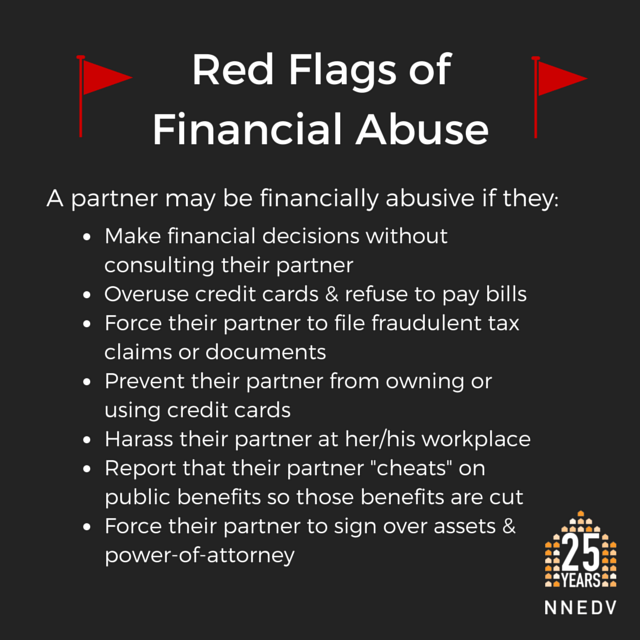
How do I see this with men (and women who have more than the narcissist) who are survivors? They are robbed of all their money in court during a divorce.
With women, they are signing legal documents without reading – because they are being pushed into signing through on-going manipulation in the household. They have learned to just do whatever he says.
A Frequent Blog of Devotionals Inspired by A Course in Miracles, A Course of Love, The Way of Mastery, Choose Only Love--Plus More . . . with Celia Hales - https://www.amazon.com/author/celiahales


 Jeannine Vegh