As someone who has been through trauma and survived it, I find this form of treatment [Cognitive Processing Therapy or CPT] to be the best and most healing of those that are out there for PTSD (post-traumatic stress disorder). This is a way of being involved in the treatment process – directly. It is a technique that helps one to look at their beliefs, through the help of a psychotherapist and re-examine them in a non-traumatic setting. It is not re-traumatizing (but your symptoms can elevate at first) and you are doing all the work. There are other techniques for working with Post Traumatic Stress Disorder and you should find the one that fits best for you.
Over forty years ago, hundreds of people went to their death in a country called Guyana. Back in 1978, I was a teenage girl in high school and two years later wrote my first paper on the topic of “Religious Cults” which would transform my life. On May of
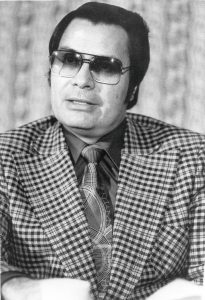
FILE – This Jan. 1976 photo shows the Rev. Jim Jones, pastor of Peoples Temple in San Francisco. Dozens of Peoples Temple members in Guyana survived the mass suicides and murders of more than 900 because they had slipped out of Jonestown or happened to be away Nov. 18, 1978. Those raised in the temple or who joined as teens lost the only life they knew. (AP Photo/File)
2011, I published “The Child of the Narcissist,” on my blog post and began working with survivors of narcissism in my practice. There are different phases that I see. One is the denial phase which is when the person has not yet let the person go. Second, is the acceptance phase which is when they are in realization stage and feel angry, frustrated, duped, taken, had, and wonder “How could I have been so stupid?” Or the child of a narcissist will say “Can they be helped?,” or “Am I destined to become this way?” Thirdly, I see the healing stage when they begin to set boundaries and take back their power and their life. The third stage is a place that they will be in the rest of their life because you must always be conscious, mindful and awake when you meet someone that seems to have certain qualities.
The people of Jonestown are no different than a woman who meets up with some guy who is playing her. People who fall for a narcissistic type are vulnerable, desperate and yearn to be loved and accepted. These type of people (parents are a different category because you aren’t choosing them, though this could be argued from a metaphysical perspective), are very aware of their power over men and women. They have learned – from the cradle – that they are entitled in some way. This can be from a self-imposed entitlement to protect themselves (by self-soothing) or an entitlement given to them by a parent. I have known and learned of parents who say their child is perfect and will do whatever it takes to protect them. This takes away from a child learning when they make a mistake. It takes away from a child growing and evolving over time. A friend’s father was a criminal attorney in Los Angeles and he once told me that mother’s would take second mortgages out on their homes, sell their cars, jewelry, whatever assets they could give up to pay his fees and get their kids off. When I watched the movie “Guyana Tragedy: The Story of Jim Jones,” I remember noting that he was engaged in animal cruelty as a boy.
These past few months have been a struggle for everyone. And yet for some, it has been more difficult than others. This reminds me of the first sentence of Anna Karenina which now rings more true than ever.
All happy families are like one another; each unhappy family is unhappy in its own way. Leo Tolstoy
Interpreted this can mean that each unhappy family brings different baggage from their own families of origin. Two households merged into one from four parents and siblings. The unhealthy dynamics that played out, inside this home [of origin], were interpreted individually. When a crisis hits a family, each member deals with it in their own separate ways. Thus, bringing all of these family parts, of each couple, into their own domain and without therapy to support these persons, you will have nothing but chaos during this virus (though the relationship started out this way, the virus is just adding to the mess). You are stuck with each other 24/7 and you aren’t retired. One or both of you may be without a job. You may or may not have children, either way being in an uncomfortable situation with someone you are not happy with; it can’t be easy. If you were happy with your partner pre-virus, you are probably doing fine now. If there were lingering problems or elephants in the room; it is much worse by now.
I have put off writing about Annie Oakley (born August 13, 1860 – November 3, 1926 Leo/Artemis) for some time now because I wanted to feature other Ohio Women in History that most people did not know about. Annie was one of the first superstars or famous actresses of her time. I read about her in a short biography by Chuck Wills for DK Biographies, so that it is more of a children’s reader. I’d love to find something more about her life but it appears that this was not her priority until after retirement and writing just wasn’t in her. She was only able to pen a few pages. Also, being a celebrity, more fiction was written about her than non-fiction.
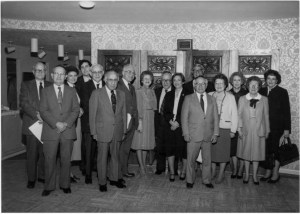
Founders of the Columbus Jewish Historical Society
Recently, I had the opportunity to meet with Toby Brief, when she talked to the American Association of University Women, about the Columbus Jewish Historical Society and showed us around their little museum in Bexley.
The mission of the Columbus Jewish Historical Society is to collect, preserve, and publish materials on the history of the Jewish people of Columbus and central Ohio; to encourage projects, celebrations, and activities which spread authentic information concerning Columbus and central Ohio Jewish history; to create a Society concerned with the past, present, and future; and to enlighten the membership of the Society, the Jewish community and the general public on the achievements of our people and the growth of Jewish community life from the days of the early settlers.
They began this organization in 1981 but the work toward Jewish refugees began after the 1830’s when Jewish people first came to the Columbus area. Anti-Semitism was not as huge in Columbus as in other cities, so they were able to start businesses (such as the Lazarus Department Stores), rent and purchase homes without much issue.
Recently, I met with Sandra Jamison who is a member of Second Baptist Church and part (board member?) of the James Preston Poindexter Foundation. Second Baptist Church is the oldest Black Baptist Church in Columbus and Reverend Poindexter was a very outspoken and prominent leader for this parish and community. Ms. Jamison and I met at the Ohio Local History Alliance Conference last weekend and shared with me a list of these wonderful women who once attended her church. The list was created by another woman in her church and she handed me a copy of it. I am listing these women here and sharing photos and notes if I can find them. If you are aware of any information on these women, I invite you to contact me with more information. Also, don’t hesitate to post on my FB group Ohio Women in History.
Blanche M. Van Hook – She was a society columnist featuring black women as well as working for the city. She was also known for writing about the Lucy Depp Park neighborhood. She was born in approximately 1896 in Ohio and died here in 1970.
Helen Carter Moses – She was a composer, organist and teacher (Sandra said that she learned to play piano from her).
Daisy Hall Rice – Beautician
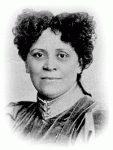
Helen Jenkins Davis- She was born in the 1880’s and lived until the 1980’s. She was one of the first black teachers in Columbus. She graduated from her teaching college in 1916 but it would not be until 1921 that she was able to find a position because of her race. In 1976, she was the first witness to be called in regard to a school segregation case that would eventually lead to the Supreme Court making a decision on this once again. She is mentioned in the book Beyond Busing: Reflections on Urban Segregation, the Courts and Equality. There is now a scholarship in her memory and a FB group.
Jessie Stephens Glover – Is the first black female to graduate from the Ohio State University in 1905 with a B.A. in Modern Languages. For awhile she lived in Florida and taught German and English at what is now Florida A&M University. She later moved to Virginia to teach at what is now Virginia State University before moving back to Ohio for marriage and to raise their two daughters. She became an activist and volunteered to be a probation officer for the Domestic Relations court. She was born in 1882, in Ohio, the daughter of former slaves and lived until 1966. Her biography is featured in Profiles of Ohio Women 1803-2003.
Edna Bryce – She was a club woman and entrepreneur who owned a flower shop.
Isabella Ridgway – Founder of an “old folks” home for blacks, in the early 1900’s. It is named after her and continues to this day. There is also a foundation in her name which began in 2016.
Constance Jean Nichols – Born in Marietta, Ohio and a graduate of the Ohio State University. She was a devoted activist, was one of the founders of the Vanguard League— an organization dedicated to eliminating discrimination against African Americans in Columbus. She was also responsible for helping to get the Ohio Theater integrated.
E. Carrie Coles – Was a member of the Housewives League.
Nell Moffett – Was once a Principal at Mt. Vernon Avenue Elementary School.
Cora Jordan White – Executive Secretary at the Blue Triangle Branch Y.W.C.A.
Anna Hughes – Administrator, Ohio Avenue Day Nursery
Belle Carter – She was a Pioneer Teacher, Social Worker, and a Probation Officer in the Court of Domestic Relations.
Mayme Artis – Piano Teacher
Anna B. Jones – She was born in about 1871 and became a Philanthropist and Community Activist
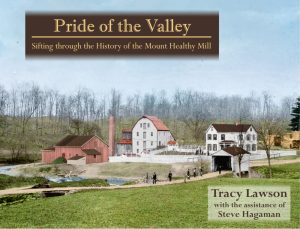
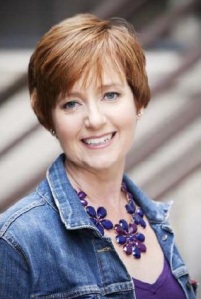
This is my first interview, here on Ohio Women’s History Project and I am starting with Tracy Lawson, whom I met at the recent Ohio Local History Alliance Conference. Tracy is an Ohio based writer who is known for her most recent work “Pride of the Valley,” which is a historical account of her ancestors. Tracy won “Best Non-fiction History,” in 2012 from the Ohio Professional Writer’s Association. In 2013, she was selected to present at Ohioana Book Festival. She also holds a 5-star selection from Reader’s Favorite Book Reviews. Tracy has written in several genre’s which you can find on Amazon and by clicking the book photo above. The following is the Q&A format I submitted to her:
How long have you been a writer and what made you choose to go in this direction?
I always wanted to be a writer, from the time I learned how to read. But I finally found the time to try when my daughter was in high school. My first book was published in 2012, and since then I’ve published six more, and have two in progress.
What plans do you have for your next book?
My next book is historical fiction, based on events in the life of my 6x great grandparents. I’ve written nonfiction history books, and also thriller novels, so this is like the perfect mash-up of what I like to write—a thrilling tale of a woman thwarting a conspiracy that could have changed the course of the American Revolution.
What struggles did you face while working on your books?
I sometimes wrestle with writer’s block or, perhaps it’s better called writer’s insecurity. First drafts can be messy, and often the story doesn’t fully develop until it’s been through a few drafts. It can take a while for the story that’s in my head to emerge on the page.
What woman in history has inspired you and why?
When I was younger, I found the story of Anne Sullivan, Helen Keller’s teacher, fascinating. It showed just how vital it was to be able to communicate, read, and study to develop one’s mind. I’m also a huge fan of Laura Ingalls Wilder, both as a pioneer and as an author.
What woman in your ancestry inspired you and why?
Anna Asbury Stone, the subject of my current work-in-progress, inspired me because she was willing to risk her safety—not only to come to the aid of her husband and brothers, but to deliver a dispatch to General Washington while she was being pursued!
What advice would you give young women about tackling their future?
Don’t be afraid of hard work and don’t expect to land in your dream job right away. Study something that will allow you to earn a living and support yourself. My daughter loved dance and theater—but she majored in economics in college, and is now in grad school and planning to be a college professor.
When you think of the upcoming 100th anniversary passing the 19th amendment, what sticks out in your mind?
Wow this is a tough one. I wonder what the women who fought for our right to vote would think if they could see the candidates we have to choose from. I think they’d be disappointed.
I want to be clear that this is just a sample of the names of women in Ohio History, it is not all of them. These are names that I could fit on a t-shirt and names of women I have begun to write about on this website, plus a few more. I made sure to get names of women that were “firsts” at something. I also tried to only get one name in different categories, and this is why all the first ladies from Ohio are not on here. If you haven’t bought your t-shirt yet, click on the link above and see the different items which are featured. Let’s educate others about Ohio Women’s History, ONE T-SHIRT AT A TIME!
Agnes May Driscoll – Coder/Mathmetician
Annie Oakley – Sharp shooter
Belle Sherwin – Activist
Berenice Abbott – Photographer
Bernice Pyke – First woman to be a delegate for the Democratic Nat’l Convention
Betsy Mix Cowles – Activist Abolition
Betty Zane – American Revolution Heroine
Charity Edna Earley – First AA woman to be an Army Officer
Dorothy Fuldheim – Journalist
Eliza Bryant – Humanitarian
Ella P. Stewart – First AA woman Pharmacist
Emma “Grandma” Gatewood – First woman to walk the Appalachian Trail
Erma Bombeck – Comedian
Evelyn Ryan – Prize winner of Defiance, Ohio (movie made about her life)
Florence Harding – First Lady
Florence Ellinwood Allen – First woman on the state Supreme Court
Florence Z. Melton – Shoe Manufacturer
Frances Jennings Casement – Suffragist
Frances Bolton – First woman to Congress/House of Rep.
Hallie Brown – Educator/Activist
Harriet Beecher Stowe – Writer
Henrietta Buckler Seiberling – Founder of AA/Oxford Group
Jane Scott – Journalist/Musicians
Jerrie Mock – First woman to fly solo around the world
Judith Resnik – Astronaut
Lillian Wald – Nurse
Lillian Gish – Silent film star
Lucy Stone – Suffragist
Lucy Webb Hayes – First Lady
Maude C. Waitt – One of the First women to the state Senate
Thank you to everyone who came out and supported Ohio Women’s History Project this year at the conference! If you wished to have a receipt, don’t forget to email me at ladyjatbay@gmail.com and let me know your name and how many shirts or prints that you paid for and I can send this back to you. If you still wanted to purchase a shirt, you can click on the store at the top of this page.
Ohio Local History Alliance held an amazing conference and I think we all learned a great deal from these presentations. We now have good ideas about how to take our museums, non-profits and new businesses forward in the years ahead. Below are some of the workshops I attended and information that I learned. I have included some links so that you might be able to research this more on your own.
The first workshop that I attended was given by Megan Woods, Cultural Resources
Megan Woods
Division Director at the Ohio History Connection. Her workshop was “Ohio Women’s Suffrage Centennial.” Megan discussed how to be included on their event page on the Ohio Suffrage Centennial website. The Ohio Suffrage Centennial Commission was passed on May 2019 by Governor Mike DeWine. There is currently a travelling exhibit of banners and a trading card project going on in Northwest Ohio by the Trumbull County Historical Society. There are also book discussion groups and you can get a list of books to read for your own groups through the Ohio League of Women Voters. In August of 2020 there will be a huge celebration that is in the planning stages at this time. Akron is working on a statue to honor Sojourner Truth. Case Western Reserve is hoping to get a play produced entitled the “Taming of the Anti.” All these and more can be found on their website above.
Harriet Taylor Upton
She spoke about three women in particular from Ohio, Harriett Taylor Upton who started in Ravenna and ended up in Warren. She brought the National Women’s Suffrage Association to Warren. She became the Vice Chairman of the Republican National Committee and was a part of the D.A.R. (Daughter’s of the American Revolution).
She also shared about Florence Allen who was the first female judge in Ohio but began her career first as a musician and journalist. She had left Ohio for New York to study law and then returned to eventually receive a nomination to the Ohio Supreme Court. Later she would be nominated by Franklin D. Roosevelt to the Federal Supreme Court. Florence also wrote several books about the law.
Haley Quinn Brown
The third woman was Haley Quinn Brown who was a black woman that eventually came to Wilberforce, Ohio. She was the Dean of Tuskeegee Institute, an International Public Speaker and the President of the Colored Women’s League. She was very involved in the temperance movement as well.
We listened to various people in the audience talk about their projects. One of which is that the Girl Scouts of Ohio are working on a badge to commemorate being a good citizen and learning about the voting process.
I then attended a Grant Management Basics workshop with Jennifer Souers-Chevraux who is the owner of Illumine Creative Solutions, LLC. Jennifer taught us about ways to be organized in a fashion that would help guarantee success with the grant already received. She also gave us several non-profit organizations to help with your business.
Tracy Lawson, the author of a historical book entitled “Pride of the Valley,” engaged
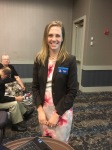
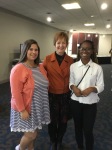
Savannah Homa, Tracy Lawson and Keilah Israel
with Mt. Healthy school in Springfield, to help kids become interested in their ancestry through family trees. Two young ladies came to report on their findings. These future female historians were Savannah Homa and Keilah Israel. There were a total of eight boys and girls involved in this project.
These young girls were very bright and had amazing insight into what they had discovered on this project. I was very impressed with their advanced level of thinking.
At lunch time, on Friday, we listened to Nekole Alligood from the Delaware Nation speak on re-patriating native American remains that might be found in a family member’s home. There is an organization called NAGPRA (Native American Graves Protection and Repatriation Act) which handles this type of service in a culturally appropriate way so as to bring peace to the departed. When such an event occurs it needs to be a sacred event with no press invited to the ceremony. Nekole also made us aware of the fact that there are 44 federally recognized tribes that stem from Ohio. I wondered how many there were that were not recognized. We also learned that native American’s were not recognized or given U.S. citizenship until 1924. Even today, the issue of young women kidnapped from reservations, (which are often isolated locations with people living far from others) for purposes of human trafficking. The issue of rape was brought up many years ago in an article written for Amnesty International that I recall reading. I believe this took place in Alaska. It is interesting to note that girls are kidnapped from reservations but not outside of the reservation (i.e., non-natives). This is a huge concern because the reservations are meant to be protected lands – so why are the people on them not protected?
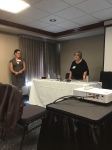
Sue Plummer and Christine Anderson
Another workshop I attended was on the “Women of King Records.” King Records was a recording studio, manufacturer and shipping warehouse run by Syd Nathan between 1943-1971, in the Cincinnati area. Christine Anderson, a professor from Xavier University in Cincinnati and Sue Plummer an Ohio History Service Corps Alumni, have been conducting research to uncover the women who produced music during that time. They shared a spreadsheet with their findings which held 2,054 recordings of various genres including hillbilly, Doo-Wop, funk and soul. They gave us access to this spreadsheet which includes links to YouTube videos if they were available. I am not sure whether or not it is acceptable to share this link so I will keep that to myself. You can however access this website which appears to be linked to Xavier University.
As you can imagined I had a wonderful time at this conference but I feel safe in saying most people seemed to be having a good time. There were smiles on these eager faces, as they walked about and the people I talked with all agreed that they enjoyed attending.
Remember #olhaempowers to follow on Instagram or Twitter.
Monsieur and Madame Adelman, a movie (Kanopy/Roku), starts off with the ending. It is predictable that Madame is going to tell someone at the funeral her life story. This is the last time you can be pretty sure of what is going to happen, well, until the
ending that explains the ending. At this point, the characters personalities have been built and so one can trust the obvious. As she begins to tell her story, which begins in the 1970’s, it seems as if this will be a typical love story. You can imagine this, though from the onset, Madame comes across as a cynical woman. She is begging you to pay attention. What comes across to the viewer are exceptional performances from Doria Tillier and Nicolas Bedos (he also wrote the score for the film, directed it and they both wrote the screenplay). Or did she, while he supervised? This is an inside joke from the film.
A Frequent Blog of Devotionals Inspired by A Course in Miracles, A Course of Love, The Way of Mastery, Choose Only Love--Plus More . . . with Celia Hales - https://www.amazon.com/author/celiahales

 Blanche M. Van Hook – She was a society columnist featuring black women as well as working for the city. She was also known for writing about the Lucy Depp Park neighborhood. She was born in approximately 1896 in Ohio and died here in 1970.
 one of the first black teachers in Columbus. She graduated from her teaching college in 1916 but it would not be until 1921 that she was able to find a position because of her race. In 1976, she was the first witness to be called in regard to a school segregation case that would eventually lead to the Supreme Court making a decision on this once again. She is mentioned in the book
  Isabella Ridgway – Founder of an “old folks” home for blacks, in the early 1900’s. It is named after her and continues to this day. There is also a
 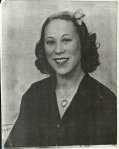 of the Ohio State University. She was a devoted activist, was one of the founders of the Vanguard League— an organization dedicated to eliminating discrimination against African Americans in Columbus. She was also responsible for helping to get the Ohio Theater integrated.