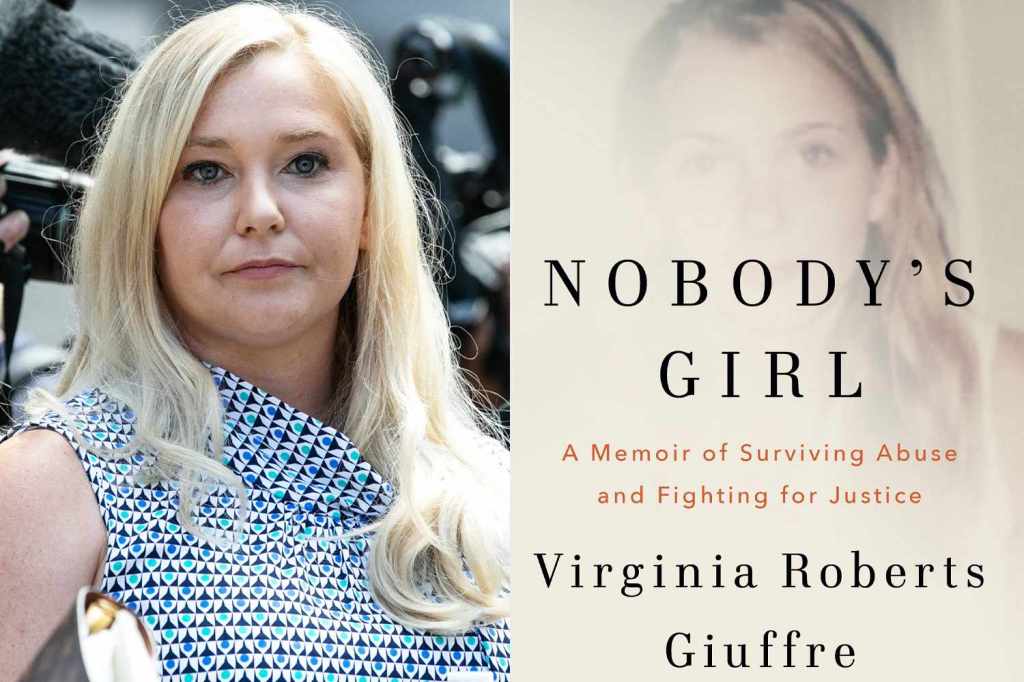
This book was probably the hardest and most challenging book for me to read. Not because of what she suffered, I was a social worker for 8 years and read hundreds of reports about child molest, dealt with clients who were trafficked, girls who were used as prostitutes on the street. It was the “Why” that kept nagging in the back of my head. Why was this incredibly, or seemingly strong woman having a book published posthumously? Why did she die by suicide? As a psychotherapist, I kept searching for answers throughout the book, and I walked away feeling as if I understood what they were.
Unless you are licensed in the psychology profession and have some training or knowledge in the field of personality disorders, and you have had personal or professional contact with this person, it is not narcissism, it is purely speculation.
I had only learned of this young woman a week ago. My boyfriend mentioned her name, we looked her up and found lots of scathing reviews from liberal journalists who don’t know the first thing about psychology or survivors of communist countries. As soon as I heard more about the story, I wanted to read it immediately to see for myself. My step/adopt father came to the U.S. in 1956 from Hungary. Post-WWII, after failing as an ally (luckily), their country was communist until 1989. I grew up learning about communism, Russians and fearing this type of lifestyle. I also, myself, wrote a book about 1956, The Uprisers, in which I did an extensive amount of research. And, I am a trauma specialist in my day job.
I will not put this movie (French 2018), in “The Arts” section because it is a psychological drama that hits on the topic of sexual abuse, narcissism and women being left alone for several generations; much like Antonia’s Line (Netherlands, 1995). The film starts out in the 1950’s post WWII France. If you are a great film lover, as I am, you will know when you see the cover and the title, it just hits you – I must watch this film. What really piqued my interest was the title “An Impossible Love,” which hit home for me. I saw other things in the description that I ignored at first until it came up on the screen. I love the way Catherine Corsini handles abuse of a child in this film. Extremely subtle. The topic does not even come up until much later in the film. The child’s older lover tells the mother, not to let her daughter visit the father anymore. The shock on the mother’s face, to realize a man she has loved for 16 years, but who has rejected her all the same, is now sexually abusing their daughter. The shock to finally take in the missing pieces of this puzzle “Rachel” has created, her fantasy that he was a great lover, that they had something special together, suddenly unravels before her eyes. Virginie Efira (with the help of the cameraman), gives a somatic demonstration of soul searching, confusion, awareness and reality in just a few seconds of this film.
A Frequent Blog of Devotionals Inspired by A Course in Miracles, A Course of Love, The Way of Mastery, Choose Only Love--Plus More . . . with Celia Hales - https://www.amazon.com/author/celiahales

 Jeannine Vegh