Gone Girl – The Kind of Woman Everyman Should Fear

Gone Girl Movie Poster – Rosamund Pike and Ben Affleck

Written several years ago for another blog/website that is now defunct.

Last night I watched Gone Girl, which I found quite scary! I didn’t really like the ending but then I realized, if he had killed her that would have been predictable. If she had killed him, this would have been expected. It also would have turned the movie into a horror film and I would not have watched it. The ending was rather odd though and made no sense. Usually, this is what I love about foreign films, non-predictable and full of questions. And this is an American film.

However, I did turn to Wikipedia, for some clarification thinking I’d read something new. The scenes seemed to race by, like a British murder mystery that isn’t quite sure how to come to a conclusion. Often the sillier but much loved TV murder mysteries are so confusing in the end but you don’t really care because you enjoyed the storyline and the actors. I don’t really love Ben Affleck, but I think he can be a great actor. Sometimes he chooses really dumb storylines but overall, he is good. I don’t know much about Rosamund Pike but I thought she did a wonderful job. It seemed though that the focus was too much on her being pretty, like Reese Witherspoon in “Wild.” No matter what scene Reese was in, even as a junkie, she still looked made up. Too think that no one recognized “Amy” just because of her hair color (especially when they are sitting right next to each other at the trailer park hotel) was a bit of a stretch. It is possible I suppose.  Isn’t that being non-politically correct though to stereotype poor white people?

The stereotypical feminist’s didn’t like it – of course! But what is strange is that Thelma and Louise are in their Top 10 of movies to watch. I found that movie rather ridiculous and not a film that showed strong female characters, rather, very weak and distraught. They probably wouldn’t have recognized Amy either. Amy was weak but mentally dysfunctional. Not too different than Natalie Portman’s character in “Black Swan.” It is funny that when the guy isn’t the bad guy and a woman is up against him it goes against stereotypical feminist beliefs but yet if it is a woman up against a woman, it makes sense? Or it is okay for the politically correct pundits. Here are some of the reviews by women via Wikipedia:

Writing in The Guardian on October 6, 2014, Joan Smith criticized what she saw as the film’s “recycling of rape myths”, citing research released in 2013 which claimed that false allegations of rape in the UK were extremely rare.[53] She wrote: “The characters live in a parallel universe where the immediate reaction to a woman who says she’s been assaulted is one of chivalrous concern. Tell that to all the victims, here and in the US, who have had their claims dismissed by skeptical police officers.”

I did think the scene with the police officers (who were they anyway?) was rather un-predictable and strange. I think the female cop in the beginning at least showed a little more common sense. Why were these other cops called in? I am sure the book would have explained it.

In an October 3, 2014, blog post for Ms. Magazine, Natalie Wilson argues that by not addressing Amy’s social privilege—whereby she possesses the “necessary funds, skills, know-how and spare time” to stage a disappearance—Gone Girl is the “crystallization of a thousand misogynist myths and fears about female behavior.”

I don’t think it is a myth or fear about female behavior if a male has been traumatized by a woman, any more than a woman having this fear in the same scenario. If the roles had been reversed in this film, it would have been predictable but the stereotypical feminists would have been salivating.

Alyssa Rosenberg wrote in the Washington Post on October 3, 2014, that, although she was initially “unconvinced” by the book, her fascination with the novel and film was partly due to her conclusion that “Amy Elliot Dunne is the only fictional character I can think of who might be accurately described as simultaneously misogynist and misandrist.”

I confess, I had to look up misandry because I had never heard the word before. Well, it is basically the definition of a stereotypical feminist.

Europeans love women and allow them to be in films, no matter what their age. The women don’t have all these issues that American women have about the roles they play. This is probably why they are in more films. That and they often speak more than one language which makes them versatile for different markets. I began to wonder about how things would have been if Gone Girl had been a European film. If the movie had been made in France, no doubt Isabelle Huppert would have starred in it. She definitely wouldn’t have come across as being “too pretty,” in all her scenes, though she is a beautiful woman. She is one of those actresses that always come across as intense, dark and fearful. In fact, I tend to become a little nervous about watching the movies she is starring in. “Merci Pour Le Chocolat,” comes to mind. From the onset, you don’t even imagine this will be a happy family story even with the designer wardrobe and the vast estate. The mansion looks like it belonged to Erzsébet Báthory. The nice expensive clothes on Isabelle’s character aren’t even noticed when the camera pans on her face while she is talking.

If it were made in Spain, Penélope Cruz would no doubt have been the lead and Pedro Almadovar would have directed it. I think of “Volver,” and how Pedro’s films always seem to make sense “When you put it that way.” Penélope has a huge repertoire of personalities that can come out on film. The “extras” that came with one of her films I rented through Netflix (DVD) showed her being filmed doing stills, while the cameraman asked her to portray different thoughts. I think it was after her Italian film “Don’t Move,” which is a story about a prostitute in a relationship with a physician, who ultimately rapes her. I was caught off guard by how ugly she was able to make herself for this performance, which was certainly very important to really embrace the character and not think of the actress.

In the end, I think Gone Girl was a good film in many respects. The beginning was rather stale and dry, though it began to make sense as it continued. I initially thought Ben Affleck was behaving like a bored actor not wanting to make a film. The gripping turn of events is what made me look at the film in a much better light. I began to realize Ben’s character Nick was really just confused and unsure of himself. In fact, I initially thought this was going to be a predictable storyline but then began to fear for Nick because I don’t like to see someone wrongfully accused. I don’t hate men. They took some time showing Amy in her true light, of course it made it much more palatable as a movie with this twist. I might like to have seen something that showed her a little off other than the “Amazing Amy,” clue. The ending probably could have used some work because I think confusing endings are okay but it just seemed out of context for the film. I can’t quite put my finger on what I think would have made more sense. Watch it because it is not a typical American movie, if you are one of those who hate modern US films. Don’t watch it if you are a stereotypical feminist, as you probably won’t find it fits your mindset. To fear it because you are a man is ludicrous and typecasting, just as it would be if the roles were reversed. It is a good film, don’t try to politicize it. There are mentally ill men and women. Even if it is rare that a woman would lie about rape, it does happen. It also makes for good plot twists and storylines.

You Might be a Batterer If:

Sleeping with the Enemy – Julia Roberts 1991

I wrote the following many years ago, but since I saved it on the Icloud, in one fell swoop, I lost all my dates. I am guessing this was written in the early 2000’s. There are three lists to distinguish between “Batterer,” “Victim,” and “Survivor.” The sentences are sarcastic in the sense that this is how the person is thinking. Meaning, if someone is a batterer, they are going to agree with these sentences and not find anything wrong with it.

Continue reading

Survivors Turned Experts – Laymen Speaking about Psychology

It is really important to heal your wounds before speaking to others about psychology. This goes for psychotherapists, psychiatrists, psychologists and even laymen (or non-professionals). Why? Because there is still so much to learn. Because you don’t really understand yet what is going on. Because you have so much anger and are relaying only part of a very biased story. For professionals, it is easy to project your own pain onto others. It is easy to misunderstand because their story doesn’t fit yours.

Continue reading

First Steps to Leaving a Narcissist – Kerry Kerr McAvoy, Ph.D.

I bought this book to give to someone and kept another in my office to share with clients. It is actually a workbook and I think you will find it very helpful in preparing to take this next step. Safety tip, make sure to leave it at work or at a friend’s house, somewhere that this person will not find it and use it against you. Cognitive Dissonance – very important part of what keeps us in the relationship or makes it difficult post-separation. It is a combination of the trauma bond and the romantic delusion. But, you will have to read Dr. McAvoy’s book to learn more. A tip: I could only find this on Amazon, so this is the best place to begin.

Narcissistic Mothers in Prose

In speaking of Mother’s Day, some people prefer to read and are not really in to movies. I have a list here that I found on Goodreads that talks specifically on this topic through bios or novels. Some of the books, I am familiar with and will comment on.

Will I Ever Be Good Enough? Healing the Daughters of Narcissistic Mothers by Karyl McBride. This book comes up first on their list and is my number one choice for women wanting to learn more about what they have been through. One caveat is that her examples are more extreme stories, such as the movie I mentioned about August: Osage County yesterday. What this means is that you need to focus on the behaviors of the women in these stories. Your mother may not have been this extreme but how was her behavior similar but on a smaller scale. For example: In the movie August, I found that the fighting scene was a bit ridiculous and over the top. However, a client once said to me “No, this did happen between my mother and I.” How it could happen on a smaller scale would be that your mom and you got into a fight verbally, and you simply told her to “Fuck off” or other strong words and then when she threw a temper tantrum, you held your ground and did not empathize with this.

Children of the Self-Absorbed: A Grown-Up’s Guide to Getting over Narcissistic Parents by Nina W. Brown. This book comes in third on Goodreads list. I confess that I have yet to read it, but it is a client favorite that has been mentioned to me many times. It is my second book resource to make people aware of.

Mommie Dearest by Christina Crawford. The infamous story of Joan Crawford, written by her adopted daughter. This book I have not read, but saw the movie when it came out – on TV. Who doesn’t remember the “hangers,” for the expensive clothes? It makes sense naturally, but is that they way for a mother to handle it? Or the toys given to the children at Christmas and then promptly donated the next day? Children do not understand these things. It was terribly inappropriate and traumatic for a child.

Like Water for Chocolate by Laura Esquivel. I highly recommend that you DON’T read this book and watch the movie instead. Perhaps in Spanish it is an easier read, but in English, I did not enjoy it at all. I would not generally give this advice either. The movie was well acted and passionately played out. Watching the mother toward her daughters evoked so many feelings in me. When I read the book, I kept thinking “Was all the dialogue completely made up in the movie?” It was just not an interesting read and I put it down after one chapter and never picked it up again. The mother in this movie/novel, IS portraying what was socially acceptable at that time in Mexico, which is explained in the beginning of the movie, however, it could have been handled differently in a more healthier household. Oh, and I have seen this movie twice now, and I’d be happy to watch it again and again and again. It is really that good.

Anywhere But Here by Mona Simpson. This is also a movie, with Natalie Portman and Susan Sarandon. I saw the movie, have not read the book. I found myself hating Susan Sarandon’s character so much so that I decided I hated the movie. I also was unsure if she was narcissistic or borderline, but I’d have to watch the movie again as I saw it when it came out. Naturally, it was well acted – in order for me to feel that strongly about the character.

Disarming the Narcissist: Surviving and Thriving with the Self-Absorbed by Wendy Behary. This book is not specifically written for mother’s who are narcissists. It is more for people in relationships with them in general. I have read this book and taken Wendy’s workshop for psychotherapists. She is a great writer and a good workshop speaker. I was told about this book by someone who I knew who went through a divorce and it helped her. That is why I recommend it to people for the same reason. However, the guidelines for communicating for a narcissist, would be the same for your mother.

Pride and Prejudice by Jane Austen. I had never thought about this book having a narcissistic mother, because I was too focused on Mr. Darcy! Yet, I do recall the mother being consumed with who her daughters would marry and how she goes about making these things happen. I am sure, there are plenty of Victorian novels, now that I think about it, where you could find just such a mother – due to the times. At least they had an excuse then! And, while I am on this topic, Jane Eyre by Charlotte Brontë, was my favorite novel as a young girl. This is about a narcissistic aunt who was cruel. It was about a horrible boarding school with narcissistic teachers and I horrible boss that she gets into a trauma bond with and then marries at the end!

August: Osage County – Why Some of us Hate Mother’s Day

If you grew up with a narcissistic mother, or a mother like Violet, you absolutely hate Mother’s Day. You were ripped off and didn’t get that kind, nurturing, loving, supportive parent that Hallmark believes you had. They don’t keep “giving, loving and being the best mother you could possibly be,” as one card would lead us to think. So, every woman who has grown up with a narcissistic mother will struggle to find a card, find a gift – that is good enough, or will try to resist altogether, in a passive/aggressive way – which you will pay for.

Continue reading

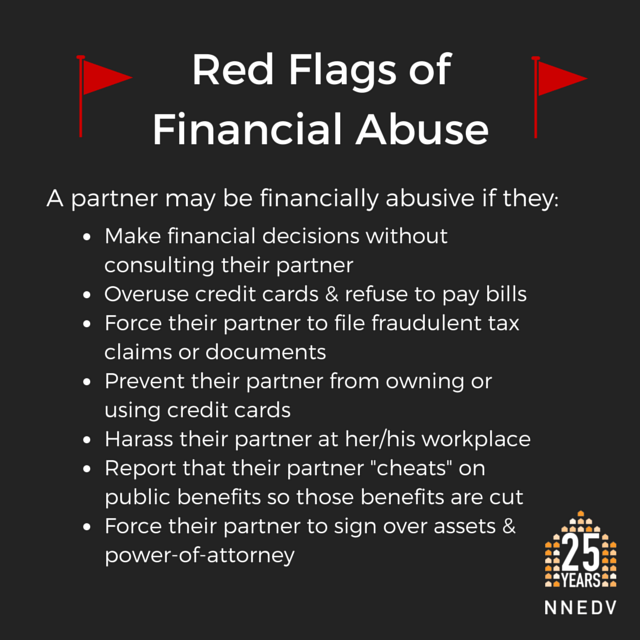
What does Financial Abuse look like?

How do I see this with men (and women who have more than the narcissist) who are survivors? They are robbed of all their money in court during a divorce.

With women, they are signing legal documents without reading – because they are being pushed into signing through on-going manipulation in the household. They have learned to just do whatever he says.

Statistics based on Research from Sandra L. Brown

Survivor Profile

© 2014 The Institute for Relational Harm Reduction (from Sandra L. Brown’s training)

  • All survivors will have experienced some trauma symptoms during or after the pathological love relationship (PLR/Pathological Love Relationship = her terms for having a narcissistic abuse partner)
  • 37% have high ACE scores related to adverse childhoods; their trauma usually falls between moderate PTSD-c-PTSD ++ and higher. These survivors may have the history most associated with codependency. (I have not seen PTSD with the majority of my survivors, except when they meet Criteria A, in the DSM 5, measured with testing, and this is generally when they are with an Anti-Social PD, not a NPD ).
  • 63% have low ACE scores and many did not have adverse childhoods. Their trauma was created in the pathological love relationship and usually falls between mild/moderate PTSD. These survivors have the history most associated with super traits of personality (super traits explained in her training).
  • All survivors have atypical trauma related to the effect of cognitive dissonance on their trauma. (This is what I am seeing).

Most of the time I am working with the 37% and I would say this is 99% of my survivor population. My thoughts are that if I were going to conduct research, I would want to strictly focus on survivors of Narcissistic Personality Disorder. I think this will show some interesting nuances. Sandra L. Brown has written a number of books, that you can find on the internet. If you are a therapist reading this, her workshop is on PESI. This study is referenced on my Resource page above. Please note, this study focused solely on women who were survivors.

Somebody that I Used to Know – Gotye

Above is the video of this song, below are my translations as to what I believe the words mean when I look at them in the context of a narcissist. Not sure if this is what he was thinking, but I suspect it could be. I feel like this song is his way of telling us how he redirected himself in the process of moving forward after a narcissist. Take a look and see:

Now and then I think of when we were together,

Like when you said you felt so happy you could die,

Told myself that you were right for me, (Love Bombing)

But felt so lonely in your company, (Trauma Bond)

But that was love and it’s an ache I still remember.

You can get addicted to a certain kind of sadness,

Like resignation to the end, (Trauma  Bond)

Always the end,

So when we found that we could not make sense,

Well you said that we would still be friends,

But I’ll admit that I was glad that it was over. (Self-Realization – Healthy Detachment)

But you didn’t have to cut me off, (Discard)

Make out like it never happened,

And that now we’re nothing,

And I don’t even need your love, (Trauma Bond)

But you treat me like a stranger,

And that feels so rough,

No you didn’t have to stoop so low,

Have your friends collect your records, (Discard)

And then change your number, (Discard)

I guess that I don’t need that though,

Now you’re just somebody that I used to know, (Healthy detaching process)

Now and then I think of all the times you screwed me over

But had me believing it was always something that I’d done (Gaslighting)

And I don’t wanna live that way

Reading into every word you say (Romantic Delusion)

You said that you could let it go

And I wouldn’t catch you hung up on somebody that you used to know…

The Vulnerable Narcissistic Wife – Darren F. Magee

Darren is a psychotherapist in Belfast, Ireland and has a Youtube channel. I have enjoyed learning from him in relation to men who are survivors of narcissists. If you are a male reading this, I would also look up Borderline Personality Disorder. I have found that some of the male’s I have been working with are actually dealing with this type of personality disorder, where narcissism is a symptom but better served under this umbrella.