Voices Carry – Till Tuesday – He Wants me if he can Keep me in Line
Reply

A good relationship isn’t hard to understand but it is hard work. It is difficult for those who have never been allowed to have a voice to suddenly speak without their throat collapsing. To be able to say “This is what I want,” without someone making them feel like a heel for even thinking about that need. To be able to set a boundary without hearing the word “No,” or just being ignored. It requires that you are brave and assert yourself. It also means that you don’t stay with the person if they are not respecting your requests or allowing you to have your needs met. A good relationship means that a person doesn’t run away when there is a crisis. They stick by you as the two of you see it through. A good relationship means that both people are committed to being on this team. You take responsibility for the bills being paid and understand that there is something required of you when the chips are down. When you have children you undertake this task together and don’t expect the other will do all the work. You realize that both of you are creating this new team member and the result of your actions will determine the future for this young soul.
Continue reading
What does a good relationship look like? There is a really good book out called “The Good Marriage: How and Why Love Lasts” (1996) by Judith S. Wallerstein and Sandra Blakeslee. This was one of the first books I read on looking at what works in a relationship and I read this prior to graduate school. I was seeking answers myself; curious how people make things happen. When I met a couple that seemed to have a good relationship, I would ask what made them so great. I always heard the good one’s say “communication,” as to why their relationship lasted as long as it did. What does this look like though? If you have grown up in a narcissistic household, where you have lost your sense of self – or in a relationship where you are broken down, it is confusing. I am not sure these really good relationship role models, I met, know the answer themselves. I think they just know this is the secret and it is what everyone says.
Continue readingIt is really important to heal your wounds before speaking to others about psychology. This goes for psychotherapists, psychiatrists, psychologists and even laymen (or non-professionals). Why? Because there is still so much to learn. Because you don’t really understand yet what is going on. Because you have so much anger and are relaying only part of a very biased story. For professionals, it is easy to project your own pain onto others. It is easy to misunderstand because their story doesn’t fit yours.
Continue readingIf you grew up with a narcissistic mother, or a mother like Violet, you absolutely hate Mother’s Day. You were ripped off and didn’t get that kind, nurturing, loving, supportive parent that Hallmark believes you had. They don’t keep “giving, loving and being the best mother you could possibly be,” as one card would lead us to think. So, every woman who has grown up with a narcissistic mother will struggle to find a card, find a gift – that is good enough, or will try to resist altogether, in a passive/aggressive way – which you will pay for.
Continue readingI enjoy listening to Dr. Gabor Maté’s advice on life, his life, what he has been through to get to this place of experiential knowledge. I use this video in my course for therapists to discuss the topic of people pleasing. I hope you will enjoy it.
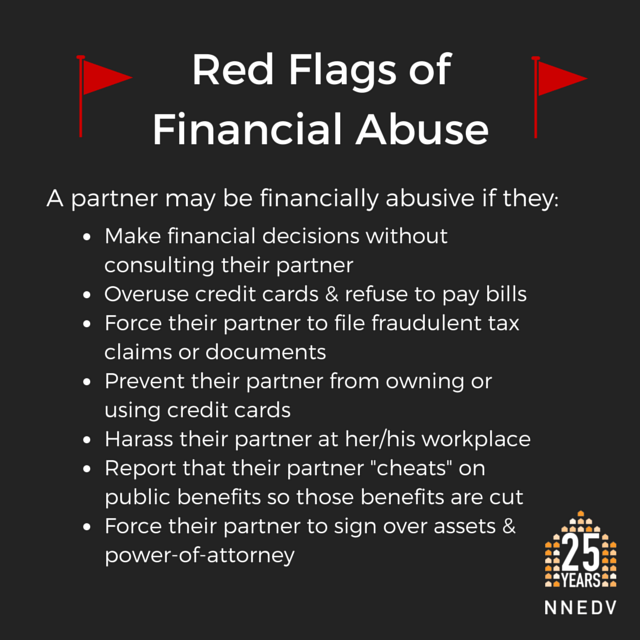
How do I see this with men (and women who have more than the narcissist) who are survivors? They are robbed of all their money in court during a divorce.
With women, they are signing legal documents without reading – because they are being pushed into signing through on-going manipulation in the household. They have learned to just do whatever he says.
Survivor Profile
© 2014 The Institute for Relational Harm Reduction (from Sandra L. Brown’s training)
Most of the time I am working with the 37% and I would say this is 99% of my survivor population. My thoughts are that if I were going to conduct research, I would want to strictly focus on survivors of Narcissistic Personality Disorder. I think this will show some interesting nuances. Sandra L. Brown has written a number of books, that you can find on the internet. If you are a therapist reading this, her workshop is on PESI. This study is referenced on my Resource page above. Please note, this study focused solely on women who were survivors.
Above is the video of this song, below are my translations as to what I believe the words mean when I look at them in the context of a narcissist. Not sure if this is what he was thinking, but I suspect it could be. I feel like this song is his way of telling us how he redirected himself in the process of moving forward after a narcissist. Take a look and see:
Now and then I think of when we were together,
Like when you said you felt so happy you could die,
Told myself that you were right for me, (Love Bombing)
But felt so lonely in your company, (Trauma Bond)
But that was love and it’s an ache I still remember.
You can get addicted to a certain kind of sadness,
Like resignation to the end, (Trauma Bond)
Always the end,
So when we found that we could not make sense,
Well you said that we would still be friends,
But I’ll admit that I was glad that it was over. (Self-Realization – Healthy Detachment)
But you didn’t have to cut me off, (Discard)
Make out like it never happened,
And that now we’re nothing,
And I don’t even need your love, (Trauma Bond)
But you treat me like a stranger,
And that feels so rough,
No you didn’t have to stoop so low,
Have your friends collect your records, (Discard)
And then change your number, (Discard)
I guess that I don’t need that though,
Now you’re just somebody that I used to know, (Healthy detaching process)
Now and then I think of all the times you screwed me over
But had me believing it was always something that I’d done (Gaslighting)
And I don’t wanna live that way
Reading into every word you say (Romantic Delusion)
You said that you could let it go
And I wouldn’t catch you hung up on somebody that you used to know…

I have put everything for Survivors in one place now and will not be typing about this topic here anymore. Make sure to copy the QR code below or go to Survivors-of-Narcissists.com
Essays on Politics and Life in Our America
Mental Health & Wellness
Clinical and Forensic Psychology, LLC
Discerning Gal
A Frequent Blog of Devotionals Inspired by A Course in Miracles, A Course of Love, The Way of Mastery, Choose Only Love--Plus More . . . with Celia Hales - https://www.amazon.com/author/celiahales
Freelance Novelist, Editor, Writer, and Journalist
Reading Into Our Past...
Ohio's best and biggest city
My Family Stories
Natalie. Writer. Photographer. Etc.
"Trail Magic" DVD now available
Poetry * Mythology * Podcast
Sometimes I'm just itching to write!
 Jeannine Vegh