Adolf Hitler and Che Gueverra were both socialists with different views of what was right. Both hated art (unless it was about them) and destroyed art and artists. They both killed people for different reasons. The same occurred within the communist movement and amongst religious zealots in history who wanted to take control over people. They have killed people too for different reasons. All thought they were fair, right and just for doing so. Now we have the feminist radicals who have gone to the extremes in many ways. We are no longer just seeing “Women are better than men,” thought processes but witch hunts from the “MeToo” movement and destruction of art, “Baby It’s Cold Outside,” to fit their purposes. They are destroying men and art and even women who don’t agree with them for the sake of beliefs that they believe is right and just. This radical approach to turning the world around to their perspective, and this causes them to be incapable of looking at another side of things or listen to their instincts (not their ego). The “I am Right and You are Wrong,” is like with any radical thought process mentioned above, it is always “wrong,” as it is based on the ego, not a mature mindset and destroys society.
This book is one you don’t devour. You take your time, stirring, simmering and seasoning as if you are making a pot of soup or stew. Sophia is a Virgo, which is most of my astrological chart, except the first dominant three. I sensed a grounded woman almost immediately. A person who has taken her time and made the right choices; which led her down a path that would make her a very happy woman. As a Leo, who has made all the wrong choices, very impatiently and innocently, when you have done these things, only then can you truly appreciate someone who is smarter than you. Patience really is a virtue.
This is quite a fascinating debate series founded by Hungarian born Paul Munk in 2008 out of Toronto, Canada. Interestingly, I learned about this through a client recently. I find that I get many good resources from the people I serve almost as if it were providence. They did make me aware of who won the debate before I saw it, though it wasn’t that hard to figure out as it was quite obvious which side were more gifted in speech and somatic comfort. What is troubling, as always, are Americans abroad. They are just incapable of realizing it isn’t all about them.
A French Village is set in German occupied France, World War II. We are being shown local townspeople being forced to make choices to survive. It is romantic, because there is always love when you are in a traumatic situation. It is not biased and so you see bad Germans and bad French. What is amazing is that the most important thing that you see is people at war. As you watch it, you have to try not to view this from the lens of an educated person who obviously knows what happened during WWII. You must try to behave as ignorantly as the characters are to have an ability to appreciate their choices and empathize with them. Some people you don’t empathize with such as the character Heinrich Müller, who enjoys putting cigarettes out on people. Including the one he loved.
Heinrich and Hortense
Today, I watched the first episode of the third season and was struck by the fact that I felt as I did when I worked in the county government for eight years. In this episode the head of the local government, the prefect (I believe he is called or deputy prefect) is handed a list of Jewish names to round up in the neighborhood. Up until this time, the city of Villenueve was protected and the Jewish people could more or less feel their lives were somewhat safe, although they were unable to run their businesses. In this tiny town, they assumed that the Prime Minister Phillipe Pétain, had the power to protect French Jews from being deported. In this episode we learn that this has now changed. When I worked for the county government our mindset was “What was in the best interests of the children,” until the recession hit. Then it was all about saving money and putting them in the cheapest places. I fought this and all the other changes that were going on until I was put on Administrative Leave for a year and then I finally quit. I quit because their evidence was lies or fabricated stories and I knew I would be fired if I stuck around. I couldn’t believe that a huge agency like that would be so concerned about me (there were lots of people involved). So while, my personal situation with the government is a far cry from making decisions during World War II, I like putting things into perspective with the here and now.
Marcel Larcher, a communist
When you think of a soldier at war, doing what he or she is told to do, they really don’t have any choices of whether or not they like it. When the “team” loses, suddenly we turn on them, and everyone is punished; whether they really had a choice or not. This is something I keep thinking about as I watch this show. While the character may seem bad, you can recognize a corporate boss; eager to get a promotion. You can see a “company man” who does what he is told. When you are working for corporate America or government, this is how most people behave. Most employees don’t sit down and weigh the consequences of what their boss tells them or how it is going to affect people, business, employees, or the community at large. You just do it because that is what you are told. At the end of the day, you go home to your families and try to forget about what you heard. I didn’t have a family to go home to, so I went home and thought about my day a little more. That was my problem, I thought too much!
As I have seen a trailer for the seventh and last season, I am aware of the fact that many of these people will be blamed for the choices that they made. Every episode has been and is going to be sad and tragic but that one will be the hardest to endure. The reason is that these characters who have lasted till the seventh season, their lives will have been disrupted to the point of forgetting who they are. Already we are seeing choices that are being made to help a Jewish maid, or a lover, or a business associate who is collaborating to stay alive. They aren’t trying to help a vast number of people though at times they try to get the list, for example, from 20 down to 10.
Daniel Larcher, The Mayor
It is really too bad that most Americans, especially liberals won’t see this TV show. As far as I am aware, the only way you can see it now is if you have MHz Choice which is an international channel you have to pay for and have to know it even exists. I was aware of MHz from PBS when they pretended to collect International Mysteries from around the world. After doing some digging I realized the guy on PBS was lying; all they did was purchase a channel. They had me going though for a while there. American liberals love to blame people and do it so loud that you feel nauseous having to listen to it day after day after day. I feel that most of the time it is very hypocritical and seems to lack in values. I am on the border of the left and right and can never seem to sit on one side.
Jeannine Schwartz
We are in an era now where people are being blamed who had ancestors in the Civil War. They want to take down a statue of a soldier in the South, General Robert E. Lee. He was a man who did his job and because he came from the south, chose this side so he wouldn’t be killing his own family. He was a soldier being asked to lead a team, a side of government. If the south had won, we would want to tear down a statue of General Ulysses S. Grant. I don’t see a need to tear down any statue because I am fond of history. General Lee wasn’t responsible for slavery as Adolph Hitler was responsible for the holocaust. It is apples and oranges; but here in America we are not reasonable people. We allow ignorance to prevail because we feel sorry for them (those in this mindset).
A French Village could teach Americans quite a great deal about having to make choices in a time of war.
Raymond Schwartz
Whether or not they would be able to focus on such a great historical show without finding it racist, I could not say. The show even shows a shady Jewish character, could Americans handle this? This seems to be the new wave of lying to our children. We educate them with period pieces that have politically correct storylines rather than literal or factual storylines. If North and South, probably one of the last great American TV historical fictions made, were filmed today; it would be such a joke. No doubt they would not be able to create an honest re-make. The actors would complain that they could not do the show because they could not speak the historically accurate lines (which would mean they are terrible actors).
I cannot imagine how tense it must have been to be on the set of A French Village. These actors do not ever come out of character, so that we are able to feel as if we are there; with them. I feel transported into another time and place. I feel tense every moment, wondering what will happen to this person or that. So tense that I had to look it all up online to see who will live and who will die. I just couldn’t keep watching without this sense of relief because it is traumatizing to watch this TV show. I do know what happened and while I try to think like the character, I am not perfect. When you feel like these characters are real people and they actually existed, you know you are hooked and drawn in.
If you have read “The Nightingale,” by Kristin Hannah, published in 2015, you will no doubt appreciate A French Village. I had read it last summer and so it was fresh in my mind. Two completely different stories as Ms. Hannah’s book was a little more biased. I feel it is important that A French Village created a lack of bias so that you can wonder. So that you could have a discussion after watching the show and think a little more deeply about those times.
I grew up with a step-father who took political asylum in the United States in 1956. When I wrote a historical fiction about that time period, it was while I was on leave from the government. It was actually perfect timing to have a sense of communist Hungary. I remember a family member telling me that I was actually on house arrest from my job. At the time, I had no idea why I was being paid to stay at home and do nothing. My father raised me to fear Russians and communists. He told us all kinds of horrible stories. I tried not to be completely biased while writing because I knew some of that was his hatred of people who ruined his life and his family’s lives. As I did research, as most historians due, you read the facts and put together your own interpretation of what you see. This is blended together with the biased interpretations of the people who witnessed. I don’t say biased in a bad way either. No one can ever really know the whole story. A French Village seems to be saying this. They are showing you a broader perspective, 75 years later.
My first time to hear the name Maria Callas was in a movie about her life. This was called “Callas Forever,” (2002) starring Fanny Ardant and Jeremy Irons. I was intrigued with the personality and captivated by her voice (which was dubbed in). At this point she was long passed (1977 in Paris, France) and there was no chance of seeing her in concert. I began to immerse myself in everything I could find about her. Documentary, video clips of her singing, and I read Arianna Huffington’s book “Maria Callas: The Woman Behind the Legend,” which also came out in 2002. The funny thing is; I don’t really like opera. When I was reading Ms. Huffington’s book, I kept wondering what an aria was. Somehow I missed the part where she had explained that this is what you call an operatic solo.
I have since attended a couple of operas and I have tried listening to other sopranos but I just don’t get the same feelings as I do when I listen to Ms. Callas. It is hard to explain. It seems to be that I am in love with the person, not the genre and the passionate way she projects herself. I get the same feelings when I listen to a gypsy violin, especially when it is played to sound like a bird singing. This is when the violin is transformed to become another entity as if it is shapeshifting. I like other instruments (except the flute) and I appreciate other violinists but not quite as much as a gypsy violin player.
Her story is rather romantic. Father leaves, mother pushing her daughter to sing from the age of three, her great love marries Jacqueline Kennedy. What is also sad is the bracelet that Aristotle Onassis gave to I believe four women, including Ms. Callas and Kennedy, which all said the same thing and looked the same as well. This did not make me think too highly of him as a partner. At the end of Ms. Callas’s life, she died alone. Perhaps her life could become an opera on its own.
My favorite fairy tale moment (though it is said to be true), in Ms. Huffington’s book was a time when Ms. Callas had been practicing on the terrace of her mother’s home. Suddenly a man’s voice could be heard, with an equally gifted sound, singing from behind a hedge or was it a tree in the distance. Evidently she never did meet this person but the singing took place a few times and with a particular song which I do not recall.
When I was a young girl, my best friend used to play classical music records at the highest volume so that they could permeate our environment and I was forced to immerse myself in a genre that, at that time, I did not appreciate. Most kids our age were doing this with head banging music, which neither of us liked. Now, I find myself doing this with Ms. Callas’s music. If it is not loud one cannot hear it upstairs while on the computer.
One documentary that I saw, Maria Callas: The Callas Conversations, had interviews with various journalists. In order to sing opera, one has to become something of a linguist and she spoke quite a few languages besides her native Greek dialect. One can learn so much about the art of speaking a language by watching Ms. Callas talk. When she was speaking to a British journalist in English, she was in a very conservative room and she was more subdued or composed in her body language. A lot like my grandma used to say “Sit up straight, legs crossed, hands folded in the lap like a lady.” She even spoke with a British accent (and an American one with another interview on YouTube here in the US). When she was speaking to an French journalist, the room had a more dramatic look to it and suddenly her command of this language was accentuated with hand gestures and a stronger voice. This is quite a talent to envy.
From what I understand, she was a difficult woman to deal with. At the same time, one can imagine that because her life was a never ending drama, it must have been hard to leave the stage. Today, we talk about famous women being divas. All the same, when I hear this, I wonder how appropriate it is for the person, or shall I say are they just doing it on purpose. There are also famous women who aren’t divas, including great singers. When we make a word out to be a given, it loses its luster. It is taken advantage of.
If you haven’t had a chance to immerse yourself in the aria’s of Ms. Callas, make it a point to do so. She had a lot of critics, just as most famous people do and so it might not be to your liking. If you are not a fan of opera, you might find yourself opening up to a new sound in your home.
I’ve just finished watching the 2016 film “Things to Come,” and before this I had seen the movie “Elle,” a few months ago. Both were made (or released) in the same year, starring Isabelle Huppert. She has always seemed to me to be a very smug actress and yet I feel drawn to her. I find her characters deeply moving. No matter that she always seems to portray the perfect psychopath, it feels as if she is on the verge of an aneurism. Most Americans would call her characters intellectual snobs. Partly because she is not funny, unlike Woody Allen who can make a discussion in philosophy seem like a night at a comedy club. Also because she is a woman and while we try to pretend we are modern here, we just can’t handle the honesty portrayed by characters in French movies in general. We pretend to observe and honor freedom of speech in our constitution but only if people say what is popular for the times. In truth, there is no room for a good debate in America which is probably why the traditional “salons” of Paris never existed here. Once we made very good and intelligently written movies, now we have opted for special effects and pop culture actors who speak in slang because a cerebral film would not be considered a “date night” film.
Art should be regarded as a spiritual experience for when you find a piece that you like, it is speaking to your soul. When I first met a Frida Kahlo, I was in a university class that had to do with Women in Art (I don’t recall the specific title).Our professor showed us a piece of her work and I asked the teacher if she had been in some type of an accident and explained what I saw in the photo of the painting. She told us a little about the history of Frida Kahlo and I felt stung. Until that moment, my experience was usually to look at paintings in a museum and admire them. While I had been to many art museums and had my favorites, I had never been this moved by art.
Of course it doesn’t hurt to grow up in a European-American family. Where the world that revolves around you speaks another language, has different values, talks about the old country and you begin to look at America as a second home. Watching foreign films for me has always felt as if I were welcomed; as one of theirs who got away. That I was getting a sneak peek into a home that existed but that I had never lived in; yet it felt like it belonged to me. There was a sense of familiarity about it. Déjà vu.
Foreign film observation began at home, not with my family but with Kukla, Fran and Ollie. This was a children’s program that featured the puppets Kukla and Ollie and their friend Fran who would host a film from around the world each week. There is a website to learn more about this but unfortunately very difficult to get the actual films. Hello Netflix?!? This would certainly be a great program for you to buy.Since Kukla, Fran and Ollie was an American program, all the characters were dubbed with British English from what I recall. I didn’t realize it was dubbing as a child, I just though everyone spoke English with a cute accent. There may have been a couple of programs with subtitles but I can’t recall.I do remember circus bears on the loose, a Cinderella story with a bird that would say “Koo-koo-ri-koo, Who is the one for you?” and other wonderful adventures that kids would get themselves into.
Women of exceptional taste in todays society are multi-faceted. They are sophisticated, successful in a career, have good taste in clothing, don’t use plastic surgery (if over 40), are involved in various philanthropic efforts and are admired by women around the world. Some of these women speak more than one language a commendable trait. Many of them have children or grandchildren as well and this is an aside. What is remarkable about our generation is that these type of women can now choose not to have children or wait until they are ready to have children.
Adriana Ugarte delivers a remarkable performance as a respectable seamstress, spy and loyal confidante to her select group of friends; in the Spanish TV Series now on Netflix entitled “The Time in Between.” Ms. Ugarte plays “Sira,” who maintains strict boundaries and does not cede to the style of Mata Hari. The costumes for this World War II period piece get an A- and this is only because of the shoes which are about 3” too high for the 1940’s. I have noticed this happening more frequently with historical fiction, especially from Spain. The TV Series “Velvet,” also showed some of their major characters in heels that were not appropriate heights for the 1950’s time period either.
The story revolves around Sira, a poor girl from Spain on the eve of the Spanish coup of 1936, which of course is about to be on the eve of World War II as well. She runs off to Morocco with the boy who would take her heart away from the good boy next door. Naturally, we all know he is a player and the character of Ramiro does not disappoint. While in Morocco she meets Rosalinda Fox, a British lady who is the mistress of a Spanish foreign minister. Naturally, while everyone in this TV Series is German, British, Portuguese and Moroccan, they all of course speak Spanish. I find this hilarious when I watch foreign programs but of course we do this too. Half-way through this 17 episode bundle, Rosalinda encourages her to become a spy on behalf of the Brits, using her storefront – which will be moved to Madrid – as a hovel for German ladies gossip. The storyline is rich and the characters addicting. The leading ladies Ms. Ugarte and Hannah New (Rosalinda) are adorable, young and vivacious. Ms. Ugarte could be the next Penelope Cruz coming on to the scene.I don’t doubt that America will rip her up from her native roots and put her in Hollywood as soon as they can. I hope that unlike Sira, she will not be tempted into this new life and will stay devoted and loyal to her country. Ms. Cruz and Selma Hayek have drifted over to English speaking roles but I find that the characters we give them pale in comparison to the respect they achieve at home.
Naturally you should also pay attention to the fitted suits, thick quality fabrics they are made from, the hats for every occasion, gloves, purses and ball gowns. Other than her peasant clothes (so to speak), there wasn’t one outfit that she wore that I wouldn’t kill to wear. The turbans I could do without as they look especially tight and cumbersome, yet they are elegant at the same time. I could see wearing these clothes in today’s society, if we were still elegant fashionable women – though, the only place fitting these days would be Buckingham Palace or the Oscars; none of which, I dare say, I will ever see an invitation.
If you are a big fan of women’s history and enjoy learning about different era’s through fiction, you will appreciate and adore this series. It is a more honest way of showing a strong woman with some integrity.
A Frequent Blog of Devotionals Inspired by A Course in Miracles, A Course of Love, The Way of Mastery, Choose Only Love--Plus More . . . with Celia Hales - https://www.amazon.com/author/celiahales
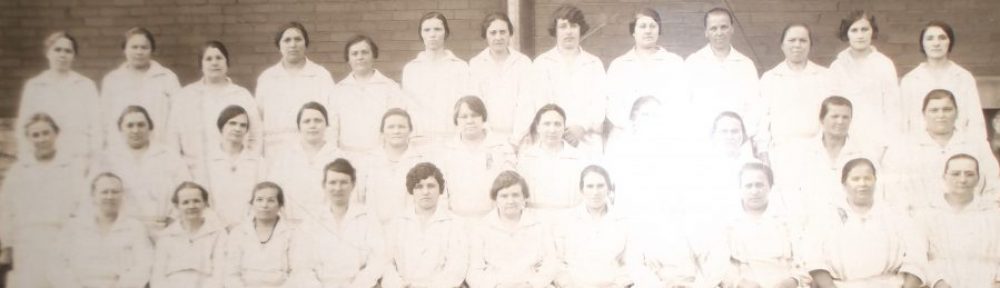
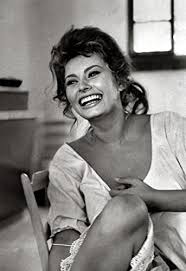 This book is one you don’t devour. You take your time, stirring, simmering and seasoning as if you are making a pot of soup or stew. Sophia is a Virgo, which is most of my astrological chart, except the first dominant three. I sensed a grounded woman almost immediately. A person who has taken her time and made the right choices; which led her down a path that would make her a very happy woman. As a Leo, who has made all the wrong choices, very impatiently and innocently, when you have done these things, only then can you truly appreciate someone who is smarter than you. Patience really is a virtue.
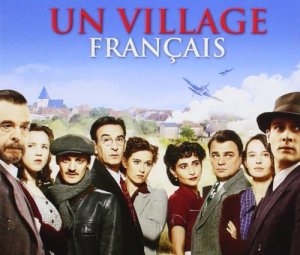 A French Village is set in German occupied France, World War II. We are being shown local townspeople being forced to make choices to survive. It is romantic, because there is always love when you are in a traumatic situation. It is not biased and so you see bad Germans and bad French. What is amazing is that the most important thing that you see is people at war. As you watch it, you have to try not to view this from the lens of an educated person who obviously knows what happened during WWII. You must try to behave as ignorantly as the characters are to have an ability to appreciate their choices and empathize with them. Some people you don’t empathize with such as the character Heinrich Müller, who enjoys putting cigarettes out on people. Including the one he loved.



 I have since attended a couple of operas and I have tried listening to other sopranos but I just don’t get the same feelings as I do when I listen to Ms. Callas. It is hard to explain. It seems to be that I am in love with the person, not the genre and the passionate way she projects herself. I get the same feelings when I listen to a gypsy violin, especially when it is played to sound like a bird singing. This is when the violin is transformed to become another entity as if it is shapeshifting. I like other instruments (except the flute) and I appreciate other violinists but not quite as much as a gypsy violin player.
 When I was a young girl, my best friend used to play classical music records at the highest volume so that they could permeate our environment and I was forced to immerse myself in a genre that, at that time, I did not appreciate. Most kids our age were doing this with head banging music, which neither of us liked. Now, I find myself doing this with Ms. Callas’s music. If it is not loud one cannot hear it upstairs while on the computer.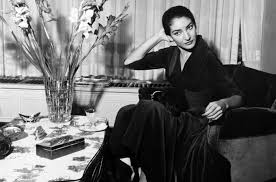
 I’ve just finished watching the 2016 film “Things to Come,” and before this I had seen the movie “Elle,” a few months ago. Both were made (or released) in the same year, starring Isabelle Huppert. She has always seemed to me to be a very smug actress and yet I feel drawn to her. I find her characters deeply moving. No matter that she always seems to portray the perfect psychopath, it feels as if she is on the verge of an aneurism. Most Americans would call her characters intellectual snobs. Partly because she is not funny, unlike Woody Allen who can make a discussion in philosophy seem like a night at a comedy club.
  Jeannine Vegh