
The Uncomfortable Comfortableness with a Narcissist

My ebook is finally here and I can’t wait for you to read it and provide a review to help others who are struggling with this topic. You can find the book at Books2Read through a variety of your favorite ebook publishers. Today is the first day, so if you don’t see your favorite publisher yet, it may be there tomorrow. Hoopla will take a couple of weeks so please be patient!

Uncomfortable Comfortableness is an easy read-in-one-day, with six wonderful homework assignments to keep you thinking. I have been working on this for many months at the same time preparing workshops on this very same topic. It finally occurred to me, I needed something quick and easy. A book that gets right to the point. Another therapist came up with a similar concept – quick and easy for couples. I told her to publish it and then I thought – why don’t I do this for survivors? Well, here it is, just in time for Christmas/Hannukah/Winter Solstice or whatever holiday you might celebrate at this time of the year.

Thank you for shopping and again, leave a review if you don’t mind, so others might consider picking up a copy for themselves.

Who is Telling the Truth? – The Narcissist Always Wins

As a psychotherapist, I am dumbfounded by the stories I always hear in my room. It is the family law stories that get me every time. The client, no matter whether it is male or female, the survivor of the narcissist, is always the one who loses when there is a narcissistic spouse involved. Here in Ohio, it is a “woman’s only state,” but I can tell you this is NOT true when there is a narcissist. I’d like to even say only with children, but I have had women who had money (not lots, but more then him) who have had to fight him trying to take their money, when they were only married a few years. I have had men who were up against a woman (with no children together) and had to fight her lies and manipulation in court – not for money – but for power. Why is it that nothing is being done about this? Why is it the court’s always believe them? Why are they not trying to create change, or to have a conscience?

Continue reading

I Can See Clearly Now – The Divorce is Over (or the relationship has ended)

“I Can See Clearly Now”

I can see clearly now, the rain has gone
I can see all obstacles in my way
Gone are the dark clouds that had me blind
It’s gonna be a bright, bright sun-shining day

I think I can make it now, the pain has gone
All of the bad feelings have disappeared
Here is that rainbow I’ve been praying for
It’s gonna be a bright, bright sun-shining day

Look all around, there’s nothing but blue sky
Look straight ahead, nothing but blue sky

I can see clearly now, the rain has gone
I can see all obstacles in my way
Gone’re the dark clouds that had me blind
It’s gonna be a bright, bright sun-shining day
Gonna be a bright, bright sun-shining day
Gonna be a bright, bright, bright sun-shining day

Written by Johnny Nash

When listening to the lyrics of this very famous song written by Johnny Nash, you feel a sense of hope after all the pain that you have been through. Women and men who are struggling in the courtroom, trying to divorce a narcissist – this can be a long and tedious journey costing tens of thousands of dollars and leaving the victim broke. However, once it is over, it is over. My clients talk with me about the sense of relief – he/she is gone. “I can sleep at night.” and “I am beginning to have a sense of where I want to go.” As he sings, “Gone are the dark clouds that had me blind,” from the trauma bond (cognitive dissonance), the attorneys who you are unsure are supporting you or not, the judges and GALs who collude with the narcissist (coercive control in the courtroom).

Continue reading

Is She a Narcissist or a Borderline – Dr. Daniel Fox Explains

The narcissist fears being inferior whereas the borderline fears being abandoned. It is a whole lot more than this, so listen to see what you think you are or have dealt with. Both are manipulative but in different ways. It is complex and exhausting but important to understand the difference.

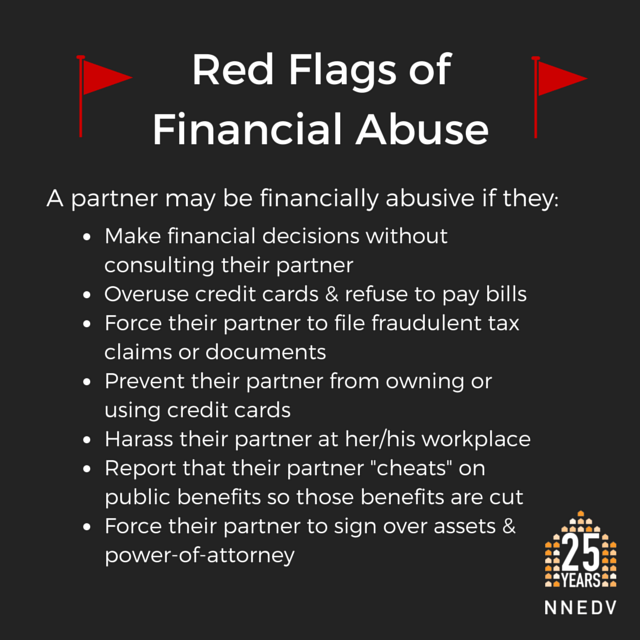
What does Financial Abuse look like?

How do I see this with men (and women who have more than the narcissist) who are survivors? They are robbed of all their money in court during a divorce.

With women, they are signing legal documents without reading – because they are being pushed into signing through on-going manipulation in the household. They have learned to just do whatever he says.

Coercive Control by a Parent in the Courtroom

This is an issue that is often unrecognized in courtrooms due to a lack of training and knowledge of this topic. This is a good video and a great discussion between three professional women who highlight different cases they are aware of.

As an ex-CPS worker I can say that emotional abuse, manipulation, this is very difficult to see – which they talk about above. This is rarely a reason to remove a child.

What I will also add is that men can sometimes be a victim of coercive control as well. I have listened to many stories of how women and turned a situation around to their advantage and the man walks away penniless or alienated from his children.

Dr. Christine Cocchiola. Take a look at her website to learn more about her training/coaching for professionals and clients.

If you get a chance and can find the documentary Divorce Corp. It is very telling to hear about how finances play a role in lengthening this process – when people have it and even when they don’t.

When are they NOT a Narcissist?

There are so many articles about Narcissism on the internet. It is easy to lump someone into a category when “narcissistic traits” may seem to be prevalent in many other diagnoses. This is the reason why it is inappropriate to diagnose someone who is not in the room. Often times, I will hear people talking about their partner and I realize they may have TBI or PTSD. They may also have Depression or some other mental health condition. Addicts DO seem to be narcissistic but this is because they are putting the addiction before the family, job or partner. Below are some things to be aware of. No one should diagnose anyone unless they are a psychological professional and they are in the room with this person. Even then, we don’t necessarily tell the person, unless we are going to do treatment on them or they seem open to listening.

  1. Narcissistic traits vs. personality disorder – As mentioned above, the traits can be seen in a myriad of diagnoses and so it might not be the personality disorder. We are all egotistical and so there are times when we can seem like narcissists to others.
  2. Another personality disorder. In my practicum, I worked with a woman who had Histrionic Personality Disorder. Now, I can recall her narcissistic traits, but it was way more drama. The men who have begun to see me for a Narcissistic partner, generally seem to be Borderline. Anti-Social Personality Disorder is really what is going on in the movie “Gaslight.”
  3.  I have had people tell me that a mentally ill person was a “narcissist” or that the addict was a “narcissist,” for example. Those traits will surface from these types of other diagnoses. Which comes first though? What will they be like on medication or clean and sober? This is something that we can’t answer until it happens. I try to empathize with the mentally ill person – who is not in treatment – when explaining to my clients or to people in general. With an addict, I will say “Oh, they are an addict. And the fix is their priority, not you or anyone else, which makes them seem like a narcissist.” Mentally ill people often feel bad about the strain caused on their families by their illness.
  4. Is the man/woman angry due to undisclosed sexual abuse or because of a traumatic brain injury or PTSD? I try to dig deep when I hear a man come into my office who says he was told he was a narcissist. Women aren’t generally told this for some reason. If we find out what is really going on, then we can treat the problem and find a solution. If a man is coming into my office and addressing his own narcissism by taking responsibility for this, that is usually a good sign. I would like to say that most likely they are not as the narcissist does not take responsibility. It is always everyone else’s fault.
  5. Women will often ask “Am I a Narcissist,” thinking it is genetic or maybe it wasn’t my mom or maybe it wasn’t my husband/boyfriend, maybe it was me. There is a study that I have read but I am not convinced yet, I have seen it re-enacted but not inherited.
  6. There are walls put up by the person with PTSD. I specialize in this, and I prepare for the defensiveness when they have it (not always), sometimes they can be quite angry. I never take it personally; they aren’t angry at me or at us as psychotherapists. Their behaviors sometimes can be narcissistic because they are protecting themselves from assumed tragedy, crisis, pending danger. They are angry at all men or all women. They are angry at the perpetrator and their ego shows us a very cocky, know it all, in charge, protector – or a very strong person who is trying to be in control of the world around them. They know this. The narcissist is not aware that they are doing these behaviors, some are conscious though and this is a whole other level.

The narcissist is not aware of their behaviors and how it impacts others. The parent is not concerned about how their children will turn out as adults and how it correlates to the way they raised them. They will talk about their children’s outcomes and will approve or disapprove but do not correlate with themselves and their spouse. They are “bad children”, “they became drug addicts,” “they are a horrible parent,” “they live in the basement because they can’t make it on their own.” I have heard a parent say, “I don’t want them to leave, because I don’t want to be alone.” That is, at least, some acknowledgement of responsibility.

In conclusion, don’t assume the person is a narcissist. If the articles you are reading online, make sense, talk to a therapist to discuss this further. The most important thing is not their diagnosis but how you are handling this relationship, yourself, and what steps should you take to heal and move on in your life. Take a look at my workshop on the “Survivors” page above, which can be found on Udemy.

What is a Narcissist?

a woman kissing a mask instead of the man who has turned

What does a narcissist look like? According to the Diagnostic and Statistical Manual 5 – 0-6% of the population has an actual diagnosis of Narcissistic Personality Disorder and of this population 75% are male. I am going to tell you the traits of a narcissistic person, not the diagnostic criteria. I don’t want you to get caught up in what the diagnosis is because it doesn’t matter. If you are a therapist reading this, than you will know where to look to find this answer but what really matters is the personality type, not the diagnosis. This is because you are not working with the narcissist but with the survivor. If you are the survivor, you need to focus on YOUR LIFE right now.

Continue reading

Who Can We Trust

This week has been a difficult and challenging week for me. I had to trust someone, an attorney, who luckily was able to help me get through one challenge. On another situation, an organization I belong to, decided to strip away my trust by changing their bylaws and not informing their members. I found out by reading about it in the Daily Wire. My local branch had changed their by-laws last year, I voted “No,” because it smelled fishy to me. The chapter regent beat around the bush when I declared my concerns to her after the meeting. She “would get back to me on it, after talking to some people higher up.” She never did. I resigned from the organization this past weekend, after reading this article and knowing that it was correct.

Continue reading

Destroying America, One Value at a Time

Yesterday, our former president was the victim of a second assassination attempt by someone who, in the least, suffered from Anti-Social Personality Disorder. ASPD is a given when an adult commits a crime. With a child, it would be called Conduct Disorder. My thinking right now is – bad luck comes in threes – the Secret Service (and other law enforcement) did a great job yesterday, now they should be even more prepared, no matter where he goes. However, crime in America is worse than it has ever been. A lack of values, a division of people, anti-Semitism not seen since WWII, attacks on freedom of speech (usually conservative), a lack of professionalism in the workplace (all the way to the political debates) and then political lies that go unchecked from a biased debate.

Continue reading