Unknown's avatar

About Jeannine Vegh

I am a psychotherapist and author of both fiction and non-fiction.

Dreams – Stevie Nicks

Now here you go again
You say you want your freedom
Well who am I to keep you down?
It’s only right that you should
Play it the way you feel it
But listen carefully to the sound
Of your loneliness
Like a heartbeat, drives you mad
In the stillness of remembering what you had
And what you lost
And what you had
And what you lost

Thunder only happens when it’s raining
Players only love you when they’re playing
Say, women, they will come and they will go
When the rain washes you clean, you’ll know

Now here I go again, I see the crystal visions
I keep my visions to myself
It’s only me
Who wants to wrap around your dreams, and,
Have you any dreams you’d like to sell?
Dreams of loneliness,
Like a heartbeat, drives you mad,
In the stillness of remembering
What you had,
And what you lost,
What you had,
And what you lost

Thunder only happens when it’s raining
Players only love you when they’re playing
Say, women, they will come and they will go
When the rain washes you clean, you’ll know
You will know,
Oh, you’ll know

Written by: Stephanie Nicks Album: New Jersey 1983 Released: 1983

One day, while driving in the car and listening to the song, I heard that “Players only love you when they’re playing.” I went to my office and played the entire song again and understood the importance of this song to narcissism. Of course, I had heard this song 100 million times before, but like all good music, well, with me, I often listen to the beat – or the sadness – and not always the lyrics. Or, I hear them but don’t piece it together. Until you have been with a “player” the word doesn’t mean a whole hell of a lot to you. You just don’t get it. When you have, the song suddenly takes on new meaning.

I think she wrote this song while in a trauma bond with someone that she loved very much and on the precipice of coming back to reality, she hit the revenge button and wrote of her anger toward this piece of shit that dumped her. Now he hears it every time it is sung on the radio. Does he roll his eyes, or take stock in himself?
People Pleasing with Dr. Gabor Maté

I enjoy listening to Dr. Gabor Maté’s advice on life, his life, what he has been through to get to this place of experiential knowledge. I use this video in my course for therapists to discuss the topic of people pleasing. I hope you will enjoy it.

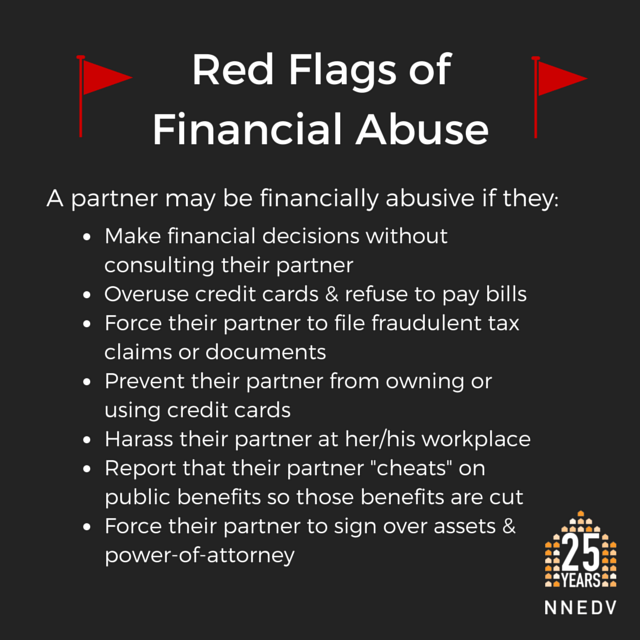
What does Financial Abuse look like?

How do I see this with men (and women who have more than the narcissist) who are survivors? They are robbed of all their money in court during a divorce.

With women, they are signing legal documents without reading – because they are being pushed into signing through on-going manipulation in the household. They have learned to just do whatever he says.

Statistics based on Research from Sandra L. Brown

Survivor Profile

© 2014 The Institute for Relational Harm Reduction (from Sandra L. Brown’s training)

  • All survivors will have experienced some trauma symptoms during or after the pathological love relationship (PLR/Pathological Love Relationship = her terms for having a narcissistic abuse partner)
  • 37% have high ACE scores related to adverse childhoods; their trauma usually falls between moderate PTSD-c-PTSD ++ and higher. These survivors may have the history most associated with codependency. (I have not seen PTSD with the majority of my survivors, except when they meet Criteria A, in the DSM 5, measured with testing, and this is generally when they are with an Anti-Social PD, not a NPD ).
  • 63% have low ACE scores and many did not have adverse childhoods. Their trauma was created in the pathological love relationship and usually falls between mild/moderate PTSD. These survivors have the history most associated with super traits of personality (super traits explained in her training).
  • All survivors have atypical trauma related to the effect of cognitive dissonance on their trauma. (This is what I am seeing).

Most of the time I am working with the 37% and I would say this is 99% of my survivor population. My thoughts are that if I were going to conduct research, I would want to strictly focus on survivors of Narcissistic Personality Disorder. I think this will show some interesting nuances. Sandra L. Brown has written a number of books, that you can find on the internet. If you are a therapist reading this, her workshop is on PESI. This study is referenced on my Resource page above. Please note, this study focused solely on women who were survivors.

Somebody that I Used to Know – Gotye

Above is the video of this song, below are my translations as to what I believe the words mean when I look at them in the context of a narcissist. Not sure if this is what he was thinking, but I suspect it could be. I feel like this song is his way of telling us how he redirected himself in the process of moving forward after a narcissist. Take a look and see:

Now and then I think of when we were together,

Like when you said you felt so happy you could die,

Told myself that you were right for me, (Love Bombing)

But felt so lonely in your company, (Trauma Bond)

But that was love and it’s an ache I still remember.

You can get addicted to a certain kind of sadness,

Like resignation to the end, (Trauma  Bond)

Always the end,

So when we found that we could not make sense,

Well you said that we would still be friends,

But I’ll admit that I was glad that it was over. (Self-Realization – Healthy Detachment)

But you didn’t have to cut me off, (Discard)

Make out like it never happened,

And that now we’re nothing,

And I don’t even need your love, (Trauma Bond)

But you treat me like a stranger,

And that feels so rough,

No you didn’t have to stoop so low,

Have your friends collect your records, (Discard)

And then change your number, (Discard)

I guess that I don’t need that though,

Now you’re just somebody that I used to know, (Healthy detaching process)

Now and then I think of all the times you screwed me over

But had me believing it was always something that I’d done (Gaslighting)

And I don’t wanna live that way

Reading into every word you say (Romantic Delusion)

You said that you could let it go

And I wouldn’t catch you hung up on somebody that you used to know…

Meditation 101: A Beginner’s Guide by Dan Harris

This is the best video I have ever seen on how to do meditation. It is also what I prescribe to my clients, especially to those with anxiety. I tell them this is the best medication for Anxiety. Why, because if you are doing these 5-10 minutes a day, you will be more in touch with your intuitive voice, will be more relaxed and comforted during the day. Less stress, more in touch with your higher power, more energy and feel more loved – by yourself. It helped me to get over one of my fears. It has made me a stronger person. Oh, and btw, it has no side effects!

The Vulnerable Narcissistic Wife – Darren F. Magee

Darren is a psychotherapist in Belfast, Ireland and has a Youtube channel. I have enjoyed learning from him in relation to men who are survivors of narcissists. If you are a male reading this, I would also look up Borderline Personality Disorder. I have found that some of the male’s I have been working with are actually dealing with this type of personality disorder, where narcissism is a symptom but better served under this umbrella.

Crying Doesn’t Fix the Pain – But it Helps in the Healing Process

“All happy families are alike; each unhappy family is unhappy in its own way.” Leo Tolstoy – Anna Karenina

As a Child of a Narcissist, when you cry it doesn’t fix the pain – they don’t get better. You are still trapped in a home with two parents who are emotionally immature, damaged, wounded and are so detached from their own pain and have no self-awareness. Without self-awareness, from a parent, you are stuck with them. As Is. I cried growing up, all the time. I cried because I felt unloved, unwanted, that no one would listen to me. I felt like a robot living my mom’s life, behaving like my dad wanted. I didn’t know who I was. After I met the guy who would later become my husband and faced his abuse and detachment, I began to cut. This was before it was a “trend” something you read about on social media. I didn’t even know this was a “thing.” I just scratched and scratched until blood came out. I wore long sleeves so no one would see what I was doing. Meanwhile, if I cried, I would hear “Why are you crying? You have no reason to cry” from my mom. Or my dad, when punishing us would say “If you cry, I will whip you more. Toughen up.” They saw my arms and said, “What did you do to yourself?” I can’t recall the excuse I made up. Maybe they said I was crazy.

Continue reading