The following is an article written by Maude C. Waitt (under her married name Mrs. W.G. Waitt). I found this on The Ohio Channel but as they did not note what paper it came from and I was unable to track this, I could not say which periodical it is from. Having said this, I would say it is from one of the Cleveland, Ohio (Lakewood) newspapers as she lived in Cuyahoga County. Ms. Waitt was the first female state senator. The Ohio Channel did note that the date this was published was on January 21, 1921. I have not edited this save for a missing quotation mark by the paper.
A Dream and What Came of It by Mrs. W.G. Waitt
THE DREAM
Last night I dreamed a dream and beheld a vision.
I thought I stood upon the shores of a great inland lake and a fair and beautiful city stretched before me.
And as I looked I saw in many homes – on many streets groups of earnest faced women who seemed to be intent on studying something. And ever and anon they would lift their eyes to messages which shone with a pure and wonderful radiance.
And after reading these messages their faces were illumined and they returned to their study with renewed zeal.
And as I drew closer I was privileged to read these flaming messages, “Arise, women voters from the North and South and East and West in this your union together – strong of faith and fearless of spirit and pledge yourselves and all that you are to a new crusade, a crusade which shall not end until the electorate of this republic is clean, intelligent American.”
“I pledge myself never to cast a vote for any measure which has not been submitted to my intelligence and ratified by my conscience.”
“Hold fast to those high ideals of public service which have been handed down to you form women who received inspiration from the Holy Fire of Divinity itself.”
And as I stood there curious – but understanding little which I saw I turned and saw at my side an Angel of Light.
And I said to him “What are all these women studying?” And he replied “They are studying the laws of the nation, state and city.”
“But,” I said, “it seems strange to me that they should leave their homes and children to study thus together.”
And he said, “They are leaving their homes and their children that they may learn better how to protect them. It has been revealed to these women that home cannot be contained within the four walls of an individual house – that home is the community and the people who live in it are the family, and the public school is the nursery and upon the welfare of the one depends the welfare of the other. And sadly do they all need the mother touch.”
“But what use do they expect to make of this knowledge,” said I.
“They are building for the new vision where men and women work together, each administering and governing according to his or her special abilities.”
“But are they not satisfied with the long reign of man?” said I. And the angel made reply: “Many women feel that a great share of the evils of society come from one half the human race with only half the intelligence and less than half the moral power making all the laws of the world alone.
“But what does woman feel she can add to the superior knowledge of man gained the long agest through? She expects to bring quicker intuitions, better moral standards and higher ideals.”
“But said I, half in anger, “Who is this new kind of woman who dares to think she can add to the superior knowledge of man?”
“This,” he made reply, “is the new woman citizen and you behold her in preparation to take her place at the council table of the nation.”
“But who is she and from whence did she come?”
And he said: “This is she who at man’s side stood and received with him the primal curse. This is she, who at his side passed the dread angel of the flaming sword went driven from the garden.
“This is she, who unfailing, weariless and unafraid has borne with man the heat and burden of the day.”
“But she is so new, so untried, can she be trusted?” said I.
And he answered thus: “When God sent to earth his only Son in whose arms was he laid? Whose was the breast that nourished Him?”
And the beauteous vision faded and as I slept I dreamed again. And once more I found myself on the shores of the same great inland lake and the same fair and beautiful city stretched before me. And I saw earnest men and women working together and the light of mutual understanding was in their eyes.
And I saw women working in peace and concord and the light of sisterly love was shining in their eyes. And I said to the Angel of Light still standing by my side: “What is this place?”
And he said: “Heaven is found on earth and here is the city of the new vision building by men and women working together. This is the ideal toward which humanity has been struggling the long ages through – this is the city of Lakewood, O.”
AND WHAT BECAME OF IT
Because of this dream, during the month of February, 1921, a new plan for citizenship classes originating with Mrs. Waitt, will be tried out in the City of Lakewood.
Twenty women have consented to become leaders of twenty groups – each of these groups to contain twenty of their friends or neighbors.
For four consecutive weeks in February these groups will meet and discuss questions relative to the State of Ohio. Said discussion to be followed by a talk-fest and a cup of tea.
A French Village is set in German occupied France, World War II. We are being shown local townspeople being forced to make choices to survive. It is romantic, because there is always love when you are in a traumatic situation. It is not biased and so you see bad Germans and bad French. What is amazing is that the most important thing that you see is people at war. As you watch it, you have to try not to view this from the lens of an educated person who obviously knows what happened during WWII. You must try to behave as ignorantly as the characters are to have an ability to appreciate their choices and empathize with them. Some people you don’t empathize with such as the character Heinrich Müller, who enjoys putting cigarettes out on people. Including the one he loved.
Heinrich and Hortense
Today, I watched the first episode of the third season and was struck by the fact that I felt as I did when I worked in the county government for eight years. In this episode the head of the local government, the prefect (I believe he is called or deputy prefect) is handed a list of Jewish names to round up in the neighborhood. Up until this time, the city of Villenueve was protected and the Jewish people could more or less feel their lives were somewhat safe, although they were unable to run their businesses. In this tiny town, they assumed that the Prime Minister Phillipe Pétain, had the power to protect French Jews from being deported. In this episode we learn that this has now changed. When I worked for the county government our mindset was “What was in the best interests of the children,” until the recession hit. Then it was all about saving money and putting them in the cheapest places. I fought this and all the other changes that were going on until I was put on Administrative Leave for a year and then I finally quit. I quit because their evidence was lies or fabricated stories and I knew I would be fired if I stuck around. I couldn’t believe that a huge agency like that would be so concerned about me (there were lots of people involved). So while, my personal situation with the government is a far cry from making decisions during World War II, I like putting things into perspective with the here and now.
Marcel Larcher, a communist
When you think of a soldier at war, doing what he or she is told to do, they really don’t have any choices of whether or not they like it. When the “team” loses, suddenly we turn on them, and everyone is punished; whether they really had a choice or not. This is something I keep thinking about as I watch this show. While the character may seem bad, you can recognize a corporate boss; eager to get a promotion. You can see a “company man” who does what he is told. When you are working for corporate America or government, this is how most people behave. Most employees don’t sit down and weigh the consequences of what their boss tells them or how it is going to affect people, business, employees, or the community at large. You just do it because that is what you are told. At the end of the day, you go home to your families and try to forget about what you heard. I didn’t have a family to go home to, so I went home and thought about my day a little more. That was my problem, I thought too much!
As I have seen a trailer for the seventh and last season, I am aware of the fact that many of these people will be blamed for the choices that they made. Every episode has been and is going to be sad and tragic but that one will be the hardest to endure. The reason is that these characters who have lasted till the seventh season, their lives will have been disrupted to the point of forgetting who they are. Already we are seeing choices that are being made to help a Jewish maid, or a lover, or a business associate who is collaborating to stay alive. They aren’t trying to help a vast number of people though at times they try to get the list, for example, from 20 down to 10.
Daniel Larcher, The Mayor
It is really too bad that most Americans, especially liberals won’t see this TV show. As far as I am aware, the only way you can see it now is if you have MHz Choice which is an international channel you have to pay for and have to know it even exists. I was aware of MHz from PBS when they pretended to collect International Mysteries from around the world. After doing some digging I realized the guy on PBS was lying; all they did was purchase a channel. They had me going though for a while there. American liberals love to blame people and do it so loud that you feel nauseous having to listen to it day after day after day. I feel that most of the time it is very hypocritical and seems to lack in values. I am on the border of the left and right and can never seem to sit on one side.
Jeannine Schwartz
We are in an era now where people are being blamed who had ancestors in the Civil War. They want to take down a statue of a soldier in the South, General Robert E. Lee. He was a man who did his job and because he came from the south, chose this side so he wouldn’t be killing his own family. He was a soldier being asked to lead a team, a side of government. If the south had won, we would want to tear down a statue of General Ulysses S. Grant. I don’t see a need to tear down any statue because I am fond of history. General Lee wasn’t responsible for slavery as Adolph Hitler was responsible for the holocaust. It is apples and oranges; but here in America we are not reasonable people. We allow ignorance to prevail because we feel sorry for them (those in this mindset).
A French Village could teach Americans quite a great deal about having to make choices in a time of war.
Raymond Schwartz
Whether or not they would be able to focus on such a great historical show without finding it racist, I could not say. The show even shows a shady Jewish character, could Americans handle this? This seems to be the new wave of lying to our children. We educate them with period pieces that have politically correct storylines rather than literal or factual storylines. If North and South, probably one of the last great American TV historical fictions made, were filmed today; it would be such a joke. No doubt they would not be able to create an honest re-make. The actors would complain that they could not do the show because they could not speak the historically accurate lines (which would mean they are terrible actors).
I cannot imagine how tense it must have been to be on the set of A French Village. These actors do not ever come out of character, so that we are able to feel as if we are there; with them. I feel transported into another time and place. I feel tense every moment, wondering what will happen to this person or that. So tense that I had to look it all up online to see who will live and who will die. I just couldn’t keep watching without this sense of relief because it is traumatizing to watch this TV show. I do know what happened and while I try to think like the character, I am not perfect. When you feel like these characters are real people and they actually existed, you know you are hooked and drawn in.
If you have read “The Nightingale,” by Kristin Hannah, published in 2015, you will no doubt appreciate A French Village. I had read it last summer and so it was fresh in my mind. Two completely different stories as Ms. Hannah’s book was a little more biased. I feel it is important that A French Village created a lack of bias so that you can wonder. So that you could have a discussion after watching the show and think a little more deeply about those times.
I grew up with a step-father who took political asylum in the United States in 1956. When I wrote a historical fiction about that time period, it was while I was on leave from the government. It was actually perfect timing to have a sense of communist Hungary. I remember a family member telling me that I was actually on house arrest from my job. At the time, I had no idea why I was being paid to stay at home and do nothing. My father raised me to fear Russians and communists. He told us all kinds of horrible stories. I tried not to be completely biased while writing because I knew some of that was his hatred of people who ruined his life and his family’s lives. As I did research, as most historians due, you read the facts and put together your own interpretation of what you see. This is blended together with the biased interpretations of the people who witnessed. I don’t say biased in a bad way either. No one can ever really know the whole story. A French Village seems to be saying this. They are showing you a broader perspective, 75 years later.
If you have ever been one of those women, like me, who has sat by the sidelines for years wishing your mom would have let you be in a ballet class, now there is a new fitness craze created just for you! Barre classes are springing up all over the nation designed to, well, what I call nurture your inner ballerina.
It is hardly a ballet class and yet there is just a hint of it. You will do some plié’s and use first and second position (possibly other positions depending on the instructor) and if you have arthritis setting in, like me, will use the barre more than most people. Mostly you will do planks, downward facing dog, put a ball between your thighs or hold onto it with your back leg in the air. You will do side planks, lift your legs up while in the plank and a lot of other difficult maneuvers (if you are 55). None of this would have been too daunting for me as a 20 year old, back in the 80’s when I was already in advanced yoga and had done gymnastics as a child. It’s a dream class come true a little too late but I am not giving up nor should you. Stick with it and you will begin to have some shape again where the sagging has long begun and if you are young, get going as you will have so much fun!
The Ohio History Museum will be featuring a few events with regard to women’s history in this winter quarter of 2018.
Thursday, January 11 at 2pm “Our Men and Women in Blue: A Brief History of the Columbus Division of Police.” Retired Deputy Chief Antone Lanata will talk about the history of the Columbus Police Department which began in 1816. It is the largest police department in Ohio. He will also share stories of notable individuals as well as important events in the police departments history.
Saturday, January 13 from noon-12:30 or Sunday, January 28th from 1-1:30pm a staff member will talk about objects collected from the 2017 Women’s March.
Sunday, February 18 from 2-2:30pm “Ohio Criminals,” will feature stories of infamous people such as Anna Marie Hahn. (Rated R, don’t bring children). I would also recommend reading the book “Wicked Women of Northeast Ohio,” by Jane Ann Turzillo. This is definitely a page turner of women who “snapped” from Ohio, though I don’t recommend reading this before bed!
Saturday, March 10 from noon-12:30pm “Nancy Drew, Ohio’s Girl Detective.” Come and learn about “Carolyn Keene,” who is one of many authors but the first and most famous is our very own Mildred Benson (an Ohio transplant from Iowa).
also on Saturday, March 10 from 2-2:30pm “African American Suffragists,” will be discussed by Curator Lisa Wood who will share visual resources and talk about the unique challenges of this women.
Other educational events:
If you would like to learn about quilting, a tradition of American women which helped to keep their families warm at night you can take Crazy Quilting 101. This will be in March, on four Wednesdays the 7th, 14th, 21st and 28th from 6-8 pm. This will cost $80 and $65 if you are a Ohio History Connection member. Advance registration is required and this is done by calling 800-686-1541 or go to ohiohistory.org/learninglab. This class is taught by local artist and historian Robin Schuricht. She will teach hand-stitching techniques as well as on a sewing machine.
History Day Regional Contests will be starting February 24th for grades 4-12, the kids have been actively working on their projects right now and if you would like to be a judge for an event in your region contact Ohio History Day Coordinator Shoshanna Gross at 800-686-6124 or historyday@ohiohistory.org I was a judge last year and found this to be such a thrilling experience. Many Ohio women (in history) were featured as well as other women from around the world by young women on the verge of making history.
At the National Afro-American Museum of Cultural Center in Wilberforce Ohio:
Express yourself Saturdays: Black History Heroes and She-roes on Saturday, February 10 starts at 1pm. There will be a collage-making workshop to express yourself with vintage Life magazines and other materials. This is included in your museum admission and free for Ohio History Connection members.
Also Dr. Sharon Lynette Jones of Wright State University will be giving a talk called “Historically Speaking Lecture Series, Status and Sensationalism: African American Women’s Identities on Reality Shows.”
Thanks to Mary and Grace Innis, two sisters who purchased this property and built a home toward the end of their days, this beautiful landscape exists for our benefit. This property is now know as Inniswoods Metro Gardens. The home where they live, which is now offices and a place to rent for meetings, was first occupied by the two ladies in August of 1961. Mary died five years later and Grace continued to stay there and keep up the property until her death in 1982. The 37 acre property was donated to the city about ten years before she died though (but she remained). I heard that she did this to keep from having property developers move in and rip it up but I don’t know if this is a fact or she just wanted to preserve all the work she had accomplished. Maybe it was both.
Part of the Secret Garden
The park has a secret garden near a children’s play area. It has an area for concerts to be held with a huge lawn surrounding this for about a few hundred people. There is a creek running through the property with what appears to be an original bridge and a modern bridge. It is hard to know what was planted by Grace and what was planted by the city. I had assumed she did all the landscaping but after reading notes in the office library, I saw that this was not the case. As I walked around afterward, I started to look for signs of what might have originally been there vs. volunteer landscapers. It really doesn’t matter, it is just that when I tour a historic area I like to imagine the inhabitants living there and what they might have been looking at.
Lovely sculptures inhabit the property, none of which were probably there when the sisters lived there. One is a sculpture of the two of them as teens in the “Sisters Garden” which is meant to look like a miniature farm. The art piece which struck me the oddest was Sky Woman on a turtle. I believe there is a Native American story behind this as the woman appears to be of this background. There is an Iroquois story book you can get online called “Sky Woman and the Big Turtle.” The tribe was once found along the St. Lawrence River in New York. Perhaps the sculpture was based on this story (I didn’t find a reference to it at the park). I would love to get a smaller version of it though as it is very beautiful and unique. I am sure my friends in the Sand Play Therapists world could have a day discussing this.
A couple of weddings were going on while I was there today and I saw quite a few places that were obviously created just for that purpose. When Grace was alive, she was a part of many horticultural societies and would open her grounds to the public on occasion as well as hosting events here. I recall going to the Park of Roses in Clintonville with my grandmother but I don’t believe she knew about Inniswoods as it was never mentioned.
Unfortunately, they do not allow food there so you can’t consider taking a picnic, nor can you take your animals. However, considering they way people behave in our society today, it makes a lot of sense. This area is a paradise of sorts and a wonderful place to go on a date or just take your kids out for a stroll. If you ever happen to be visiting Northeastern Columbus make sure to plan a day at this park. You won’t be disappointed.
I usually write about ancient women on this blog—women from Classical times—because I’ve always felt like their contribution to history has been forgotten. But I recently came upon the story of another woman, a modern woman, whose story I think has also been forgotten. And I want to share her story with you because I think it deserves to be told.
Sharon Ann Lane. First Lieutenant in the United States Army. A nurse stationed at the 312th Evacuation Hospital, Chu Lai, Vietnam in 1969.
Sharon was born in 1943 in Ohio. She graduated from high school in Canton in 1961. After high school, she attended the Aultman Hospital School of Nursing, where she graduated in April of 1965. She worked at a civilian hospital before joining the U.S. Army Nurse Corps Reserve in April of 1968.
She received her army training at Fort Sam Houston in Texas, where all…
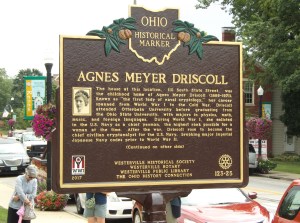
Agnes May Driscoll, née Meyer (July 24, 1889 – September 16, 1971, Leo/Athena), known by colleagues as Madame X or Miss Aggie. At first glance you might see a very timid woman in her photographs. You are suddenly caught by her eyes and this is when you realize her wisdom, strength and character. Unfortunately, Agnes is probably the most difficult woman I have chosen to write about on this blog because only one paper has been written about her and she
Beth Weinhardt
was a cryptanalyst, something I know nothing about. I am extremely grateful to
Beth Weinhardt, Local History Manager at the Westerville Library, for allowing me to spend time in their history museum reading this paper. Beth is also the writer of the “Images of America: Westerville” booklet that can be found at stores here in Ohio (but also on Amazon). This coming weekend, July 22, 2017, at 2pm, the Westerville Library will be honoring Agnes by placing a plaque outside the front of the library. The section of the library where this will be placed also happens to be the home Agnes and her family lived in until 1903. This is the time when the Anti-Saloon League purchased the property but then later sold it to the library in the 1930’s.
At the age of six years old, Agnes and her family moved to Westerville, from Illinois as her father had accepted a position at the newly opened “Otterbein College,” as a Professor of Music. Her father was Dr. Gustav Meyer, a German
Meyer family home 110 State Street.
immigrant from a town called Neustadt on Reibenberg near Hanover. Her mother, Lucy Andrews Meyer was American. The family had only three children at the time of the move to Westerville, with Agnes being the youngest but it would soon grow to a total of eight children. Dr. Meyer was also an accomplished pianist and like his father, he would share his love of music with the family. Agnes would go on to study music and become an accomplished pianist herself. Also, like her father, fluent in several languages. Dr. Meyer also ran a very strict household, demanding obedience. As you read the paper “The Neglected Giant,” 2015, by Kevin Wade Johnson of the National Security Administration (NSA), on Agnes, a deceased colleague from this agency, you begin to empathize with her personality.
Agnes was from a time before women had the right to vote. She would be 31 years old before she was able to do so for the first time. Prior to joining the U.S. Navy in 1917, she achieved degrees from both Otterbein and OSU. She received a Bachelor’s degree (listed in the paper as an A.B.) in Mathematics, Physics, Foreign Languages and Music and taught for some time. At the age of 28, in 1917, this was the first time the Navy allowed women to enlist and they were only allowed to be in clerical positions. Their view on women did not change much in her time and she was often slighted from promotions, pay raises, and dealt with heavy competition and jealousy from male peers; which caused her much distress. She was recruited as a Chief Yeoman and started with a pay of $1400/annum. This was in the middle of World War I and almost immediately she was transferred to Washington D.C. to work in the Code and Signal Section of the Director of Naval Communications.
Great Nephew Captain Victor A. Meyer, (retired USN).
Her time in the Navy started out as a short period of a couple of years. She was discharged and then went back to work as a civilian but quickly left for what seemed like a promising future in the small business world. After solving a puzzle (noted as being unsolvable), in a contest put together by Edward H. Hebern, she was asked to work at his company Hebern Electric Company, at their offices in D.C. as a Technical Advisor. This was to be a small stint as the company fell apart due to issues with finances. It would be 1924 when she returned to her post as a civilian in the Navy knowing that she was going to receive a 17.5% pay cut.
At this time she was working for Captain Laurance Safford, who was to become known as “the father of U.S. Navy Cryptology.” It was also a time when Japanese and Americans were engaged in stealing secrets from each other, known as “black-bag” jobs. Soon she would be put on the task of breaking the codes from something known as “The Red Book.” It would take her three years before she was able to accomplish this. In the meantime she was training junior officers on the art of cryptology. This is about the time when her nicknames began to be formed by the men and she would be known as Madame X or Miss Aggie.
Agnes was a very refined woman, seen by colleagues as being tall and patrician, she was only about 5’ 5” which is an average height for women today, though it was tall for a woman at that time. It is mentioned that probably because she was in a “man’s world,” she was known to “curse like a sailor.” This certainly would not fit her personality based on the way she was raised and what you can gleam from her personal life. She also wore no make-up to work as attractive women were said to be in the military to marry a sailor. She would however, go on to marry Michael “Brownie” Bernard Driscoll on August 12, 1925. Brownie, his nickname, was an Attorney for the Interstate Commerce Commission. He was known to be a sentimental person who wrote poems for his wife. Brownie and Agnes loved to travel and garden and they never had children. They were close to her family and she enjoyed analyzing her nieces and nephews when they were at play, trying to determine a deeper meaning in this. She would have made a great play therapist, no doubt. The two of them loved to enter contests and gamble and Agnes was a great chess player. Her sister Margaret Eliza Hamilton, was eight years her junior. She had enlisted in the Navy during World War I as well and would end up working with her sister in the Code and Signal Section.
By 1930 the Japanese had realized the U.S. was onto their codes and so they established a new code which would come to be known as “The Blue Book.” This lasted until 1938 and then it became “The Black Book,” in two parts. However, around 1937 Agnes was in a terrible automobile accident. The driver of the faulty car would see two fatalities. Agnes had about four people in her own car but she apparently suffered the worst. She had two broken jaws and a leg that was never properly fixed so that she suffered pain and walked with a cane the rest of her life. In the video above, you can see a photo of her with her mother and what her leg looked like. Evidently she was too afraid of the surgery, which would require re-breaking the bone and probably not as nicely as the way it would be managed today with modern technology. However, this injury was known to have changed her personality quite substantially. Though the debate from her colleagues as to whether or not this was the case varies according to favoritism. At this time, she was accomplishing a great many things for the Navy meanwhile watching her peers surpass her in pay and rank. She wasn’t too happy about this.
After the accident, it would appear she had hit her peak and upon returning from her convalescence began to go on the decline in her job. It does appear though that she would be set up to fail by her colleagues, from what was written. Around this time Pearl Harbor would be attacked, to no surprise to Agnes or to U.S. Naval Intelligence (though I found it interesting to read this). Nonetheless she would be shifted to other things at this point and was no longer involved with Japanese intelligence. She would be involved with a German naval system called Enigma, in which her work came to no avail. Partly, this had to do with the Navy refusing to work with the British who had already achieved success in decoding this system. Partly, it had taken awhile because Agnes’s methods for de-coding were behind the times and she refused to keep up with them. There were machines now to help with deciphering codes but Agnes preferred to work manually (and did so the rest of her career). It was however, her only way to find the answers that she trusted. Then she was put on a project called Coral and a colleague by the name of Frank Raven, was successful at thwarting her accomplishments by sabotaging them. He was backed by people within. Agnes at this point had enemies and her cheerleaders were losing strength as they were retiring or deceased.
In 1949, toward the end of her career, she was transferred to the newly formed Armed Forces Security Agency (AFSA). It appears that she was at this point merely patronized on the job. The officers in charge had no respect for people who did not go to war directly, so she was given tasks to keep her busy during the day. From 1952-1959 she became a consultant for the NSA (National Security Administration) that was formed by the top people in the field. Agnes was still very stubborn in the way she did her work and was using a magnifying glass to pore over pages of information that took much longer to do then the machines devised to speed up the process. She did finally retire in 1959 after her 70th birthday, though no mention of this was made in the NSA newsletter.
At the end of her life, she and Brownie continued to travel, sometimes with her mother, to New England, post-war Europe and Cuba (before Castro). Agnes was fond of collecting green stamps, which gave rewards (these were before you had cards to get discounts at stores). She and her husband kept to themselves and did not socialize much, outside of a few dinner parties. They did attend lectures on astronomy and anthropology. Her mother Lucy would go on to live to be 100 years old and died in 1964. Within the same year her husband Brownie died three days before his 74th birthday. Her family noted that she was very stoic about this but stated that this was just her nature. She was known to them as an iron-willed woman.
Her sister’s stroke in 1969, which left her unable to talk until she died in 1980, would prove to be the toughest for Agnes to take. The two of them had worked together since World War I and had been close their entire lives. Agnes shared a floor at the same nursing home and would come to her death at the age of 82, in 1971. She and her husband’s bodies are interred at Arlington National Cemetery.
The reason for there being a lack of information about Agnes is that she did not keep a diary or journal. Much of what the author was able to deduce for his paper came from military archives and journals written by her peers, which happened to mention her but gave biased details about her personality. She herself is a bit of an enigma.
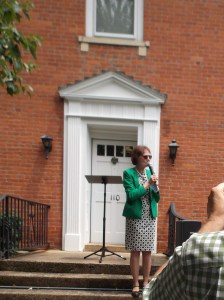
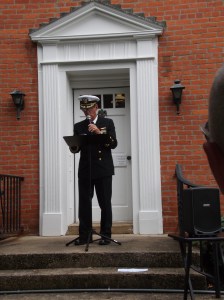
**The above (and below) photos are from the ceremony on July 22, 2017, honoring her with a plaque in front of the library (and her home).
Front of plaque.
Great Nephew Captain Meyer standing next to the plaque.
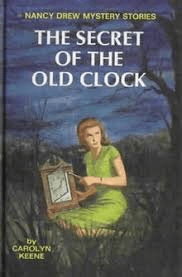
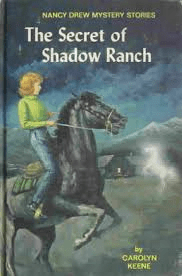
Mildred Wirt Benson (aka Carolyn Keene, Alice B. Emerson, Frances K. Judd, Joan Clark, Mildred A. Wirt, and Ann Wirt) lived 96 years (July 10, 1905 – May 28, 2002, Cancer/Hera) and wrote 79 books, including the first 23 in the Nancy Drew series. She was married twice, the first husband Asa Wirt, brought her to Cleveland and this is where the Nancy Drew series began. Several years after Asa died, she met the editor of the Toledo Blade, George Benson, where she had begun to work as a journalist.
Growing up in Ohio, the books for teens to read in the 1970’s included the Nancy Drew series. They were either a Christmas or birthday present, I don’t know which but I devoured them. This series showed an independent young woman solving mysteries. Her dad respected her. Her friends looked up to her and she was beautiful and smart. It was as if there was nothing she couldn’t do.
What I did not know is that Nancy Drew was conceived of in 1929, the outline was created by a man, Edward Stratemeyer. This was a man who made his fortunes creating “dime store” novels with ghostwriters who took on various nom de plumes that he thought up as well. Nancy Drew was first released in 1930, at the beginning of the Depression but because they sold for 50 cents apiece and even during these bleak times, people found a way to get two quarters. Entertainment was what helped people get through these dark years. It gave them hope, something to dream about. Post World War I, women were beginning to have careers, living on their own and making their own decisions (rebelling against parent’s wishes).
Mildred, was a lot like Nancy Drew. She was born and raised in Ladora, Iowa and as a young woman went right to college, in 1922, without even considering a husband. Her parents were not pushing this either. Mom might have wished she wouldn’t leave though and wrote this really touching poem to her daughter.
So now your room is silent.
The whole house seems silent too;
Every object which confronts me
Seems incomplete without you.
Yes, your silent room, it haunts me
Every garment left behind
Have memories from which bring a tear
For the loved one I cannot find.
Lillian Augustine, “Mildred’s Room.”
In college, Mildred became a member and excelled on the swim team. Having already begun to write and win contests she majored in journalism. Naturally, she joined her colleagues and became a part of what is still the top college newspaper entitled “Daily Iowan.” This newspaper was the springboard for her future success with other papers and books. Mildred’s parents respected her lifestyle, just as Carson Drew respected Nancy. Being raised by parents who respect their daughter, this lead her to find partners who looked up to her and respected her as well. Again, a lot like Ned Nickerson, Nancy Drew’s boyfriend, both nurtured her profession and supported her achievements. Mildred did other odd feats for women at the time, also like Nancy Drew. She became an accomplished pilot too but not until she was in her fifties. Like Nancy Drew she had so much energy to burn and couldn’t sit still and be idle. Whenever obstacles hit her, she got involved in a hobby or book series and threw her attention into this.
The book I read was “Missing Millie Benson,” by Julie K. Rubini (2015, Ohio University Press) which is actually written for young readers – apropos to this woman’s life. Mildred had a daughter, Peggy Wirt and Ms. Rubini mentioned they had a challenging relationship. I notice her name is not acknowledged in the credits as to one of the people providing insight and wisdom for this book. Peggy, one would guess, took a back seat to Mildred’s life. Unfortunately, as successful as Mildred was, apparently she was unsuccessful in balancing motherhood with all the other amazing feats she accomplished. I am not surprised at this. Generally when women are like this, they have no children or if they do, their children suffer in the attachment process. I have seen this time and time again in my profession. You can’t do everything without something or someone suffering.
Some of the other books that Mildred was known for writing, none of which have merited the success today that Nancy Drew has, though they were well known in their time include: Ruth Fielding and her Great Scenario, the Dana Girls series, the Penny Parker series, Kay Tracy series, Penny Nichols series and more. It is interesting to note that most of these girls lived with their father because their mother had died. Why this was the case remains a mystery because neither Edward Stratemeyer nor Mildred lost their mother’s at an early age from what I have read. Mr. Stratemeyer developed the storylines and so my only thoughts on this are that 1. Mr. Stratemeyer did not have a close relationship with his mother or 2. Felt that a mother character in these novels would get in the way of the female characters development – a girl would subsequently strengthen as a woman by losing a mother because she would have to become the mother herself. We were such a naïve society back in the days prior to the sixties when college was more prevalent for both men and women and feminism had become an epidemic. While we do continue to pay money to see regurgitated stories in American pop theater culture, I believe readers are a lot more intelligent than this and demand much more. Not only did these series not have a mother, they were all independent young women who solved mysteries and had spunky attitudes.
Carolyn Keene’s identity ended up being three women toward the end of “her” career. This was not exposed until the 1980’s when two publishers were fighting to retain the rights of the Nancy Drew series. Mildred’s fame began at this time, because after appearing in court to prove her existence and how the stories came about, people suddenly became interested in her. Unfortunately the bigger publishing house won and as is typical in our society, instead of creating a new storyline they have turned Nancy Drew into a website and I suppose an “app” and re-did the stories to appeal to today’s culture. Nonetheless, the Nancy Drew series from the 1970’s can be found in many antique stores here in Ohio that I have been too. I haven’t purchased the set yet but I do intend to so that hopefully my granddaughter will be a fan of the story as well. I’d prefer she reads the original story rather than the modern version because I think it is more important to read it as it was written.
Of course I did watch the actress Pamela Sue Martin, in the TV series from 1977-1979 and the only reason I watched the Hardy Boys is that I was a great fan of Shaun Cassidy back then. From reading the book, I learned that the earliest version of Nancy Drew in the film world was in 1939 (both parts available on YouTube). As I look over this post, I wonder if I am writing about Mildred Wirt Benson or Nancy Drew. How can we possibly think of an artist without seeing their creations in our head?
My first time to hear the name Maria Callas was in a movie about her life. This was called “Callas Forever,” (2002) starring Fanny Ardant and Jeremy Irons. I was intrigued with the personality and captivated by her voice (which was dubbed in). At this point she was long passed (1977 in Paris, France) and there was no chance of seeing her in concert. I began to immerse myself in everything I could find about her. Documentary, video clips of her singing, and I read Arianna Huffington’s book “Maria Callas: The Woman Behind the Legend,” which also came out in 2002. The funny thing is; I don’t really like opera. When I was reading Ms. Huffington’s book, I kept wondering what an aria was. Somehow I missed the part where she had explained that this is what you call an operatic solo.
I have since attended a couple of operas and I have tried listening to other sopranos but I just don’t get the same feelings as I do when I listen to Ms. Callas. It is hard to explain. It seems to be that I am in love with the person, not the genre and the passionate way she projects herself. I get the same feelings when I listen to a gypsy violin, especially when it is played to sound like a bird singing. This is when the violin is transformed to become another entity as if it is shapeshifting. I like other instruments (except the flute) and I appreciate other violinists but not quite as much as a gypsy violin player.
Her story is rather romantic. Father leaves, mother pushing her daughter to sing from the age of three, her great love marries Jacqueline Kennedy. What is also sad is the bracelet that Aristotle Onassis gave to I believe four women, including Ms. Callas and Kennedy, which all said the same thing and looked the same as well. This did not make me think too highly of him as a partner. At the end of Ms. Callas’s life, she died alone. Perhaps her life could become an opera on its own.
My favorite fairy tale moment (though it is said to be true), in Ms. Huffington’s book was a time when Ms. Callas had been practicing on the terrace of her mother’s home. Suddenly a man’s voice could be heard, with an equally gifted sound, singing from behind a hedge or was it a tree in the distance. Evidently she never did meet this person but the singing took place a few times and with a particular song which I do not recall.
When I was a young girl, my best friend used to play classical music records at the highest volume so that they could permeate our environment and I was forced to immerse myself in a genre that, at that time, I did not appreciate. Most kids our age were doing this with head banging music, which neither of us liked. Now, I find myself doing this with Ms. Callas’s music. If it is not loud one cannot hear it upstairs while on the computer.
One documentary that I saw, Maria Callas: The Callas Conversations, had interviews with various journalists. In order to sing opera, one has to become something of a linguist and she spoke quite a few languages besides her native Greek dialect. One can learn so much about the art of speaking a language by watching Ms. Callas talk. When she was speaking to a British journalist in English, she was in a very conservative room and she was more subdued or composed in her body language. A lot like my grandma used to say “Sit up straight, legs crossed, hands folded in the lap like a lady.” She even spoke with a British accent (and an American one with another interview on YouTube here in the US). When she was speaking to an French journalist, the room had a more dramatic look to it and suddenly her command of this language was accentuated with hand gestures and a stronger voice. This is quite a talent to envy.
From what I understand, she was a difficult woman to deal with. At the same time, one can imagine that because her life was a never ending drama, it must have been hard to leave the stage. Today, we talk about famous women being divas. All the same, when I hear this, I wonder how appropriate it is for the person, or shall I say are they just doing it on purpose. There are also famous women who aren’t divas, including great singers. When we make a word out to be a given, it loses its luster. It is taken advantage of.
If you haven’t had a chance to immerse yourself in the aria’s of Ms. Callas, make it a point to do so. She had a lot of critics, just as most famous people do and so it might not be to your liking. If you are not a fan of opera, you might find yourself opening up to a new sound in your home.
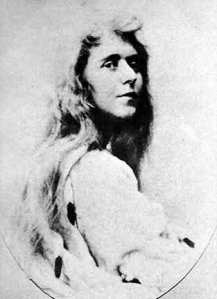
Ms. Barney (October 31, 1876 to February 2, 1972, Aphrodite/Scorpio) only lived in Ohio, where she was born for 10 years. However, I assume because her parents were both born and raised in Ohio, she is accepted on the roster of notable women from Ohio (on Wikipedia). There is also a historical marker where she was born in Dayton. Her heart and where she spent the majority of her life as a famous salonist was in Paris.
One must become idle to become oneself. Natalie Clifford Barney
I developed a love/hate relationship with Ms. Barney and trying to read 368 pages of Suzanne Rodriguez’s book “Wild Heart,” (2002) took me a couple of months. Ms. Barney is famous for saying “I am a lesbian. One needn’t hide it nor boast of it.” I have a great deal of respect for this sentence because I think the way our world is today is quite hedonistic and part of why we are in such turmoil as a whole. Ms. Barney would probably agree with me. She was a society lady, raised in wealth, appreciating high fashion and having exceptional taste. What I did not like about her is that she was a snob and if she were a man we would say she was a player. Friends, who spoke to the writer of this book described her as a very giving and generous woman. These were not her liaisons that made these observations. They documented much more painful and passionate thoughts as to her character. A player is a person who will use the word “love” sparingly and in her case as sonnets to continue playing with her web of intrigue and manipulation. A player loves the chase, like a cat to a mouse and once caught, will carry it around in their mouth until they are ready to spit it out. Natalie was known to have said “When you want to make someone crazy, you must not give in.” If she had been a poor woman, it is doubtful she would have had half of her success with friends, though she would not have been a snob.
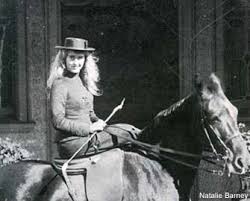
Natalie Clifford Barney
Ms. Barney was a writer, though what I have seen thus far (very little is translated) is not quite to the level as many of her counterparts, many who were her lovers. Her salon in Paris on 20 Rue Jacob, was her child, a place where she helped create futures for young writers from the 1920’s to 1972 when she died. Some of the people who were known to be in her circle, such as Pauline Tarn (aka Renée Vivien ) the courtesan Liane de Pougy, Lucie Delarue-Mardrus, and Lily Gramont (the Duchesse de Clermont-Tonnerre). There were also very famous people (that we know today still, the others were famous then) who made their way to her “Fridays” and these were James Joyce, Edna St. Vincent Millay, Max Jacob, F. Scott Fitzgerald, Gertrude Stein, Mata Hari (entertainment), Isabelle Duncan (entertainment), Antole France, Romaine Brooks and Jean Chalon.
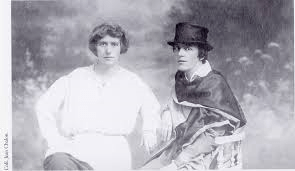
Natalie and Romaine
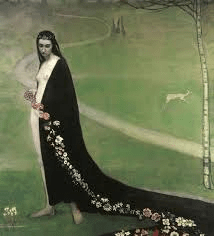
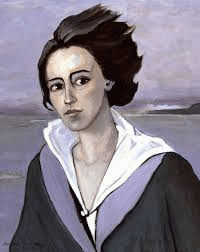
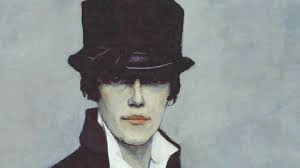
Her longest relationship was with the painter Romaine Brooks, who is now being brought back to life by many art historians. I did find myself captivated by her work when I looked at copies online. I wonder if Coco Chanel would have been intrigued as well, since they might have known each other then. Her work is black and white paintings with what is said to be incredible insight, on her part, in capturing someone’s psyche. What is odd is that they met in 1914 and it wasn’t until their mid 90’s, right before both of them died that Romaine ended the relationship for good. Of course this had to do with her mental condition that she was in at this time. My guess, from reading, is that she probably had some form of dementia. However, due to her early abusive upbringing, she had always been a bit of an eccentric and had very low self-esteem. I felt sad for Ms. Brooks because Ms. Barney was never faithful to her. I can imagine what this must have been like for her. Ms. Brooks was a survivor in some respects though. She would live elsewhere or travel abroad whenever Natalie was chasing after another skirt. Sometimes she had other liaisons herself.
Self-portrait by Romaine Brooks
In her younger days, Ms. Barney was a horsewoman, known for her athletic abilities. What is fascinating when you read this book is reading descriptions of her pursuits of other women or networking with locals, on horseback through the streets of Paris. I found myself caught up in visualizing what this might have been like, though I have seen many period pieces that have shown this. What is funny about this book is that one might think every famous woman in Paris was a lesbian, considering her exploits. What I began to gather though, is that at this time women she chased, who were well-bred ladies like herself (for the most part) and many of them married, only knew what they were allowed to behave like with a man. Natalie introduced them to newer, more promiscuous and perhaps sometimes even safer ways to be able to express oneself. Most women at that time were more comfortable with other women. I have read in other historical books that lesbian type behaviors were actually acceptable in women’s schools and colleges. It kept them from focusing on boys but was considered natural behaviors too. Once they married it was meant to end of course and they were meant to behave in a manner fitting a betrothed spouse. With Natalie’s lovers, sometimes this happened; sometimes they continued the affair and on occasion a ménage-a-tois.
Ms. Barney’s salons were famous because of her extroverted behavior, the wonderful delicacies that she served, her choice of entertainment but also her rules. The rules had to do with not cursing, behaving appropriately (not being a jerk) and if she didn’t like you, then you weren’t allowed to come back. Agents and publishers would approach her about bringing around what they hoped would be a protégé. On one occasion Natalie invited Emmeline Pankhurst; to discuss women’s suffrage in her parlor. She listened intently but in the end was disturbed by the way their discussions and ideals turned into petty arguments. She decided at that point on not to use her salon as a political venue. This is something I could applaud her for as well. While these ladies did so much for their countries, in getting the right to vote, their behaviors kept this from happening sooner (see my article on Victoria Woodhull).
In 1927, Natalie created Académie des Femmes as a reaction to the discrimination against women in Académie Française (a group recognizing writers, but only allowing men to join). While her group did not last very long, it did bring attention to women writers. It wasn’t until 1980 when Académie Française would admit the first woman.
The last salon would occur at the cemetery on February 4, 1972 when 23 friends came to honor the passing of Ms. Barney. They realized it happened to be a Friday which was fitting this great lady and her famous salons. Ms. Barney and her sister Laura were buried together. Laura was famous for her translations in the Baha’i faith. Natalie had known that the Van Gogh brothers were buried together and thought it was ridiculous that all the marker said was “Here Lies.” As a result, Natalie prepared her own tribute which says “I am this legendary being [Amazon] in which I will live again.” Her nickname, given to her by the writer Rémy de Gourmont, after they met was “The Amazon.”
A Frequent Blog of Devotionals Inspired by A Course in Miracles, A Course of Love, The Way of Mastery, Choose Only Love--Plus More . . . with Celia Hales - https://www.amazon.com/author/celiahales
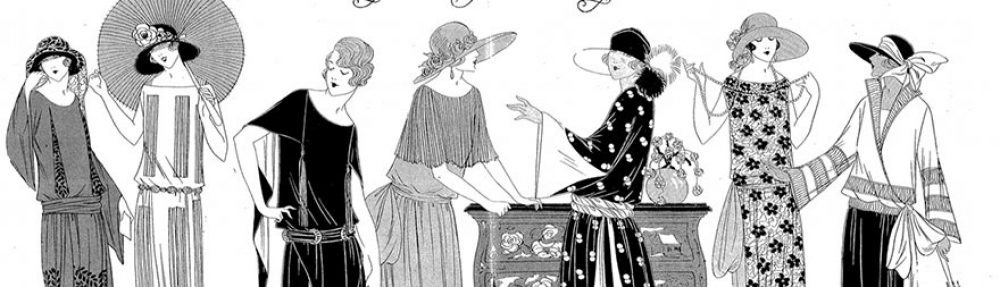

 A French Village is set in German occupied France, World War II. We are being shown local townspeople being forced to make choices to survive. It is romantic, because there is always love when you are in a traumatic situation. It is not biased and so you see bad Germans and bad French. What is amazing is that the most important thing that you see is people at war. As you watch it, you have to try not to view this from the lens of an educated person who obviously knows what happened during WWII. You must try to behave as ignorantly as the characters are to have an ability to appreciate their choices and empathize with them. Some people you don’t empathize with such as the character Heinrich Müller, who enjoys putting cigarettes out on people. Including the one he loved.





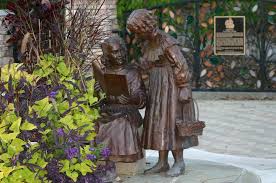

 Lovely sculptures inhabit the property, none of which were probably there when the sisters lived there. One is a sculpture of the two of them as teens in the “Sisters Garden” which is meant to look like a miniature farm. The art piece which struck me the oddest was Sky Woman on a turtle. I believe there is a Native American story behind this as the woman appears to be of this background. There is an Iroquois story book you can get online called “Sky Woman and the Big Turtle.” The tribe was once found along the St. Lawrence River in New York. Perhaps the sculpture was based on this story (I didn’t find a reference to it at the park). I would love to get a smaller version of it though as it is very beautiful and unique. I am sure my friends in the Sand Play Therapists world could have a day discussing this.









 I have since attended a couple of operas and I have tried listening to other sopranos but I just don’t get the same feelings as I do when I listen to Ms. Callas. It is hard to explain. It seems to be that I am in love with the person, not the genre and the passionate way she projects herself. I get the same feelings when I listen to a gypsy violin, especially when it is played to sound like a bird singing. This is when the violin is transformed to become another entity as if it is shapeshifting. I like other instruments (except the flute) and I appreciate other violinists but not quite as much as a gypsy violin player.
 When I was a young girl, my best friend used to play classical music records at the highest volume so that they could permeate our environment and I was forced to immerse myself in a genre that, at that time, I did not appreciate. Most kids our age were doing this with head banging music, which neither of us liked. Now, I find myself doing this with Ms. Callas’s music. If it is not loud one cannot hear it upstairs while on the computer.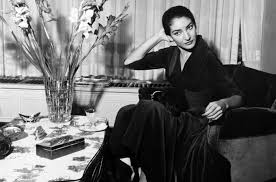

 the streets of Paris. I found myself caught up in visualizing what this might have been like, though I have seen many period pieces that have shown this. What is funny about this book is that one might think every famous woman in Paris was a lesbian, considering her exploits. What I began to gather though, is that at this time women she chased, who were well-bred ladies like herself (for the most part) and many of them married, only knew what they were allowed to behave like with a man. Natalie introduced them to newer, more promiscuous and perhaps sometimes even safer ways to be able to express oneself. Most women at that time were more comfortable with other women. I have read in other historical books that lesbian type behaviors were actually acceptable in women’s schools and colleges. It kept them from focusing on boys but was considered natural behaviors too. Once they married it was meant to end of course and they were meant to behave in a manner fitting a betrothed spouse. With Natalie’s lovers, sometimes this happened; sometimes they continued the affair and on occasion a ménage-a-tois.
 Jeannine Vegh