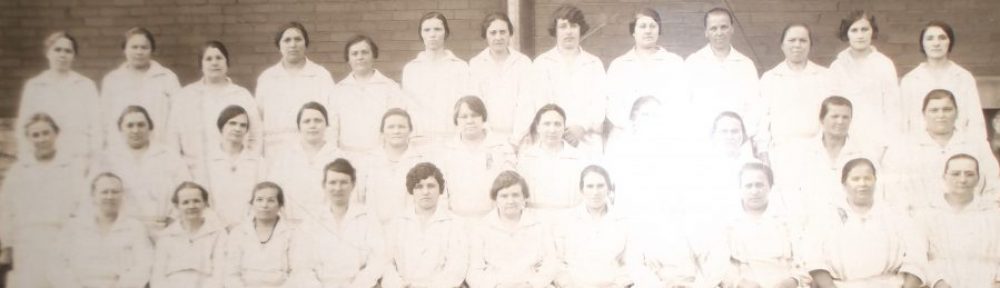

Honor the Ladies!

I felt it was important to put something together, as a memorial for women in Ohio’s history. I have been working on this for the last couple of months and then met up with a graphics artist that I was referred to. Samantha Vickers is in Cleveland and runs a company called Intentions Studio Design. We spoke on the phone and I explained how I wanted the emblem to look. I wanted something that would be formal and elegant as this was the style in our history when these women would have been around. It was important to get a design that these women would be proud of. She had it in one take and I was really surprised. You never really know if you are explaining yourself correctly until you see the finished product.

The women on this design have all passed. They are not ALL of the women in history in Ohio because you wouldn’t have been able to read the names if we did this. These are not even ALL of the women who have passed. This sample is based on women that I have written about or are preparing to do so. The names that are highlighted are women were “First” to achieve in the state of Ohio or wherever they became famous. The women that are considered for an Ohio Women’s History list are women who were either born in Ohio or those who made history here. For example, Mildred Wirt Benson (aka Carolyn Keene) was born in Ladora, Iowa and grew up there until she graduated college. When she came to Ohio, she began to write and eventually penned the “Nancy Drew Series,” or at least the majority of the stories. There are other women, like Natalie Clifford Barney who born here and lived here only 10 years. However, she went to boarding school in France and eventually stayed in Paris and ran a “Salon,” which was an intellectual gathering place for forty years. (She is not on the emblem but written about here on my blogposts).

If you click on Women’s History Store, above, you will see this emblem featured on products for men, women, youth and toddlers. This online store is based in Ohio. When you click on the products in the store, it will take you to the “EnlightenedGal” store that I created and this is through the manufacturer (CustomizedGirl). Whatever you purchase, Ohio Women’s History gets a commission from this. This is going to be set aside to pay for setting up Ohio Women’s History Project. This will be a non-profit geared toward educating and bringing awareness to our young people but also to adults. I have already given a lecture for the Westerville Kiwanis on four of the women in Ohio’s History. I would like to have contests for students, that we can feature here on the blog and will be an assignment for their history classes (If you are a teacher, please get in contact with me at ladyjatbay @ gmail.com to discuss). My way of educating will be focused on writing and lectures. The direction of this business will be based on what funds are able to be collected from the sales of these shirts in the store here.

Thank you for taking the time to peruse Ohiowomenshistory.com. Feel free to contact me about contributing an article or telling me a story about an Ohio Women in your history. They don’t need to be famous, just a remarkable person who transformed the people around her.

Jeannine Vegh, Founder of Ohio Women’s History Project

Jerrie Mock – Newark, Ohio

(November 22, 1925 – September 30, 2014: Sagittarius/Artemis)

Forget Amelia Earhart, who was the first woman to fly solo across the ocean, Jerrie Mock was the first woman to fly solo AROUND THE WORLD! Yet no one really knows about her, save for flying enthusiasts. In fact, I wonder if we would even know about Amelia, had she not died in mysterious circumstances and become a legend.  And as the author Nancy Roe Pimm points out, in the book “The Jerrie Mock Story,” when Jerrie made this harrowing journey, fraught with many obstacles along the way, too many other important events overshadowed a first for women. Would this have happened in today’s society? Probably not. Women who were the first to do things in the past, were heroines but it was not quite as fascinating then as it is now. Books were rarely written about them and when they were, they faded into the back of the shelf, until now, when so many women are trying to dust off their jackets or create them from scratch.

Nancy’s book did justice to Jerrie’s flight because she really makes it exciting for a person to read and feel that they are a part of the journey. While it is a biography for young readers, I didn’t get the sense that it was for a kid. I mean I didn’t feel like one reading it. It actually reminds me a little bit of a Nancy Drew story, except the heroine isn’t fictional and there is no mystery, just a lot of complications which create suspense. The latter is what captivated me about Jerrie’s story. I had to keep telling myself “She makes it, don’t worry.” I was able to read the story in one day which is the nice thing about a 113 page book for young readers. It reads like a short story. Nancy also puts little snippets of information in the book, right when Jerrie is in that part of the world, so you can learn additional information. I had no idea that there were once seven wonders of the “Ancient World.” Only one is still in existence. I knew there was “seven wonders of the world,” but not an ancient world. She also provides a timeline at the end of the book, which is helpful for someone wanting to write a blog article and not wanting to search through the book all over again for dates.

It is also interesting because Nancy wasn’t shy about telling us about the disgruntled relationship between Jerrie and her husband Russ. You can imagine that whenever a woman is in the limelight, it is going to frustrate their partnership on some level, especially in 1964. I wondered where this was going and the author was careful with this by noting that while Jerrie was upset, she pointed out that she also missed her husband. I can empathize with the situation. If it weren’t for Russ pushing Jerrie and remaining focused on her journey, she might not have been the first woman to fly solo around the world. Many times when people are on a long trek to become a first at something, they often have coaches to keep them on track. This generally causes a lot of friction. While I have never been a pilot, I have ridden up to sixty miles on a bike and with a lot of people. I know how you can get upset with your coach when you are tired, cranky, hungry, physically exhausted; naturally you want to slap them sometimes. It can be a testimony of a really good relationship when it can withstand such pressures as she went through like this with her husband. When I looked at the timeline in the back of the book however, Jerrie and Russ would end up divorcing fifteen years later. Since her daughter would have been around 18 years old at that time, she obviously waited until all her children were adults, which was the “right” thing to do at that time.

Her husband Russ was apparently more competitive about this journey than Jerrie. As you read the story, you find that Jerrie would have liked to have spent a lot more time in some of the places where she landed. It was her first time to be around the world (which also makes this solo flight all the more spectacular in that she didn’t practice) and she really wanted to take in a lot more scenery than she was able to. Had Russ not pushed her, she may not have won the race. I have not mentioned before but at the same time she was in the air, a woman from California was also doing the same thing. She was Joan Merriam Smith who was 27 years old to Jerrie’s 39. Joan was taking the exact same flight that Amelia Earhart took and she did succeed but only returned to California a few days after Jerrie. Unfortunately, Joan died in an airplane crash one year later.

So what kind of obstacles did our heroine endure? At the onset of her flight, just as she went into the air from Port Columbus, she hears the traffic controller state that this will be the last we ever hear of her. What a terrible thing for him to say but thank goodness, she had a strong constitution and didn’t let this sway her. If that weren’t bad enough, every leg of the journey, some idiot journalist was asking her stupid questions about Amelia Earhart – even wondering if she were afraid she would die too. Just like today, the poor woman had to suffer the endless throngs of insensitive reporters who have never learned tact and decency among celebrities. In Cairo, she was stalled by a ticket agent who didn’t believe she had her own plane and wouldn’t let her through. Naturally, this would be straightened out after a couple of phone calls.

The technical issues began immediately. First there was a radio transmission failure as well as brakes that didn’t work. Unfortunately, it sounds as if the latter were probably sabotaged. I thought it was quite funny to realize that the radio transmission for long distance was a cable of 100’ which Jerrie had to drop from the plane, allowing it to hang, in order for it to work. Another obstacle was assuming she was landing in Cairo, and as her wheels touched the ground she was greeted by the military who weren’t too excited to see her. This was because she flew into a secret Air Force base accidentally.  Mid-way over the South China Sea; there was the smell of gas. This required switching gas lines and it sounded like turning the engine off for a bit, which was a very risky undertaking. I kept wondering why things kept going wrong, though I also realized this was 1964 and planes were different than.

The nice thing about every stop along her journey was how wonderfully she was treated in each of the countries she would land in. I was the most surprised about this as I couldn’t imagine this going so well in today’s difficult world. Of course, each stop included ambassadors, statesmen, people who had been alerted long before she left home and who had already approved her stop over. Her journey was charted out by a retired military general and between him and the other people, including her husband, who were anxious to have a successful voyage; the trip seemed as if it was meant to be.

The funny thing about choosing to write about Jerrie for this blog is that I am afraid of flying. It is no accident that I purchased this book, well over a year ago, while meeting the author at Ohioana book festival. I had put off reading it because I was afraid I would be sick as I usually am when I am anywhere near an airport. I haven’t even flown since 9/11, which I never make a secret about, though I began getting sick on flights way before that. Fortunately, as I read this book, I felt very calmed by her spirit, which I felt was captured in this book. It reminds me of a couple of flights I have been on in the past, where the pilot was very re-assuring and as a result made the journey very enjoyable. I know if I had been in Jerrie’s shoes, hearing all that stuff about Amelia Earhart would have grounded me for sure. I would have panicked and seen it as an omen – that the topic kept being brought up. That kind of negative talk can cause many people to self-sabotage but Jerrie Mock was undeterred because she was that kind of woman. She was strong, brave, and yet modest and confident. Unlike Amelia, she didn’t have that egotistical side to her nature. While she relished the limelight, she wasn’t caught up in it. I don’t see this as a coincidence. Jerrie was very careful along this journey and did not take any risks with weather. She trusted her instincts, which is pointed out a couple of times in the book. On one such occasion, pre-solo flight, the trip she turned down with other pilots ended in a disaster.

What I see that appears to compare quite frequently with the Ohio women that I write about, is the spiritual side of their natures. When I think of all the women I have read about, from around the world, until I took on the task of writing about the Ohio Women’s History, I didn’t even think about the spiritual component as I read their stories. Yet, time and time again, I continue to read and to have the sense that the Gods were working in sync with them. Perhaps it is our culture, here in Ohio, or the authors of the books or a little of both. Grandma Gatewood, Jerrie Mock, Sarah Worthington, and others, I feel as if their journey was guided by a higher power. Was it them or were they chosen to do what they did?


Post-script: There are plenty of YouTube videos about Jerrie Mock and even another book that I learned about while watching a video. “Three-Eight Charlie,” was written by Jerrie Mock and more recently was enhanced as a special 50th anniversary commemorative edition. The newer version is thanks to graphic designer Wendy Hollinger and artist Dale Radcliff who along with publishers Phoenix Graphix included maps, weather charts and additional photos.

I am including this video below which is an interview with Jerrie Mock by Carol Ann Garratt for Women of Aviation Week 2014. Jerrie died later that year on September 30th in her home in Florida; at the age of 89. She was survived only by her daughter Valerie, the last of her three children (I assume there were grandchildren as well but I am thinking of those who were alive when she took this voyage).

Sophia Loren – Yesterday, Today and Tomorrow

This book is one you don’t devour. You take your time, stirring, simmering and seasoning as if you are making a pot of soup or stew. Sophia is a Virgo, which is most of my astrological chart, except the first dominant three. I sensed a grounded woman almost immediately. A person who has taken her time and made the right choices; which led her down a path that would make her a very happy woman. As a Leo, who has made all the wrong choices, very impatiently and innocently, when you have done these things, only then can you truly appreciate someone who is smarter than you. Patience really is a virtue.

Continue reading

Alaine Polcz – Hungarian Writer and Psychologist

In her book, “A Wartime Memoir: Hungary 1944-1945,”Alaine tells about a life changing year that instead of being her downfall, became her life’s purpose. Sitting ducks with a changing guard, from Russian to German on an on-going, what seemed like a never ending basis, she travels from Transylvania (then hoping to remain with Hungary) to Csákvár, in Hungary and back again. In the end, you can imagine the frustration in knowing, if she had never left, her life would have remained simple an innocent.

What is beautiful about this book is that she is not talking like a psychologist but instead, goes back in her mind to re-live painfully traumatic experiences at the age of 19, as if she were that age once more. As a psychotherapist myself, I get the sense that she probably never went through her own course of treatment. This is because she continues to repeat over and over “I do not remember…” This is typical of a sexual abuse survivor or someone who was horribly traumatized at a young age and blocks the exact details of the trauma from their mind, for their own “assumed” well-being. Ironic, as she was a psychologist yet even today, people in this profession are closed off to doing their own work. It is important so that they can properly support others without transferring their own pain onto the client or confusing the client’s story with their own. I am not condemning her though because this was more typical of this time period. I grew up with Hungarians (refugees from the revolution), none of whom went into therapy and all of whom went through some of their own harrowing ordeals. Not least of which was fleeing their beloved homeland.

Alaine was born in Kolozsvár, when it was part of the Austro-Hungarian Empire (at this time known as the city of Cluj-Napoca). Now it is Romania and it was in 1944-1945 as well. This was a time of unrest between the Romanians and Hungarians, power struggles on the Romanian part that included violence and discrimination against the Hungarians who lived there. Alaine’s father gave her this male name because of two reasons. One, he did not know French and so unaware that it was a man’s name but Two, his only purpose was finding a name that was not able to be translated into Romanian.

At the onset of 1944, Alaine, at 19, was married to her childhood sweetheart János. Within a few months into their honeymoon period, he gives her gonorrhea. Amazingly, but not surprisingly, it is at this point when he detaches from her and begins to be an emotionally abusive husband. She has the luck of being a strong woman, though terribly naïve. His mother, Mami, happens to work for the Esterházy family, who are of noble origins. It is here that they will go to live and because of him that she follows the family as they escape into Hungary to live and work at another estate, which will be the beginning of the end of Alaine’s life as she knows it. In Csákvar, what seems to bring some peace and safety for a short time, ends up being the front lines, which means constant harassment or torture from either the Germans or the Russians. For women, as with all wars, she and other villagers will be gang raped on what appears to be a daily basis, and at this time, she is under the impression that her husband was executed. The most impressive lines that she writes of her first account of abuse goes like this:

He put the photograph [of she and her husband] on the nightstand and laid me down on the bed. I was afraid he would not give me the picture. When he was done, he took the picture into his hand and showed it to me again…

When she writes, she is not writing like a writer in this book.  She states facts, over and over. There are no pictures drawn and yet there is a story being told. Fuzzy memories are re-told and sometimes they are not even in order, so you have to re-read to catch yourself. It is as if you are sitting with her and she is telling you a story. When I got to the line “When he was done,” it came at me so quickly; I had to read it a few times to let it register. “Oh, okay,” I thought, this is how she is protecting herself and the audience. Even though she is not talking like a psychologist, she is consciously protecting throughout the book.

At some point, days, maybe a month or so later, she is escorted to a cellar, with 79 other Hungarians, who are doing their best to survive. They will go through days or months (you are never sure of the timeline but the book is only one year), of not bathing, very little food and at one point no water, ritual defecating and urinating (they can only go outside to do this during the 10 minutes of ceasefire which occurs daily at the same time), as well as lice and natural body odors. She is only with Mami and her dachshund “Filike,” who she holds at her breast, under a coat which no one notices until the end of her time there.

Alaine does spend a lot of time talking about blood and guts and waste, more than any other writer I have seen when it comes to war zones. One does wonder how people use the toilet during these times. When she mentions herself running away from a gang rape sequence, she talks about running through the snow with a slip on and blood being caked on her body and in her panties. She mentions being in the cellar when she pulls her shirt away from her body and a woman notices the skin of a sore coming with it. She is telling us about how you just keep going, no matter what, becoming oblivious to your own vanity.

The war is at the end, in 1945, when this part of her story comes to a close. She returns to Budapest, still without her husband, to be reunited with family; who will then return to Kolozsvár. She is saved from being labeled a whore, as most women will be in this time period, because her family are good people and she finally denies what happened. By this time the gonorrhea and the life conditions she has just endured have taken its toll on her body. She is hospitalized for some time before she will recover and get some of her life back. The irony is that she will never be able to bear a child and this was the fault of her own husband. The sardonic twist is the realization that all those Russian soldiers had went home to their wives passing on her venereal disease to them.

She and János will part ways and soon she will meet her second husband Miklós Mészöly, who went on to become a famous Hungarian writer. Alaine will go on to become the founder of the first children’s hospice program and win two different awards. She receives the Tibor Déry Award in 1992 (for this book, which was written in 1991) and The Middle Cross of the Order of Merit of the Republic of Hungary in 2001. Alaine’s husband dies in 2001 and she will pass six years later.

Post-Script: What is horribly frustrating about the book is the writing and translation. Albert Tezla is the translator and having read a great number of translated books from several different countries, this is pathetic. You would almost think he didn’t speak English because the sentences come across as broken and unedited. I believe he is translating word for word, rather than trying to put it together in some organized fashion. It is also possible that Alaine was never edited since Albert was not either. I think this is embarrassing to both the writer and the country itself. While I am not a prolific writer myself and certainly need to be edited, I am self-published and have no professional acclaim to add to my repertoire.  I was disappointed to say the least. However, this story, edited or not, annoying with the redundancy or not, needed to be told. What I have noticed when I find anything about women in history, this is so often the case. It is sad because I can’t recall any time when I have seen the same about men.

#METOO feels Self-Serving to Me

Back in the mid-80’s, I lived and worked in LA and was trying to get into modeling. I was not naïve to the “casting couch” as I had read the non-fiction “Hollywood Babylon” (published in 1959) as a teenager and knew this was a dirty world. My last time to try and make a go of it was with an agency looking for older models (I was 26-ish by then). They were off of Laurel Canyon and Ventura Blvd. It was in a building across from the famous newsstand which may or may not exist anymore (do people still buy trade magazines and newspapers?). The guy who ran this agency worked with his wife, a beautiful Swedish/Norwegian looking blonde lady who was very pregnant with their first child. He took me and another younger woman to Malibu and we spent the day doing photos for our portfolios. We were in bathing suits and had to endure two Mexican men ogling us from over the side of a cliff we were under. We also had to endure this man/photographer telling us about his days with Playgirl magazine (when he was a model) and the size of his male part and how great he was.

Continue reading

Abhorrent – the new # in Holywood

Holier than thou Hollywood continues to gain power over our society with their extreme left thinking to over compensate for their anger at the right. Hypocritically speaking out about tolerance and freedom of speech and then firing someone for just that. It is okay for Samantha Bee to disrespect a president’s daughter and call her a F-cking C-nt and for Kathy Griffin to want to decapitate a world leader, or for Joy Behar to trash Christians. All “comedians” but when a well-known, controversial, funny woman Roseanne Barr says something she is fired from her own TV show. Let’s look back at a couple of her more interesting quotes:

Continue reading

The Honorable Maude C. Waitt – Lakewood, Ohio

Biographical Database of NAWSA Suffragists, 1890–1920
Biography of Maude C. Waitt, b.1878-d.1935

By Jeannine Vegh, M.A., I.M.F.T. Psychotherapist and Author
jkvegh.com and ohiowomenshistory.com

Women’s City Club of Cleveland, Citizen’s League of Cleveland, Women’s Civic League of Lakewood, Ohio Women’s Suffrage Association, Western Reserve Chapter of the Daughters of the American Revolution, Ladies of the G.A.R., City Council of Lakewood, Lakewood Republican Club and Ohio General Assembly – State Senate

Maude Edith Comstock was born on August 11, 1878 in Middlebury, VT. Her parents were Orvis Foster Comstock and Mary Severence (née Hickey). She was the last of seven children but only three survived into adulthood. She met and later married Walter Gustavus Waitt on June 25, 1903 in Melrose, MA. They had a daughter, Doris Ida who was born on March 7, 1909 (died 1995) after moving to Ohio. Doris would go on to wed a year after her mother died and does not appear to have had any children.  Prior to marriage Maude taught in Vermont and then Massachusetts before becoming a principal at a grammar school there. Mr. and Mrs. Waitt would stay married until her death on December 13, 1935.

In 1914, Maude and her husband, moved to Lakewood, Ohio, where suffrage had been on the ballot for the second time in the state and failed. Two years prior, the Ohio Constitution had allowed cities the right to frame their own suffrage charters and create municipal offices. Then, three years after the couple had moved to the area, Lakewood passed municipal suffrage, which allowed women in the district to vote on municipal issues. This passed with the support of Maude, C.E. Kendall, and Bernice Pyke. At the same time, Maude organized citizenship classes to enable new voters from the immigrant pool.

In 1918, she became the Chair of the Lakewood Women’s Suffrage party. She urged women to “do our part in making the world safe for democracy.”  In this position, she sold $800,000 worth of Liberty bonds for the fourth drive. As a result, the Lakewood Press, on October 18, 1918 stated “They [Lakewood Women’s Suffrage party] have demonstrated their capacity to measure up to every obligation of full-fledged citizenship. Only a narrow minded man in this day of wonderful emancipation would seek to deny women the right to National Suffrage.” The article went on to exclaim “here’s to the ladies; once our superiors, now our equals.”

In 1920, Ohio was the fifth state to ratify the nineteenth federal amendment to the constitution. In 1921, Maude was elected to the City Council of Lakewood. One year later, she would resign as she was now one of the first of six women elected to the Ohio General Assembly in the State Senate. Maude was the first woman for the twenty-fifth Senatorial District. She held the title of the Honorable Mrs. Waitt. She would be re-elected in 1926 and 1930 for a four year term limit. During her three terms she sat on the following Senate committees and was the Chair for three of these: 1. Benevolent Institutions (Chair); 2. Prison and Prison Reforms (Chair); 3. Library (Chair); 4. Public Health; 5. Commercial Corporations; and 6. Soldiers and Sailors Orphan’s Home. She also introduced three bills SB 130, SB 138 and SB 252, and these were all signed into law. The first bill, SB 130 dealt with the sale and conveyance of portions of the Cleveland State Hospital. The second bill, SB 138, allowed the state medical board to appoint visiting teachers for recognized schools of nursing. The last bill SB 252 required schools to prevent sudden cardiac arrest (this is now known as Lindsay’s Law).

After a long illness, Maude passed on December 13, 1935 in Lakewood, Ohio. She was fifty-seven years old.

Sources:

“Hulbert Family Tree”. Ancestry, search.ancestry.com/.

Coates, William R. “Biography of Mrs. Maude C. Waitt.” A History of Cuyahoga County and the City of Cleveland, The American Historical Society, Chicago and New York, 1924.

Online Biographies, The American Historical Society, Chicago and New York 1924, http://www.onlinebiographies.info/oh/cuya/wait-mc.htm.

“Ladies Gallery.” The Ohio Statehouse, edited by Ohio Women’s Policy and Research Commission, http://www.ohiostatehouse.org/museum/ladies-gallery?3.

 A card advertising Ms. Waitt’s run for State Senate. A Service of Ohio’s Public Broadcasting Stations. Ohio Ladies Gallery. The Ohio Channel, http://www.ohiochannel.org/video/e-elect-maude-c-waitt.

A Dream and What Became of It. A Service of Ohio’s Public Broadcasting Stations. Lakewood Press 1/1/1921. The Ohio Channel, http://www.ohiochannel.org/video/a-dream-and-what-came-of-it.

The following resources were courtesy of: The Lakewood Historical Society, est. 1952, Jessamyn Yenni, M.A., Curator

Borchert, Jim, and Susan Borchert. Lakewood the First 100 Years. Norfolk, VA, Donning County, 1989.

Butler, Margaret Manor. The Lakewood Story. New York, NY, Stratford House, 1949.

Allen, Florence E., and Mary Welles, compilers. The Ohio Women’s Suffrage Movement: A Certain Unalienable Right. USA, 1952.

“Editorial.” Lakewood Press [Lakewood], 18 Oct. 1918.

League of Women Voters of Lakewood 1922-1967: A Glimpse at the First Forty-five Years. Lakewood, 1968.

Abbott, Virginia Clark, compiler. The History of Women’s Suffrage and League of Women’s Voters in Cuyahoga County, 1911-1945. William Feather Company, 1949.

Thank you to the Ohio History Connection on-site library for their support with Ancestry.


Special Note: This will soon be on a database for the WOMEN AND SOCIAL MOVEMENTS IN THE UNITED STATES, co-published by the Center for the Historical Study of Women and Gender at Binghamton University and the online publisher Alexander Street.

Timeline for the Honorable Maude C. Waitt – Lakewood, OH

1878: Born: Maude Edith Comstock on August  11, 1878,  in Middlebury, VT to Orvis Foster Comstock and Mary Severence (neé Hickey). She was the last of seven children and only three of which survived to adulthood.

1892 – 1896: Attended Middlebury High School. (approximate years)

1896: Normal School department of the Vermont College at Saxton’s River, Windham County. (approximate year)

1900: Became a teacher in Middlebury and then at St. Johnsbury, Caledonia County, and then in Rockland, Massachusetts. (approximate year)

1902: Principal of a grammar school in Rockland, Massachusetts. (approximate year)

1903: Married Walter Gustavus Waitt (aged 25), on June 25th, in Melrose, MA.

1909: Gave birth to Doris Ida Waitt (aged 31), on March 7th, in Fremont, OH.

1912: Ohio Constitution gave cities right to frame their own suffrage charters and create municipal offices.

1912:Women’s suffrage on Ohio ballots but defeated.

1914: Maude and Walter and Doris move to Lakewood, Ohio. She was a school teacher (age 36).

1914: Women’s suffrage on Ohio ballots but defeated again.

1917: Lakewood passes municipal suffrage in part due to Maude, C.E. Kendall, and Bernice Pyke. Women in this district were allowed to vote on municipal issues.

1918: Chair of Lakewood’s Women’s Suffrage party (aged 40).

1918: Sold $800,000 worth of Liberty bonds in the fourth drive as per article Lakewood Press, 10/18/1918.

1921: Elected to City Council of Lakewood (aged 43), resigned a year later as she was elected to the State Senate.

1922: Lakewood League of Women’s Voters is formed by the Women’s Civic League (organized in 1920) after gaining the right to vote. Now the oldest league.

1922: One of the first of six women elected in the Ohio General Assembly as a State Senate. She was a Republican and served three terms (aged 44), which is four years each.

1923: Introduced Senate Bill 130, Senate Bill 138, and Senate Bill 252 – all of which were signed into law.

1926: Re-elected State Senate (aged 48).

1930: Re-elected State Senate (aged 52).

During the three terms sat on these Senate committees –

  1. Benevolent Institutions (chair)
  2. Prison and Prison Reforms (chair)
  3. Library (chair)
  4. Public Health
  5. Commercial Corporations
  6. Soldiers and Sailors Orphans’ Home

1935: Dies in Lakewood, Ohio (aged 57) after a long illness.

__________________________________________________________________

As per The Ohio Channel: Ohio SB 130

Senate Bill 130 dealt with the sale and conveyance of portions of Cleveland State Hospital. The bill was initially passed by the Ohio General Assembly on April 6, 1923, but the Governor at the time did not sign the bill. On April 28, 1923, both the Ohio House and Senate declared the bill “passed – notwithstanding the objections of the Governor.”

And SB 138

Senate Bill 138, sponsored by Sen. Maude Waitt, allows the State Medical Board to appoint visiting teachers for recognized schools of nursing. The bill was passed April 6, 1923.

SB 252 via The Ohio Legislature website which only shows current information.

This is to require schools to prevent sudden cardiac arrest (aka Lindsay’s law).

Special Note: This birthday is based on the Hulbert Family Tree on Ancestry.com. There is a sister before her born on August 11, 1874, known as Ester Maud (w/o and e) and so many biographies incorrectly use a different year. The actual birth certificate of Maude Edith could not be found, only her sister.

A Dream and What Came of It

The following is an article written by Maude C. Waitt (under her married name Mrs. W.G. Waitt). I found this on The Ohio Channel but as they did not note what paper it came from and I was unable to track this, I could not say which periodical it is from. Having said this, I would say it is from one of the Cleveland, Ohio (Lakewood) newspapers as she lived in Cuyahoga County. Ms. Waitt was the first female state senator. The Ohio Channel did note that the date this was published was on January 21, 1921. I have not edited this save for a missing quotation mark by the paper.

A Dream and What Came of It by Mrs. W.G. Waitt

THE DREAM

Last night I dreamed a dream and beheld a vision.

I thought I stood upon the shores of a great inland lake and a fair and beautiful city stretched before me.

And as I looked I saw in many homes – on many streets groups of earnest faced women who seemed to be intent on studying something. And ever and anon they would lift their eyes to messages which shone with a pure and wonderful radiance.

And after reading these messages their faces were illumined and they returned to their study with renewed zeal.

And as I drew closer I was privileged to read these flaming messages, “Arise, women voters from the North and South and East and West in this your union together – strong of faith and fearless of spirit and pledge yourselves and all that you are to a new crusade, a crusade which shall not end until the electorate of this republic is clean, intelligent American.”

“I pledge myself never to cast a vote for any measure which has not been submitted to my intelligence and ratified by my conscience.”

“Hold fast to those high ideals of public service which have been handed down to you form women who received inspiration from the Holy Fire of Divinity itself.”

And as I stood there curious – but understanding little which I saw I turned and saw at my side an Angel of Light.

And I said to him “What are all these women studying?” And he replied “They are studying the laws of the nation, state and city.”

“But,” I said, “it seems strange to me that they should leave their homes and children to study thus together.”

And he said, “They are leaving their homes and their children that they may learn better how to protect them. It has been revealed to these women that home cannot be contained within the four walls of an individual house – that home is the community and the people who live in it are the family, and the public school is the nursery and upon the welfare of the one depends the welfare of the other. And sadly do they all need the mother touch.”

“But what use do they expect to make of this knowledge,” said I.

“They are building for the new vision where men and women work together, each administering and governing according to his or her special abilities.”

“But are they not satisfied with the long reign of man?” said I. And the angel made reply: “Many women feel that a great share of the evils of society come from one half the human race with only half the intelligence and less than half the moral power making all the laws of the world alone.

“But what does woman feel she can add to the superior knowledge of man gained the long agest through? She expects to bring quicker intuitions, better moral standards and higher ideals.”

“But said I, half in anger, “Who is this new kind of woman who dares to think she can add to the superior knowledge of man?”

“This,” he made reply, “is the new woman citizen and you behold her in preparation to take her place at the council table of the nation.”

“But who is she and from whence did she come?”

And he said: “This is she who at man’s side stood and received with him the primal curse. This is she, who at his side passed the dread angel of the flaming sword went driven from the garden.

“This is she, who unfailing, weariless and unafraid has borne with man the heat and burden of the day.”

“But she is so new, so untried, can she be trusted?” said I.

And he answered thus: “When God sent to earth his only Son in whose arms was he laid? Whose was the breast that nourished Him?”

And the beauteous vision faded and as I slept I dreamed again. And once more I found myself on the shores of the same great inland lake and the same fair and beautiful city stretched before me. And I saw earnest men and women working together and the light of mutual understanding was in their eyes.

And I saw women working in peace and concord and the light of sisterly love was shining in their eyes. And I said to the Angel of Light still standing by my side: “What is this place?”

And he said: “Heaven is found on earth and here is the city of the new vision building by men and women working together. This is the ideal toward which humanity has been struggling the long ages through – this is the city of Lakewood, O.”

AND WHAT BECAME OF IT

Because of this dream, during the month of February, 1921, a new plan for citizenship classes originating with Mrs. Waitt, will be tried out in the City of Lakewood.

Twenty women have consented to become leaders of twenty groups – each of these groups to contain twenty of their friends or neighbors.

For four consecutive weeks in February these groups will meet and discuss questions relative to the State of Ohio. Said discussion to be followed by a talk-fest and a cup of tea.

Un Village Français

A French Village is set in German occupied France, World War II. We are being shown local townspeople being forced to make choices to survive. It is romantic, because there is always love when you are in a traumatic situation. It is not biased and so you see bad Germans and bad French. What is amazing is that the most important thing that you see is people at war. As you watch it, you have to try not to view this from the lens of an educated person who obviously knows what happened during WWII. You must try to behave as ignorantly as the characters are to have an ability to appreciate their choices and empathize with them. Some people you don’t empathize with such as the character Heinrich Müller, who enjoys putting cigarettes out on people. Including the one he loved.

Heinrich and Hortense

Today, I watched the first episode of the third season and was struck by the fact that I felt as I did when I worked in the county government for eight years. In this episode the head of the local government, the prefect (I believe he is called or deputy prefect) is handed a list of Jewish names to round up in the neighborhood. Up until this time, the city of Villenueve was protected and the Jewish people could more or less feel their lives were somewhat safe, although they were unable to run their businesses. In this tiny town, they assumed that the Prime Minister Phillipe Pétain, had the power to protect French Jews from being deported. In this episode we learn that this has now changed. When I worked for the county government our mindset was “What was in the best interests of the children,” until the recession hit. Then it was all about saving money and putting them in the cheapest places. I fought this and all the other changes that were going on until I was put on Administrative Leave for a year and then I finally quit. I quit because their evidence was lies or fabricated stories and I knew I would be fired if I stuck around.  I couldn’t believe that a huge agency like that would be so concerned about me (there were lots of people involved). So while, my personal situation with the government is a far cry from making decisions during World War II, I like putting things into perspective with the here and now.

Marcel Larcher, a communist

When you think of a soldier at war, doing what he or she is told to do, they really don’t have any choices of whether or not they like it. When the “team” loses, suddenly we turn on them, and everyone is punished; whether they really had a choice or not. This is something I keep thinking about as I watch this show. While the character may seem bad, you can recognize a corporate boss; eager to get a promotion. You can see a “company man” who does what he is told. When you are working for corporate America or government, this is how most people behave. Most employees don’t sit down and weigh the consequences of what their boss tells them or how it is going to affect people, business, employees, or the community at large. You just do it because that is what you are told. At the end of the day, you go home to your families and try to forget about what you heard.  I didn’t have a family to go home to, so I went home and thought about my day a little more. That was my problem, I thought too much!

As I have seen a trailer for the seventh and last season, I am aware of the fact that many of these people will be blamed for the choices that they made. Every episode has been and is going to be sad and tragic but that one will be the hardest to endure. The reason is that these characters who have lasted till the seventh season, their lives will have been disrupted to the point of forgetting who they are. Already we are seeing choices that are being made to help a Jewish maid, or a lover, or a business associate who is collaborating to stay alive. They aren’t trying to help a vast number of people though at times they try to get the list, for example, from 20 down to 10.

Daniel Larcher, The Mayor

It is really too bad that most Americans, especially liberals won’t see this TV show. As far as I am aware, the only way you can see it now is if you have MHz Choice which is an international channel you have to pay for and have to know it even exists. I was aware of MHz from PBS when they pretended to collect International Mysteries from around the world. After doing some digging I realized the guy on PBS was lying; all they did was purchase a channel. They had me going though for a while there. American liberals love to blame people and do it so loud that you feel nauseous having to listen to it day after day after day. I feel that most of the time it is very hypocritical and seems to lack in values. I am on the border of the left and right and can never seem to sit on one side.

Jeannine Schwartz

We are in an era now where people are being blamed who had ancestors in the Civil War. They want to take down a statue of a soldier in the South, General Robert E. Lee. He was a man who did his job and because he came from the south, chose this side so he wouldn’t be killing his own family. He was a soldier being asked to lead a team, a side of government. If the south had won, we would want to tear down a statue of General Ulysses S. Grant. I don’t see a need to tear down any statue because I am fond of history. General Lee wasn’t responsible for slavery as Adolph Hitler was responsible for the holocaust. It is apples and oranges; but here in America we are not reasonable people. We allow ignorance to prevail because we feel sorry for them (those in this mindset).

A French Village could teach Americans quite a great deal about having to make choices in a time of war.

Raymond Schwartz

Whether or not they would be able to focus on such a great historical show without finding it racist, I could not say.  The show even shows a shady Jewish character, could Americans handle this? This seems to be the new wave of lying to our children. We educate them with period pieces that have politically correct storylines rather than literal or factual storylines. If North and South, probably one of the last great American TV historical fictions made, were filmed today; it would be such a joke. No doubt they would not be able to create an honest re-make. The actors would complain that they could not do the show because they could not speak the historically accurate lines (which would mean they are terrible actors).

I cannot imagine how tense it must have been to be on the set of A French Village. These actors do not ever come out of character, so that we are able to feel as if we are there; with them. I feel transported into another time and place. I feel tense every moment, wondering what will happen to this person or that. So tense that I had to look it all up online to see who will live and who will die. I just couldn’t keep watching without this sense of relief because it is traumatizing to watch this TV show. I do know what happened and while I try to think like the character, I am not perfect. When you feel like these characters are real people and they actually existed, you know you are hooked and drawn in.

If you have read “The Nightingale,” by Kristin Hannah, published in 2015, you will no doubt appreciate A French Village. I had read it last summer and so it was fresh in my mind. Two completely different stories as Ms. Hannah’s book was a little more biased. I feel it is important that A French Village created a lack of bias so that you can wonder. So that you could have a discussion after watching the show and think a little more deeply about those times.

I grew up with a step-father who took political asylum in the United States in 1956. When I wrote a historical fiction about that time period, it was while I was on leave from the government. It was actually perfect timing to have a sense of communist Hungary. I remember a family member telling me that I was actually on house arrest from my job. At the time, I had no idea why I was being paid to stay at home and do nothing. My father raised me to fear Russians and communists. He told us all kinds of horrible stories. I tried not to be completely biased while writing because I knew some of that was his hatred of people who ruined his life and his family’s lives. As I did research, as most historians due, you read the facts and put together your own interpretation of what you see. This is blended together with the biased interpretations of the people who witnessed. I don’t say biased in a bad way either. No one can ever really know the whole story. A French Village seems to be saying this. They are showing you a broader perspective, 75 years later.