
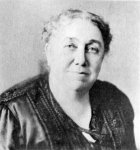
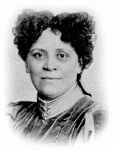
Recently, I met with Sandra Jamison who is a member of Second Baptist Church and part (board member?) of the James Preston Poindexter Foundation. Second Baptist Church is the oldest Black Baptist Church in Columbus and Reverend Poindexter was a very outspoken and prominent leader for this parish and community. Ms. Jamison and I met at the Ohio Local History Alliance Conference last weekend and shared with me a list of these wonderful women who once attended her church. The list was created by another woman in her church and she handed me a copy of it. I am listing these women here and sharing photos and notes if I can find them. If you are aware of any information on these women, I invite you to contact me with more information. Also, don’t hesitate to post on my FB group Ohio Women in History.
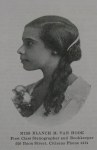 Blanche M. Van Hook – She was a society columnist featuring black women as well as working for the city. She was also known for writing about the Lucy Depp Park neighborhood. She was born in approximately 1896 in Ohio and died here in 1970.
Helen Carter Moses – She was a composer, organist and teacher (Sandra said that she learned to play piano from her).
Daisy Hall Rice – Beautician
Helen Jenkins Davis- She was born in the 1880’s and lived until the 1980’s. She was 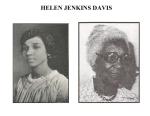 one of the first black teachers in Columbus. She graduated from her teaching college in 1916 but it would not be until 1921 that she was able to find a position because of her race. In 1976, she was the first witness to be called in regard to a school segregation case that would eventually lead to the Supreme Court making a decision on this once again. She is mentioned in the book Beyond Busing: Reflections on Urban Segregation, the Courts and Equality. There is now a scholarship in her memory and a FB group.
Jessie Stephens Glover – Is the first black female to graduate from the Ohio State University in 1905 with a B.A. in Modern Languages. For awhile she lived in Florida and taught German and English at what is now Florida A&M University. She later moved to Virginia to teach at what is now Virginia State University before moving back to Ohio for marriage and to raise their two daughters. She became an activist and volunteered to be a probation officer for the Domestic Relations court. She was born in 1882, in Ohio, the daughter of former slaves and lived until 1966. Her biography is featured in Profiles of Ohio Women 1803-2003.
Edna Bryce – She was a club woman and entrepreneur who owned a flower shop.
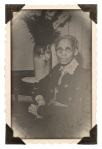 Isabella Ridgway – Founder of an “old folks” home for blacks, in the early 1900’s. It is named after her and continues to this day. There is also a foundation in her name which began in 2016.
Constance Jean Nichols – Born in Marietta, Ohio and a graduate 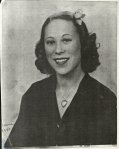 of the Ohio State University. She was a devoted activist, was one of the founders of the Vanguard League— an organization dedicated to eliminating discrimination against African Americans in Columbus. She was also responsible for helping to get the Ohio Theater integrated.
E. Carrie Coles – Was a member of the Housewives League.
Nell Moffett – Was once a Principal at Mt. Vernon Avenue Elementary School.
Cora Jordan White – Executive Secretary at the Blue Triangle Branch Y.W.C.A.
Anna Hughes – Administrator, Ohio Avenue Day Nursery
Belle Carter – She was a Pioneer Teacher, Social Worker, and a Probation Officer in the Court of Domestic Relations.
Mayme Artis – Piano Teacher
Anna B. Jones – She was born in about 1871 and became a Philanthropist and Community Activist
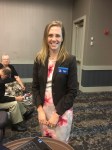

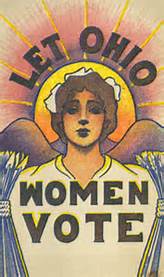 When I went to Ohio’s Statehood Day in February, I learned that they were putting together a bill for an Ohio Women’s Suffrage Centennial Commission. The good news is that it was passed on April 11th and is now awaiting Governor DeWine’s signature. This bill was sponsored by both a Republican (
 Happy 216th Birthday Ohio! We celebrated today at the Capital Building in downtown Columbus, Ohio. Part of the building was built in 1861 and then an addition was added in the early 1900’s. I took a tour of some of the building and later went back to get a look at the museum after the Statehood Day events were over with. There is a “Ladies Gallery” room on the first floor that is not part of the museum. There isn’t much in there for the moment but a lot to learn in a short amount of time. It is mainly focused on the first six women elected to the Ohio Senate and State Representatives in 1920 when Women’s Suffrage was ratified. These women were: State Representatives -Nettie Mackenzie Clapp, Lulu Thomas Gleason, Adelaide Sterling Ott, Mary Martin Van Wye and then State Senate – Maude Comstock Waitt and Nettie Bromley Loughead.
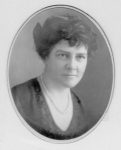

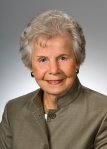
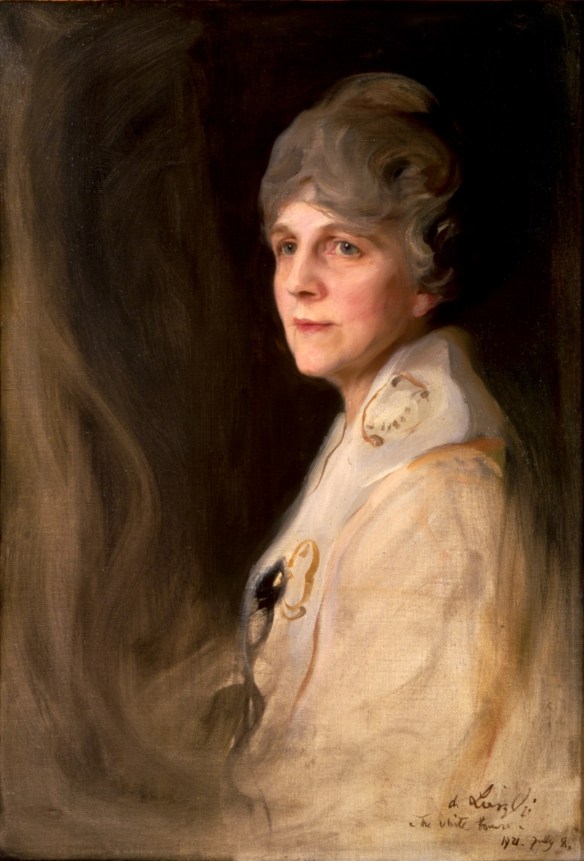
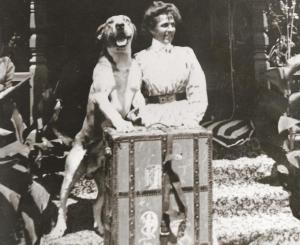
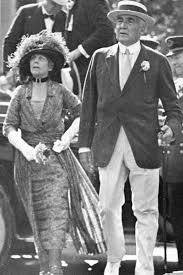
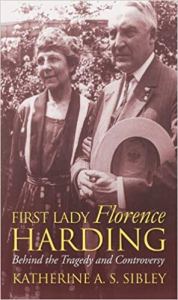
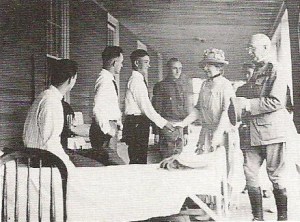 Florence took her role to heart and was not just involved in planning parties and decorating the house. Suffrage was ratified right before they went into office and so Mrs. Harding was the very first wife to vote for her own husband. She was very involved in helping Warren choose cabinet members (some of their friends) and writing the speeches he would present. She was involved with women’s concerns and took part in the conditions faced by female criminals and creating a Women’s Prison. She had gatherings with women journalists at the White House. She invited notable women to the White House such as Madam Curie. Not only was she involved with raising awareness toward women and their issues, she was also passionate about war veterans. She toured many hospitals and gave public functions for soldiers and their families. Florence and Warren Harding had a great love for animals. While their family did not include children of their own, they did have several dogs and a horse. As a result, philanthropy toward animal rights was another great cause they both shared. Ms. Sibley took offense to this though, in writing that Florence had no problems with wearing a fur coat. In that time period, it was normal to wear furs and being “Politically Correct” was unheard of. While people enjoyed pets and wanted to protect them, the issue of non-pet animals was really not a concept at that time. I don’t feel confused by this at all.

 Jeannine Vegh