Phoebe Ann Moses – Darke County, Ohio

I have put off writing about Annie Oakley (born August 13, 1860 – November 3, 1926 Leo/Artemis) for some time now because I wanted to feature other Ohio Women in History that most people did not know about. Annie was one of the first superstars or famous actresses of her time. I read about her in a short biography by Chuck Wills for DK Biographies, so that it is more of a children’s reader. I’d love to find something more about her life but it appears that this was not her priority until after retirement and writing just wasn’t in her. She was only able to pen a few pages. Also, being a celebrity, more fiction was written about her than non-fiction.

Continue reading

Prominent Columbus Black Women from Second Baptist Church

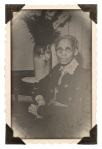
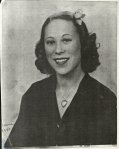
Recently, I met with Sandra Jamison who is a member of Second Baptist Church and part (board member?) of the James Preston Poindexter Foundation. Second Baptist Church is the oldest Black Baptist Church in Columbus and Reverend Poindexter was a very outspoken and prominent leader for this parish and community. Ms. Jamison and I met at the Ohio Local History Alliance Conference last weekend and shared with me a list of these wonderful women who once attended her church. The list was created by another woman in her church and she handed me a copy of it. I am listing these women here and sharing photos and notes if I can find them. If you are aware of any information on these women, I invite you to contact me with more information. Also, don’t hesitate to post on my FB group Ohio Women in History.

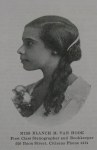
Blanche M. Van Hook – She was a society columnist featuring black women as well as working for the city. She was also known for writing about the Lucy Depp Park neighborhood. She was born in approximately 1896 in Ohio and died here in 1970.

Helen Carter Moses – She was a composer, organist and teacher (Sandra said that she learned to play piano from her).

Daisy Hall Rice – Beautician

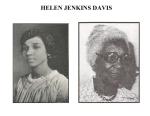
Helen Jenkins Davis- She was born in the 1880’s and lived until the 1980’s. She was one of the first black teachers in Columbus. She graduated from her teaching college in 1916 but it would not be until 1921 that she was able to find a position because of her race.  In 1976, she was the first witness to be called in regard to a school segregation case that would eventually lead to the Supreme Court making a decision on this once again. She is mentioned in the book Beyond Busing: Reflections on Urban Segregation, the Courts and Equality. There is now a scholarship in her memory and a FB group.

Jessie Stephens Glover – Is the first black female to graduate from the Ohio State University in 1905 with a B.A. in Modern Languages. For awhile she lived in Florida and taught German and English at what is now Florida A&M University. She later moved to Virginia to teach at what is now Virginia State University before moving back to Ohio for marriage and to raise their two daughters.  She became an activist and volunteered to be a probation officer for the Domestic Relations court. She was born in 1882, in Ohio, the daughter of former slaves and lived until 1966. Her biography is featured in Profiles of Ohio Women 1803-2003.

Edna Bryce – She was a club woman and entrepreneur who owned a flower shop.

Isabella Ridgway – Founder of an “old folks” home for blacks, in the early 1900’s. It is named after her and continues to this day. There is also a foundation in her name which began in 2016.

Constance Jean Nichols – Born in Marietta, Ohio and a graduate of the Ohio State University. She was a devoted activist, was one of the founders of the Vanguard League— an organization dedicated to eliminating discrimination against African Americans in Columbus. She was also responsible for helping to get the Ohio Theater integrated.

E. Carrie Coles – Was a member of the Housewives League.

Nell Moffett – Was once a Principal at Mt. Vernon Avenue Elementary School.

Cora Jordan White – Executive Secretary at the Blue Triangle Branch Y.W.C.A.

Anna Hughes – Administrator, Ohio Avenue Day Nursery

Belle Carter – She was a Pioneer Teacher, Social Worker, and a Probation Officer in the Court of Domestic Relations.

Mayme Artis – Piano Teacher

Anna B. Jones – She was born in about 1871 and became a Philanthropist and Community Activist

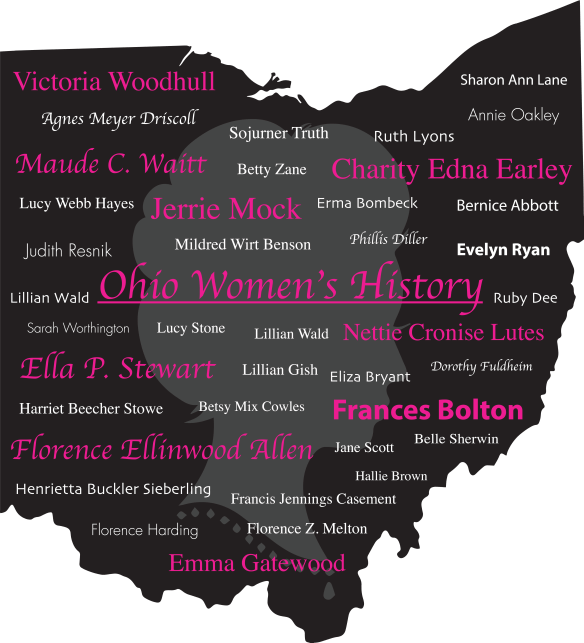
Names on the Ohio Women’s History Project Shirts

Ohio Women’s History Project T-shirts

Available at https://ohiowomenshistory.com/womens-history-store/

I want to be clear that this is just a sample of the names of women in Ohio History, it is not all of them. These are names that I could fit on a t-shirt and names of women I have begun to write about on this website, plus a few more. I made sure to get names of women that were “firsts” at something. I also tried to only get one name in different categories, and this is why all the first ladies from Ohio are not on here. If you haven’t bought your t-shirt yet, click on the link above and see the different items which are featured. Let’s educate others about Ohio Women’s History, ONE T-SHIRT AT A TIME!

Agnes May Driscoll – Coder/Mathmetician

Annie Oakley – Sharp shooter

Belle Sherwin – Activist

Berenice Abbott – Photographer

Bernice Pyke – First woman to be a delegate for the Democratic Nat’l Convention

Betsy Mix Cowles – Activist Abolition

Betty Zane – American Revolution Heroine

Charity Edna Earley – First AA woman to be an Army Officer

Dorothy Fuldheim – Journalist

Eliza Bryant – Humanitarian

Ella P. Stewart – First AA woman Pharmacist

Emma “Grandma” Gatewood – First woman to walk the Appalachian Trail

Erma Bombeck – Comedian

Evelyn Ryan – Prize winner of Defiance, Ohio (movie made about her life)

Florence Harding – First Lady

Florence Ellinwood Allen – First woman on the state Supreme Court

Florence Z. Melton – Shoe Manufacturer

Frances Jennings Casement – Suffragist

Frances Bolton – First woman to Congress/House of Rep.

Hallie Brown – Educator/Activist

Harriet Beecher Stowe – Writer

Henrietta Buckler Seiberling – Founder of AA/Oxford Group

Jane Scott – Journalist/Musicians

Jerrie Mock – First woman to fly solo around the world

Judith Resnik – Astronaut

Lillian Wald – Nurse

Lillian Gish – Silent film star

Lucy Stone – Suffragist

Lucy Webb Hayes – First Lady

Maude C. Waitt – One of the First women to the state Senate

Mildred Wirt Benson – aka Carolyn Keene (or Nancy Drew’s writer)

Nettie Cronise Lutes – First woman admitted to state bar as a Lawyer

Phyllis Diller – Comedian

Ruby Dee – Actress

Ruth Lyons – Radio/TV

Sarah Worthington – Philanthropist and daughter of Governor

Sharon Ann Lane – Vietnam Nurse

Sojourner Truth – Suffragist/Activist

Victoria Woodhull – First woman to run for President of the US

Ohio Local History Alliance Conference 2019

Thank you to everyone who came out and supported Ohio Women’s History Project this year at the conference! If you wished to have a receipt, don’t forget to email me at ladyjatbay@gmail.com and let me know your name and how many shirts or prints that you paid for and I can send this back to you. If you still wanted to purchase a shirt, you can click on the store at the top of this page.

Ohio Local History Alliance held an amazing conference and I think we all learned a great deal from these presentations. We now have good ideas about how to take our museums, non-profits and new businesses forward in the years ahead. Below are some of the workshops I attended and information that I learned. I have included some links so that you might be able to research this more on your own.

The first workshop that I attended was given by Megan Woods, Cultural Resources

Megan Woods

Division Director at the Ohio History Connection. Her workshop was “Ohio Women’s Suffrage Centennial.” Megan discussed how to be included on their event page on the Ohio Suffrage Centennial website. The Ohio Suffrage Centennial Commission was passed on May 2019 by Governor Mike DeWine. There is currently a travelling exhibit of banners and a trading card project going on in Northwest Ohio by the Trumbull County Historical Society.  There are also book discussion groups and you can get a list of books to read for your own groups through the Ohio League of Women Voters. In August of 2020 there will be a huge celebration that is in the planning stages at this time. Akron is working on a statue to honor Sojourner Truth. Case Western Reserve is hoping to get a play produced entitled the “Taming of the Anti.” All these and more can be found on their website above.

Harriet Taylor Upton

She spoke about three women in particular from Ohio, Harriett Taylor Upton who started in Ravenna and ended up in Warren. She brought the National Women’s Suffrage Association to Warren. She became the Vice Chairman of the Republican National Committee and was a part of the D.A.R. (Daughter’s of the American Revolution).

She also shared about Florence Allen who was the first female judge in Ohio but began her career first as a musician and journalist. She had left Ohio for New York to study law and then returned to eventually receive a nomination to the Ohio Supreme Court. Later she would be nominated by Franklin D. Roosevelt to the Federal Supreme Court. Florence also wrote several books about the law.

Haley Quinn Brown

The third woman was Haley Quinn Brown who was a black woman that eventually came to Wilberforce, Ohio. She was the Dean of Tuskeegee Institute, an International Public Speaker and the President of the Colored Women’s League. She was very involved in the temperance movement as well.

We listened to various people in the audience talk about their projects. One of which is that the Girl Scouts of Ohio are working on a badge to commemorate being a good citizen and learning about the voting process.

I then attended a Grant Management Basics workshop with Jennifer Souers-Chevraux who is the owner of Illumine Creative Solutions, LLC. Jennifer taught us about ways to be organized in a fashion that would help guarantee success with the grant already received. She also gave us several non-profit organizations to help with your business.

Tracy Lawson, the author of a historical book entitled “Pride of the Valley,” engaged

Savannah Homa, Tracy Lawson and Keilah Israel

with Mt. Healthy school in Springfield, to help kids become interested in their ancestry through family trees. Two young ladies came to report on their findings. These future female historians were Savannah Homa and Keilah Israel. There were a total of eight boys and girls involved in this project.

These young girls were very bright and had amazing insight into what they had discovered on this project. I was very impressed with their advanced level of thinking.

At lunch time, on Friday, we listened to Nekole Alligood from the Delaware Nation speak on re-patriating native American remains that might be found in a family member’s home. There is an organization called NAGPRA (Native American Graves Protection and Repatriation Act) which handles this type of service in a culturally appropriate way so as to bring peace to the departed. When such an event occurs it needs to be a sacred event with no press invited to the ceremony.  Nekole also made us aware of the fact that there are 44 federally recognized tribes that stem from Ohio. I wondered how many there were that were not recognized. We also learned that native American’s were not recognized or given U.S. citizenship until 1924. Even today, the issue of young women kidnapped from reservations, (which are often isolated locations with people living far from others) for purposes of human trafficking. The issue of rape was brought up many years ago in an article written for Amnesty International that I recall reading. I believe this took place in Alaska. It is interesting to note that girls are kidnapped from reservations but not outside of the reservation (i.e., non-natives). This is a huge concern because the reservations are meant to be protected lands – so why are the people on them not protected?

Sue Plummer and Christine Anderson

Another workshop I attended was on the “Women of King Records.” King Records was a recording studio, manufacturer and shipping warehouse run by Syd Nathan between 1943-1971, in the Cincinnati area. Christine Anderson, a professor from Xavier University in Cincinnati and Sue Plummer an Ohio History Service Corps Alumni, have been conducting research to uncover the women who produced music during that time. They shared a spreadsheet with their findings which held 2,054 recordings of various genres including hillbilly, Doo-Wop, funk and soul. They gave us access to this spreadsheet which includes links to YouTube videos if they were available. I am not sure whether or not it is acceptable to share this link so I will keep that to myself. You can however access this website which appears to be linked to Xavier University.

As you can imagined I had a wonderful time at this conference but I feel safe in saying most people seemed to be having a good time. There were smiles on these eager faces, as they walked about and the people I talked with all agreed that they enjoyed attending.

Remember #olhaempowers to follow on Instagram or Twitter.

Victoria Woodhull Documentary

Eden Valley Enterprises is seeking donations for their documentary on Victoria Woodhull. As you can see by this trailer, it is going to be a great success! They have already created a wonderful documentary on Emma “Grandma” Gatewood, which I got a chance to see at a screening at the Ohio History Connection. The film entitled “Trail Magic: The Grandma Gatewood Story,” was nominated for an Emmy! So you know your donations are in good hands. Both Grandma Gatewood and Victoria Woodhull’s stories are available in a storytelling program for presentations.

Statehood Day 2019 – What I learned

Happy 216th Birthday Ohio! We celebrated today at the Capital Building in downtown Columbus, Ohio. Part of the building was built in 1861 and then an addition was added in the early 1900’s. I took a tour of some of the building and later went back to get a look at the museum after the Statehood Day events were over with. There is a “Ladies Gallery” room on the first floor that is not part of the museum. There isn’t much in there for the moment but a lot to learn in a short amount of time. It is mainly focused on the first six women elected to the Ohio Senate and State Representatives in 1920 when Women’s Suffrage was ratified. These women were: State Representatives -Nettie Mackenzie Clapp, Lulu Thomas Gleason, Adelaide  Sterling Ott, Mary Martin Van Wye and then State Senate – Maude Comstock Waitt and Nettie Bromley Loughead.

Adelaide Sterling Ott

Lulu Thomas Gleeson

Mary Martin Van Wye

Nettie MacKenzie Clapp

Maude Comstock Waitt

Nettie Bromley Loughead

Sorry the photo spread looks horrible – this is WordPress for you. Here are some of the other interesting tidbits that I learned as well today:

Jo Ann Davidson, above, was the First Woman to be the Speaker of the Ohio House of Representatives from 1995-2000.

in 2020 six women will be featured at the Delaware Country Historical Society Museum. They featured six women a year ago and they are doing this every two years it sounds like.

Prior to the 19th Amendment being ratified, Ohio had 30 Suffrage Organizations. Tennessee was the late state to ratify this Amendment. They were worried about black women having the right to vote.

Ohio has more sites on the National Historic Register than any other state (with the exception of two other states).

National History Day began in Ohio in 1974.

Kirby’s Mill in Richfield, Ohio is a popular Girl Scout retreat, as well as being used for other things.

Indian Burial grounds are ripe for poachers in Ohio and for some reason, even though the Ohio History Connection is loaded with artifacts from the native people’s who once lived here, there has never been a law passed in respect to this. There is now a request to support legislation sponsored by Gary Scherer (R-Circleville) to protect unmarked burial places and abandoned cemeteries.

Overall, the day went very well. I thought I had brought my camera home and it turns out the box was empty, so now I have to figure out where it is at my office! My intention is to go back and get lots of photos, which I will have to put on Instagram since WordPress is just not set up to properly display photos (not unless you want to read a bunch of stuff online about it and are a software designer or graphics artist which I am not).

This is my second time to attend Statehood Day and each time I find it very educational. I forgot to mention that there was a group of people in costume, who serenaded us at the beginning of the day with their rendition of Beautiful Ohio, which is a very lovely tune!


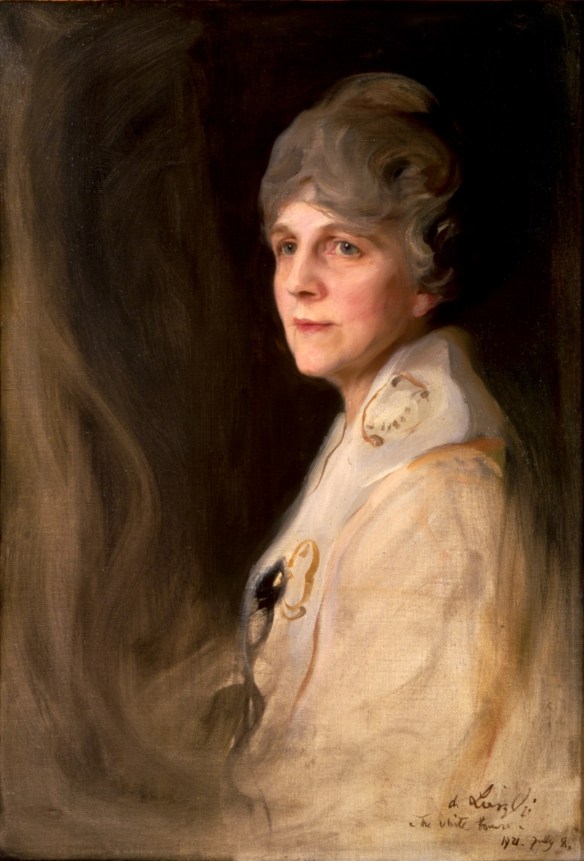
Florence K Harding – Marion, OH

Her favorite painting of herself

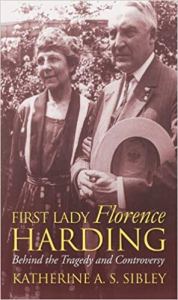
Florence Mabel Kling – Harding (August 15, 1860 – November 21, 1924 Leo/Hera) was the 29th First Lady of the United States. When searching for a book to read about her, my first First Lady to do an article on, I chose the book by Katherine A.S. Sibley. The reason being that there was a lot of controversy associated with the Warren Harding presidency (posthumously) and this book came from a more positive angle. I wanted to find out more about Mrs. Harding as a woman. As I began to read her story, I realized I had so many things in common with her. I was able to identify with her life (pre-White House years) and could empathize with some of the ways in which she behaved as a mother and grandmother; in her time period.

Florence was not a stranger to controversy, it met her every step of the way from the moment she was a frisky young adult of 19 and married the wrong guy. She was meant to become a concert pianist and study at the Cincinnati Conservatory of Music. Instead, she eloped (they could never find records of a marriage certificate) to Henry Atherton De Wolfe. He was a drunk and this lasted six years. In the meantime, however, she gave birth to her only child Marshall Eugene. Being a divorced woman in 1886 and a single mother at that, her father decided that it was in her best interests to let he and her mother raise the child. They took over and allowed her to spend time with her son but he made the decisions as to how the child would be raised. Florence lived alone and made a living off of giving piano lessons.

She met Warren G. Harding four years later and he was five years younger than she. He owned the “Marion Star,” when they met. They married a year later and Florence immediately went to task in becoming, not just his wife, but his business partner as well. This would continue throughout their marriage. Mr. Harding tried to take an interest in her son, who continued to be raised by her father and it made somewhat of an impression on Marshall.
Marshall would go on to Michigan State to study journalism and played football there as well. He made some attempts at going into business but eventually became like his own father instead. At 34 years old, he died of alcoholism an tuberculosis. His own father had died by this point as well. At his death he left a widow (Esther Naomi Neely) with a young boy, (George) and girl, (Eugenie) to raise. Mrs. Harding would keep in touch with this family (Esther eventually re-married) and she gave monthly checks to Esther for child support.

In this time period, people did not divorce and the gossip columns and social media outlets of today were, thankfully, unavailable at that time. When Warren G. Harding became the 29th president in 1921, Mrs. Harding circumvented any knowledge of her previous family from getting into the press. As she was a newspaper woman herself, she played to the journalists by becoming their friends and gave them information but refused to do interviews. In return, they respected her anonymity. Mrs. Hardings grandchildren were never at the White House. She did not visit them, during the time they were in office but she did maintain correspondence with their mother.

This is an interesting point about Mrs. Harding. A lot can be said about her pushiness toward her daughter-in-law; giving advice on how to raise the children. She was frugal with her child support (it was a lot in those days but she could have afforded more than she did). Florence would also send hand-me-down dresses (of her own) to be used as fabric to make Eugenie’s clothes. I am sure Esther did not appreciate all the meddling but we don’t really know because only Mrs. Harding’s letters were preserved. We do know though that Mrs. Harding began to regard Esther in more of a confidante type of way, telling her more intimate details about her life. I see this as a bit narcissistic though, and while I am empathic toward Mrs. Harding, I can still imagine this might be the case. She had no real relationship with Esther, other than her letters and money. They rarely saw each other from what I can detect in this book. So, for her to be so forward, appears a bit narcissistic or entitled to do so. In the end however, Mrs. Harding left a great fortune to her grandchildren and they were only in their mid-20’s at this time.
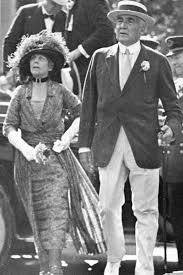
With regard to her marriage to Mr. Harding, Florence faced many struggles. He was a philanderer, like many presidents before and after him. Still, she remained strong and stalwart and it appears he did appreciate this. While he was not faithful, it does seem that he respected his wife very much and took her opinions. He nicknamed her “The Ducchess,” which she evidently enjoyed hearing. While Mrs. Harding is not given the credit that Eleanor Roosevelt would receive (she was only in office for two and a half years); she was just as involved in politics and in advising her husband. Meanwhile, Mr. Harding, had two major affairs – one to a woman who was married herself and best friends with the Hardings. The other woman was more clandestine and produced a child. However, the only child of Warren G. Harding, (Elizabeth Britton) was not proven with DNA results, and published in the New York Times, until 2015 (using Ancestry.com). So in the book I read, written by Ms. Sibley and published in 2009, she continues to state that it was highly unlikely (since the Hardings were married for 32 years and never had a child). This was an affirmed belief by all of the doctors involved with the Hardings at that time as well. Nonetheless it was true but the DNA was done posthumously as Ms. Britton did not wish to clear it up for herself. Ah, secrets and lies!!

The Daily Star’s thoughts on the First Lady:

Mrs. Harding is far better looking than her pictures…her smile is the essence of sweetness and graciousness, while her photographs often give her the appearance of sternness

It appears that President Hardings time in office was somewhat similar to that of President Trump now. He brought a lot of friends with him to the White House who assumed a great many roles. Some of them did take advantage of their positions but it seems as if they kept the President in the clear. How this would be handled now, since President Harding was a Republican, I would assume he would get the same treatment as President Trump. President Harding differed though because he was well-liked by the public at that time and this was in great part to his wife’s role in orchestrating public events. Mrs. Harding, began inviting the public to the White House and in fact this became the precedent that has continued to this day. Of course at that time, the fear of terrorists was unheard of. The Hardings actually went out and met with the public – and shook all of their hands – when they were present for these occasions. The public were also offered food and drink. Large soiree’s occurred during the Hardings time in office as well. People who throw good parties, have great numbers of friends. Especially when you are making them feel welcome in the highest office of this country.
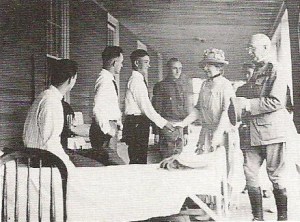
Florence took her role to heart and was not just involved in planning parties and decorating the house. Suffrage was ratified right before they went into office and so Mrs. Harding was the very first wife to vote for her own husband. She was very involved in helping Warren choose cabinet members (some of their friends) and writing the speeches he would present. She was involved with women’s concerns and took part in the conditions faced by female criminals and creating a Women’s Prison. She had gatherings with women journalists at the White House. She invited notable women to the White House such as Madam Curie. Not only was she involved with raising awareness toward women and their issues, she was also passionate about war veterans. She toured many hospitals and gave public functions for soldiers and their families. Florence and Warren Harding had a great love for animals. While their family did not include children of their own, they did have several dogs and a horse. As a result, philanthropy toward animal rights was another great cause they both shared. Ms. Sibley took offense to this though, in writing that Florence had no problems with wearing a fur coat. In that time period, it was normal to wear furs and being “Politically Correct” was unheard of. While people enjoyed pets and wanted to protect them, the issue of non-pet animals was really not a concept at that time. I don’t feel confused by this at all.

A journalist asked First Lady Mrs. Harding about women in politics and this is her short but typical response to the press:

What do you think of women in politics?” “I believe it is a good thing under certain circumstances

A separate item of interest I noted from reading this book, was the support and affiliation with the Native American tribes during their travels in office. I thought to myself, “When was the last time we heard of a President smoking a peace pipe?” For that matter, when was the last time we saw photo ops with the Native American people? Presidents don’t attend Pow Wow’s or even talk about these people, not unless there is a protest. I hadn’t thought of that until I saw a photo in this book and read about the time the Hardings spent with the Native Americans.
Émile Coué

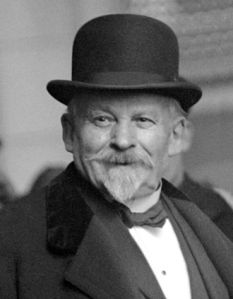
Unfortunately, another struggle with the Hardings marriage was the health and wellness of both of them. Florence almost died in office and Warren did die. Mrs. Hardings health was an issue throughout their entire marriage but came to an almost fatal blow within the first year of the presidency. The top doctors were called in and lived there for many months. One of them was Dr. Boone (an ancestor of Daniel). She was a great fan of a French motivational health speaker at that time, Émile Coué and would use his mantra: Every day, in every way I am getting better and better. This worked and she would eventually heal, though the sickness would continue to come and go. By the time her husband died, she began to lose interest in remaining and she followed him a year and three months later.

Warren’s death would even become a controversy as well, much later. It was surmised that she orchestrated this by poisoning him. The theory is based on the fact that she did not want an autopsy. Many family members do not do this when they are assured by their doctors as to the cause.  I find this reasoning hard to believe as there were nurses in the room when he died and a doctor was by his side up until the last half hour. I also find this hard to believe when you look at the emotional toll it took on Florence and how quickly she would follow him. Doctor’s today, attribute his death to being a mistake of his doctor’s who assumed it was one thing and ignored other signs (but also as they were not as knowledgeable at that time). My feeling is that Florence died of a broken heart, loneliness, and giving up her will to live.

We often want to search for posthumous theories, to try and understand or to make history fit with our own concerns in modern day times. Sometimes this makes good sense but many more times, it is best to let a “cigar just be a cigar,” to rephrase a Freudian quote.

What I also enjoyed, in reading about Florence K. Harding, is that she was a follower of the occult and enjoyed talking to psychics and astrologers. She was very well aware that Warren would win the presidency but also that he would die in office. Yet, even though people do believe in metaphysics and the supernatural, it doesn’t take away the excitement when it is proven and he is announced as the next President. Nor, does it eliminate the pain when the person does die as predicted.
Pioneer Women of the Ohio Valley

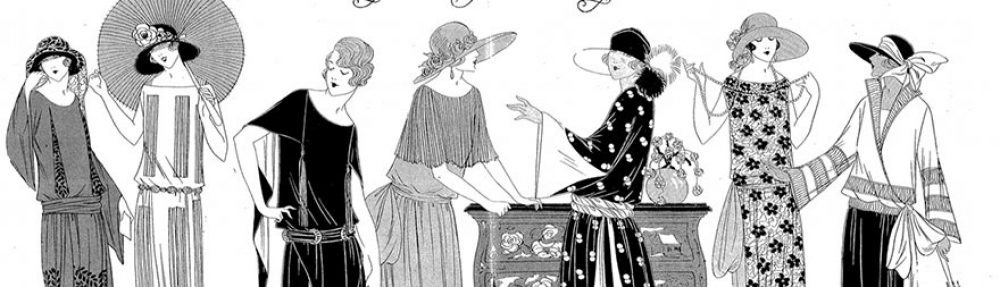
This photo is the inset of the book, “American Grit” Edited by Emily Foster – University Press of Kentucky

Women’s rights were of little importance to early settlers of the Ohio Valley. Survival in a territory inhabited solely by Native Americans, who’s land they had “purchased” (approved for passage by the Northwest Ordinance of 1787). Women were given the task of “dealing with them,” while their husbands were off clearing the land, building homes or foraging food.  Of course missionaries were in the territory shortly before purchasing land was allowed and so the first “white” child to be born in the Ohio Valley was a German girl. Her name was Johanna Marie Heckewelder, born in Salem, near the Muskingum River on April 16, 1781.

Much like what I had read in the book “They Saw the Elephant,” about women travelling cross country to California for the Gold Rush – 1849, women made their living the best they could. In the case of Ohio settlers though, women and men were working together – for the most part – as a team. Unfortunately the division of labor meant that women would do anything that was needed but not so for the men. This means that men did not step over into “women’s” roles so it was not entirely equal. Early pioneer women might be called upon to “fell trees,” or build homes, or clear a path to their homes but they still had to cook the meals, give birth, and tend to the children at the same time. How they compared to the California women is that they figured out how to make money or barter for goods so that they could have food to put on the table for their children. The California women might not see their husbands for months on end (while they hoped to win the “lottery” at that time which was a chunk of gold). The Ohio women had their husbands nearby, though not always.

Constructing a Lean-to

It was interesting to note, but not surprising, that Depression was a big issue in this time period. Many times these settlers had purchased land in lots that might include 120 acres. This meant being close to town was not always the case. And, as such, these folks would become very isolated from a social life. They lived in fear of the Natives due to an inability to communicate and, after British soldiers left the valley in 1812, a wave of kidnappings and raids began (between 1812-1825), leading to the “Indian Wars.” If this weren’t enough to worry about, until their home was built, living in a lean-to meant being in fear of wildlife. Sometimes men deserted their families and women were left to figure it all out, on their own, with their children. In other cases, women had to become nurses or healers and had the additional task of figuring out which herbs would work best to cure what ailed their spouses.

A more formal lean-to

American Grit, is a book edited by Emily Foster (University Press of Kentucky), which is based on the letters and journals of Anna Briggs Bentley. Anna was a woman who came from Maryland and was raised in a somewhat affluent household. I say somewhat because her father, Isaac Briggs – a friend of Thomas Jefferson and James Madison, just didn’t seem to be very good with money management or good ideas. When he died, he left the family deep in debt. Anna, the oldest child, and her husband left Maryland to try and establish a life in Ohio.

Anna and her husband, quickly learned how to establish roots in Ohio – which would have been hard for a woman used to servants. In their case, they were nearer to other people and she seemed to be very good at petitioning family or guests travelling in her direction to bring her things. She, like other women, also became handy in the art of bartering.

Anna’s family was of the Quaker faith and so, on top of building a homestead, she was eager to get this community going as well. What is interesting about this book is that while she was properly educated, she is poor at spelling and grammar which the editor, Ms. Foster, chose to leave in. Therefore, I found it quite humorous that Anna was chosen to be a schoolmarm for the children of their village. I imagine if any of her students went off to college, they would have been prepared for a rude awakening.

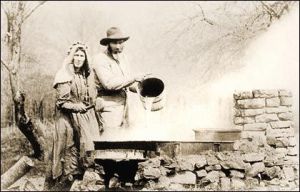
Geauga County couple

If you would like to read learn more about early pioneer life in Ohio or many other states around the country, there are a lot of books written about this. The Ohio History Museum, in Columbus, features many artifacts from this time period as well. The first chapter of the book “The History of Ohio’s Daughters” subtitled “Buckeye Women,” by Stephane Elise Booth gave a very good account of this time period. She mentions several women in this chapter and what they were able to accomplish as a Pioneer Woman in the Ohio Valley.

Honor the Ladies!

I felt it was important to put something together, as a memorial for women in Ohio’s history. I have been working on this for the last couple of months and then met up with a graphics artist that I was referred to. Samantha Vickers is in Cleveland and runs a company called Intentions Studio Design. We spoke on the phone and I explained how I wanted the emblem to look. I wanted something that would be formal and elegant as this was the style in our history when these women would have been around. It was important to get a design that these women would be proud of. She had it in one take and I was really surprised. You never really know if you are explaining yourself correctly until you see the finished product.

The women on this design have all passed. They are not ALL of the women in history in Ohio because you wouldn’t have been able to read the names if we did this. These are not even ALL of the women who have passed. This sample is based on women that I have written about or are preparing to do so. The names that are highlighted are women were “First” to achieve in the state of Ohio or wherever they became famous. The women that are considered for an Ohio Women’s History list are women who were either born in Ohio or those who made history here. For example, Mildred Wirt Benson (aka Carolyn Keene) was born in Ladora, Iowa and grew up there until she graduated college. When she came to Ohio, she began to write and eventually penned the “Nancy Drew Series,” or at least the majority of the stories. There are other women, like Natalie Clifford Barney who born here and lived here only 10 years. However, she went to boarding school in France and eventually stayed in Paris and ran a “Salon,” which was an intellectual gathering place for forty years. (She is not on the emblem but written about here on my blogposts).

If you click on Women’s History Store, above, you will see this emblem featured on products for men, women, youth and toddlers. This online store is based in Ohio. When you click on the products in the store, it will take you to the “EnlightenedGal” store that I created and this is through the manufacturer (CustomizedGirl). Whatever you purchase, Ohio Women’s History gets a commission from this. This is going to be set aside to pay for setting up Ohio Women’s History Project. This will be a non-profit geared toward educating and bringing awareness to our young people but also to adults. I have already given a lecture for the Westerville Kiwanis on four of the women in Ohio’s History. I would like to have contests for students, that we can feature here on the blog and will be an assignment for their history classes (If you are a teacher, please get in contact with me at ladyjatbay @ gmail.com to discuss). My way of educating will be focused on writing and lectures. The direction of this business will be based on what funds are able to be collected from the sales of these shirts in the store here.

Thank you for taking the time to peruse Ohiowomenshistory.com. Feel free to contact me about contributing an article or telling me a story about an Ohio Women in your history. They don’t need to be famous, just a remarkable person who transformed the people around her.

Jeannine Vegh, Founder of Ohio Women’s History Project

Jerrie Mock – Newark, Ohio

(November 22, 1925 – September 30, 2014: Sagittarius/Artemis)

Forget Amelia Earhart, who was the first woman to fly solo across the ocean, Jerrie Mock was the first woman to fly solo AROUND THE WORLD! Yet no one really knows about her, save for flying enthusiasts. In fact, I wonder if we would even know about Amelia, had she not died in mysterious circumstances and become a legend.  And as the author Nancy Roe Pimm points out, in the book “The Jerrie Mock Story,” when Jerrie made this harrowing journey, fraught with many obstacles along the way, too many other important events overshadowed a first for women. Would this have happened in today’s society? Probably not. Women who were the first to do things in the past, were heroines but it was not quite as fascinating then as it is now. Books were rarely written about them and when they were, they faded into the back of the shelf, until now, when so many women are trying to dust off their jackets or create them from scratch.

Nancy’s book did justice to Jerrie’s flight because she really makes it exciting for a person to read and feel that they are a part of the journey. While it is a biography for young readers, I didn’t get the sense that it was for a kid. I mean I didn’t feel like one reading it. It actually reminds me a little bit of a Nancy Drew story, except the heroine isn’t fictional and there is no mystery, just a lot of complications which create suspense. The latter is what captivated me about Jerrie’s story. I had to keep telling myself “She makes it, don’t worry.” I was able to read the story in one day which is the nice thing about a 113 page book for young readers. It reads like a short story. Nancy also puts little snippets of information in the book, right when Jerrie is in that part of the world, so you can learn additional information. I had no idea that there were once seven wonders of the “Ancient World.” Only one is still in existence. I knew there was “seven wonders of the world,” but not an ancient world. She also provides a timeline at the end of the book, which is helpful for someone wanting to write a blog article and not wanting to search through the book all over again for dates.

It is also interesting because Nancy wasn’t shy about telling us about the disgruntled relationship between Jerrie and her husband Russ. You can imagine that whenever a woman is in the limelight, it is going to frustrate their partnership on some level, especially in 1964. I wondered where this was going and the author was careful with this by noting that while Jerrie was upset, she pointed out that she also missed her husband. I can empathize with the situation. If it weren’t for Russ pushing Jerrie and remaining focused on her journey, she might not have been the first woman to fly solo around the world. Many times when people are on a long trek to become a first at something, they often have coaches to keep them on track. This generally causes a lot of friction. While I have never been a pilot, I have ridden up to sixty miles on a bike and with a lot of people. I know how you can get upset with your coach when you are tired, cranky, hungry, physically exhausted; naturally you want to slap them sometimes. It can be a testimony of a really good relationship when it can withstand such pressures as she went through like this with her husband. When I looked at the timeline in the back of the book however, Jerrie and Russ would end up divorcing fifteen years later. Since her daughter would have been around 18 years old at that time, she obviously waited until all her children were adults, which was the “right” thing to do at that time.

Her husband Russ was apparently more competitive about this journey than Jerrie. As you read the story, you find that Jerrie would have liked to have spent a lot more time in some of the places where she landed. It was her first time to be around the world (which also makes this solo flight all the more spectacular in that she didn’t practice) and she really wanted to take in a lot more scenery than she was able to. Had Russ not pushed her, she may not have won the race. I have not mentioned before but at the same time she was in the air, a woman from California was also doing the same thing. She was Joan Merriam Smith who was 27 years old to Jerrie’s 39. Joan was taking the exact same flight that Amelia Earhart took and she did succeed but only returned to California a few days after Jerrie. Unfortunately, Joan died in an airplane crash one year later.

So what kind of obstacles did our heroine endure? At the onset of her flight, just as she went into the air from Port Columbus, she hears the traffic controller state that this will be the last we ever hear of her. What a terrible thing for him to say but thank goodness, she had a strong constitution and didn’t let this sway her. If that weren’t bad enough, every leg of the journey, some idiot journalist was asking her stupid questions about Amelia Earhart – even wondering if she were afraid she would die too. Just like today, the poor woman had to suffer the endless throngs of insensitive reporters who have never learned tact and decency among celebrities. In Cairo, she was stalled by a ticket agent who didn’t believe she had her own plane and wouldn’t let her through. Naturally, this would be straightened out after a couple of phone calls.

The technical issues began immediately. First there was a radio transmission failure as well as brakes that didn’t work. Unfortunately, it sounds as if the latter were probably sabotaged. I thought it was quite funny to realize that the radio transmission for long distance was a cable of 100’ which Jerrie had to drop from the plane, allowing it to hang, in order for it to work. Another obstacle was assuming she was landing in Cairo, and as her wheels touched the ground she was greeted by the military who weren’t too excited to see her. This was because she flew into a secret Air Force base accidentally.  Mid-way over the South China Sea; there was the smell of gas. This required switching gas lines and it sounded like turning the engine off for a bit, which was a very risky undertaking. I kept wondering why things kept going wrong, though I also realized this was 1964 and planes were different than.

The nice thing about every stop along her journey was how wonderfully she was treated in each of the countries she would land in. I was the most surprised about this as I couldn’t imagine this going so well in today’s difficult world. Of course, each stop included ambassadors, statesmen, people who had been alerted long before she left home and who had already approved her stop over. Her journey was charted out by a retired military general and between him and the other people, including her husband, who were anxious to have a successful voyage; the trip seemed as if it was meant to be.

The funny thing about choosing to write about Jerrie for this blog is that I am afraid of flying. It is no accident that I purchased this book, well over a year ago, while meeting the author at Ohioana book festival. I had put off reading it because I was afraid I would be sick as I usually am when I am anywhere near an airport. I haven’t even flown since 9/11, which I never make a secret about, though I began getting sick on flights way before that. Fortunately, as I read this book, I felt very calmed by her spirit, which I felt was captured in this book. It reminds me of a couple of flights I have been on in the past, where the pilot was very re-assuring and as a result made the journey very enjoyable. I know if I had been in Jerrie’s shoes, hearing all that stuff about Amelia Earhart would have grounded me for sure. I would have panicked and seen it as an omen – that the topic kept being brought up. That kind of negative talk can cause many people to self-sabotage but Jerrie Mock was undeterred because she was that kind of woman. She was strong, brave, and yet modest and confident. Unlike Amelia, she didn’t have that egotistical side to her nature. While she relished the limelight, she wasn’t caught up in it. I don’t see this as a coincidence. Jerrie was very careful along this journey and did not take any risks with weather. She trusted her instincts, which is pointed out a couple of times in the book. On one such occasion, pre-solo flight, the trip she turned down with other pilots ended in a disaster.

What I see that appears to compare quite frequently with the Ohio women that I write about, is the spiritual side of their natures. When I think of all the women I have read about, from around the world, until I took on the task of writing about the Ohio Women’s History, I didn’t even think about the spiritual component as I read their stories. Yet, time and time again, I continue to read and to have the sense that the Gods were working in sync with them. Perhaps it is our culture, here in Ohio, or the authors of the books or a little of both. Grandma Gatewood, Jerrie Mock, Sarah Worthington, and others, I feel as if their journey was guided by a higher power. Was it them or were they chosen to do what they did?


Post-script: There are plenty of YouTube videos about Jerrie Mock and even another book that I learned about while watching a video. “Three-Eight Charlie,” was written by Jerrie Mock and more recently was enhanced as a special 50th anniversary commemorative edition. The newer version is thanks to graphic designer Wendy Hollinger and artist Dale Radcliff who along with publishers Phoenix Graphix included maps, weather charts and additional photos.

I am including this video below which is an interview with Jerrie Mock by Carol Ann Garratt for Women of Aviation Week 2014. Jerrie died later that year on September 30th in her home in Florida; at the age of 89. She was survived only by her daughter Valerie, the last of her three children (I assume there were grandchildren as well but I am thinking of those who were alive when she took this voyage).