Mildred Wirt Benson – Toledo, Ohio via Ladora, Iowa

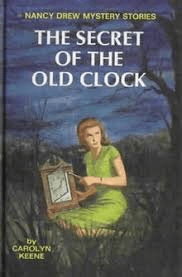
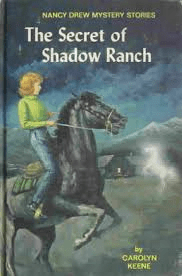
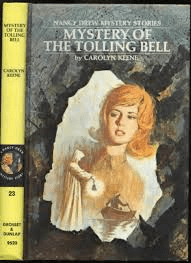
Mildred Wirt Benson (aka Carolyn Keene, Alice B. Emerson, Frances K. Judd, Joan Clark, Mildred A. Wirt, and Ann Wirt) lived 96 years (July 10, 1905 – May 28, 2002, Cancer/Hera) and wrote 79 books, including the first 23 in the Nancy Drew series. She was married twice, the first husband Asa Wirt, brought her to Cleveland and this is where the Nancy Drew series began. Several years after Asa died, she met the editor of the Toledo Blade, George Benson, where she had begun to work as a journalist. 

Growing up in Ohio, the books for teens to read in the 1970’s included the Nancy Drew series. They were either a Christmas or birthday present, I don’t know which but I devoured them. This series showed an independent young woman solving mysteries. Her dad respected her. Her friends looked up to her and she was beautiful and smart. It was as if there was nothing she couldn’t do.

What I did not know is that Nancy Drew was conceived of in 1929, the outline was created by a man, Edward Stratemeyer. This was a man who made his fortunes creating “dime store” novels with ghostwriters who took on various nom de plumes that he thought up as well. Nancy Drew was first released in 1930, at the beginning of the Depression but because they sold for 50 cents apiece and even during these bleak times, people found a way to get two quarters. Entertainment was what helped people get through these dark years. It gave them hope, something to dream about. Post World War I, women were beginning to have careers, living on their own and making their own decisions (rebelling against parent’s wishes).  

Mildred, was a lot like Nancy Drew. She was born and raised in Ladora, Iowa and as a young woman went right to college, in 1922, without even considering a husband. Her parents were not pushing this either. Mom might have wished she wouldn’t leave though and wrote this really touching poem to her daughter.

So now your room is silent.

The whole house seems silent too;

Every object which confronts me

Seems incomplete without you. 

Yes, your silent room, it haunts me

Every garment left behind

Have memories from which bring a tear

For the loved one I cannot find. 

Lillian Augustine, “Mildred’s Room.” 

In college, Mildred became a member and excelled on the swim team. Having already begun to write and win contests she majored in journalism. Naturally, she joined her colleagues and became a part of what is still the top college newspaper entitled “Daily Iowan.” This newspaper was the springboard for her future success with other papers and books. Mildred’s parents respected her lifestyle, just as Carson Drew respected Nancy. Being raised by parents who respect their daughter, this lead her to find partners who looked up to her and respected her as well. Again, a lot like Ned Nickerson, Nancy Drew’s boyfriend, both nurtured her profession and supported her achievements. Mildred did other odd feats for women at the time, also like Nancy Drew. She became an accomplished pilot too but not until she was in her fifties. Like Nancy Drew she had so much energy to burn and couldn’t sit still and be idle. Whenever obstacles hit her, she got involved in a hobby or book series and threw her attention into this.  

The book I read was “Missing Millie Benson,” by Julie K. Rubini (2015, Ohio University Press) which is actually written for young readers – apropos to this woman’s life. Mildred had a daughter, Peggy Wirt and Ms. Rubini mentioned they had a challenging relationship. I notice her name is not acknowledged in the credits as to one of the people providing insight and wisdom for this book. Peggy, one would guess, took a back seat to Mildred’s life. Unfortunately, as successful as Mildred was, apparently she was unsuccessful in balancing motherhood with all the other amazing feats she accomplished. I am not surprised at this. Generally when women are like this, they have no children or if they do, their children suffer in the attachment process. I have seen this time and time again in my profession. You can’t do everything without something or someone suffering. 

Some of the other books that Mildred was known for writing, none of which have merited the success today that Nancy Drew has, though they were well known in their time include: Ruth Fielding and her Great Scenario, the Dana Girls series, the Penny Parker series, Kay Tracy series, Penny Nichols series and more. It is interesting to note that most of these girls lived with their father because their mother had died. Why this was the case remains a mystery because neither Edward Stratemeyer nor Mildred lost their mother’s at an early age from what I have read. Mr. Stratemeyer developed the storylines and so my only thoughts on this are that 1. Mr. Stratemeyer did not have a close relationship with his mother or 2. Felt that a mother character in these novels would get in the way of the female characters development – a girl would subsequently strengthen as a woman by losing a mother because she would have to become the mother herself. We were such a naïve society back in the days prior to the sixties when college was more prevalent for both men and women and feminism had become an epidemic. While we do continue to pay money to see regurgitated stories in American pop theater culture, I believe readers are a lot more intelligent than this and demand much more. Not only did these series not have a mother, they were all independent young women who solved mysteries and had spunky attitudes. 

Carolyn Keene’s identity ended up being three women toward the end of “her” career. This was not exposed until the 1980’s when two publishers were fighting to retain the rights of the Nancy Drew series. Mildred’s fame began at this time, because after appearing in court to prove her existence and how the stories came about, people suddenly became interested in her. Unfortunately the bigger publishing house won and as is typical in our society, instead of creating a new storyline they have turned Nancy Drew into a website and I suppose an “app” and re-did the stories to appeal to today’s culture. Nonetheless, the Nancy Drew series from the 1970’s can be found in many antique stores here in Ohio that I have been too. I haven’t purchased the set yet but I do intend to so that hopefully my granddaughter will be a fan of the story as well. I’d prefer she reads the original story rather than the modern version because I think it is more important to read it as it was written. 

Of course I did watch the actress Pamela Sue Martin, in the TV series from 1977-1979 and the only reason I watched the Hardy Boys is that I was a great fan of Shaun Cassidy back then. From reading the book, I learned that the earliest version of Nancy Drew in the film world was in 1939 (both parts available on YouTube). As I look over this post, I wonder if I am writing about Mildred Wirt Benson or Nancy Drew. How can we possibly think of an artist without seeing their creations in our head?

http://www.youtube.com/watch?v=cQ2y1l_UJbc


Natalie Clifford Barney – Dayton, Ohio

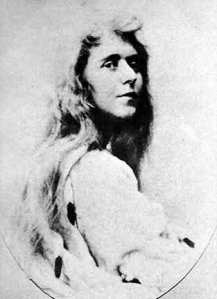
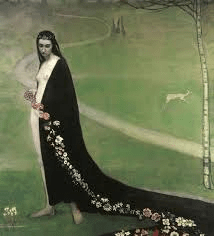
1896 painted by her mother Alice Pike Barney

Ms. Barney  (October 31, 1876 to February 2, 1972, Aphrodite/Scorpio) only lived in Ohio, where she was born for 10 years. However, I assume because her parents were both born and raised in Ohio, she is accepted on the roster of notable women from Ohio (on Wikipedia). There is also a historical marker where she was born in Dayton. Her heart and where she spent the majority of her life as a famous salonist was in Paris.

One must become idle to become oneself. Natalie Clifford Barney

I developed a love/hate relationship with Ms. Barney and trying to read 368 pages of Suzanne Rodriguez’s book “Wild Heart,” (2002) took me a couple of months. Ms. Barney is famous for saying “I am a lesbian. One needn’t hide it nor boast of it.” I have a great deal of respect for this sentence because I think the way our world is today is quite hedonistic and part of why we are in such turmoil as a whole. Ms. Barney would probably agree with me. She was a society lady, raised in wealth, appreciating high fashion and having exceptional taste. What I did not like about her is that she was a snob and if she were a man we would say she was a player. Friends, who spoke to the writer of this book described her as a very giving and generous woman. These were not her liaisons that made these observations. They documented much more painful and passionate thoughts as to her character. A player is a person who will use the word “love” sparingly and in her case as sonnets to continue playing with her web of intrigue and manipulation. A player loves the chase, like a cat to a mouse and once caught, will carry it around in their mouth until they are ready to spit it out. Natalie was known to have said “When you want to make someone crazy, you must not give in.” If she had been a poor woman, it is doubtful she would have had half of her success with friends, though she would not have been a snob.

Natalie Clifford Barney

Ms. Barney was a writer, though what I have seen thus far (very little is translated) is not quite to the level as many of her counterparts, many who were her lovers. Her salon in Paris on 20 Rue Jacob, was her child, a place where she helped create futures for young writers from the 1920’s to 1972 when she died. Some of the people who were known to be in her circle, such as Pauline Tarn (aka  Renée Vivien ) the courtesan Liane de Pougy, Lucie Delarue-Mardrus, and Lily Gramont (the Duchesse de Clermont-Tonnerre). There were also very famous people (that we know today still, the others were famous then) who made their way to her “Fridays” and these were James Joyce, Edna St. Vincent Millay, Max Jacob, F. Scott Fitzgerald, Gertrude Stein, Mata Hari (entertainment), Isabelle Duncan (entertainment), Antole France, Romaine Brooks and Jean Chalon.

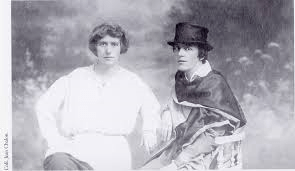
Natalie and Romaine

Her longest relationship was with the painter Romaine Brooks, who is now being brought back to life by many art historians. I did find myself captivated by her work when I looked at copies online. I wonder if Coco Chanel would have been intrigued as well, since they might have known each other then. Her work is black and white paintings with what is said to be incredible insight, on her part, in capturing someone’s psyche. What is odd is that they met in 1914 and it wasn’t until their mid 90’s, right before both of them died that Romaine ended the relationship for good. Of course this had to do with her mental condition that she was in at this time. My guess, from reading, is that she probably had some form of dementia. However, due to her early abusive upbringing, she had always been a bit of an eccentric and had very low self-esteem. I felt sad for Ms. Brooks because Ms. Barney was never faithful to her. I can imagine what this must have been like for her. Ms. Brooks was a survivor in some respects though. She would live elsewhere or travel abroad whenever Natalie was chasing after another skirt. Sometimes she had other liaisons herself.

Self-portrait by Romaine Brooks

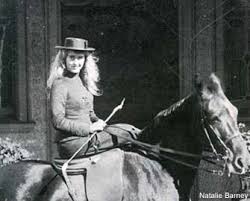
In her younger days, Ms. Barney was a horsewoman, known for her athletic abilities. What is fascinating when you read this book is reading descriptions of her pursuits of other women or networking with locals, on horseback through the streets of Paris. I found myself caught up in visualizing what this might have been like, though I have seen many period pieces that have shown this.  What is funny about this book is that one might think every famous woman in Paris was a lesbian, considering her exploits. What I began to gather though, is that at this time women she chased, who were well-bred ladies like herself (for the most part) and many of them married, only knew what they were allowed to behave like with a man. Natalie introduced them to newer, more promiscuous and perhaps sometimes even safer ways to be able to express oneself. Most women at that time were more comfortable with other women. I have read in other historical books that lesbian type behaviors were actually acceptable in women’s schools and colleges. It kept them from focusing on boys but was considered natural behaviors too. Once they married it was meant to end of course and they were meant to behave in a manner fitting a betrothed spouse. With Natalie’s lovers, sometimes this happened; sometimes they continued the affair and on occasion a ménage-a-tois.

Ms. Barney’s salons were famous because of her extroverted behavior, the wonderful delicacies that she served, her choice of entertainment but also her rules. The rules had to do with not cursing, behaving appropriately (not being a jerk) and if she didn’t like you, then you weren’t allowed to come back. Agents and publishers would approach her about bringing around what they hoped would be a protégé. On one occasion Natalie invited Emmeline Pankhurst; to discuss women’s suffrage in her parlor. She listened intently but in the end was disturbed by the way their discussions and ideals turned into petty arguments. She decided at that point on not to use her salon as a political venue. This is something I could applaud her for as well. While these ladies did so much for their countries, in getting the right to vote, their behaviors kept this from happening sooner (see my article on Victoria Woodhull).

In 1927, Natalie created Académie des Femmes as a reaction to the discrimination against women in Académie Française (a group recognizing writers, but only allowing men to join). While her group did not last very long, it did bring attention to women writers. It wasn’t until 1980 when Académie Française would admit the first woman.

The last salon would occur at the cemetery on February 4, 1972 when 23 friends came to honor the passing of Ms. Barney. They realized it happened to be a Friday which was fitting this great lady and her famous salons. Ms. Barney and her sister Laura were buried together. Laura was famous for her translations in the Baha’i faith. Natalie had known that the Van Gogh brothers were buried together and thought it was ridiculous that all the marker said was “Here Lies.” As a result, Natalie prepared her own tribute which says “I am this legendary being [Amazon] in which I will live again.” Her nickname, given to her by the writer Rémy de Gourmont, after they met was “The Amazon.” 

Emma Gatewood – Mercerville, Ohio

Emma “Grandma” Gatewood (October 25, 1887 – June 4, 1973; Scorpio and Artemis)

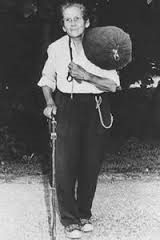
To say that she had the Gods on her side would be an understatement. This woman faced such tragedy at the hands of her husband. These were episodes of extreme violence, sexual abuse and emotional abuse as well.  After she finally got rid of him, she began to heal from these inner wounds in her own individual way. A way which began to nurture her sense of self and help define her as a woman. By an act of purpose, she became an accidental celebrity. A gift that she did not wish for but would allow and come to expect after a while. Emma Gatewood, aka Grandma Gatewood on the A.T. (Appalachian Trail) would be the first woman to walk the trail in 1955 at the age of 67. She would continue to walk the trail two more times as well as the “The Oregon Trail,” and quite a few other long hauls.

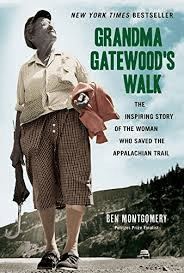
gatewood-book-coverI was turned on to this story, just this past year, after learning about a documentary made in her honor. A documentary which features two of her daughters:  Lucy and Louise, the youngest of the clan. After watching the documentary, I saw Ben Montgomery’s book “Grandma Gatewood’s Walk,” lying on the table and picked it up to scan the cover (P.S. 8/26/2018 – see NYT article at the end of this blog. Ben Montgomery evidently was her great great nephew). This book was a  New York Time’s bestseller and written by a Pulitzer Prize Finalist. After purchasing it, I had put the book to the side, thinking it would be a dull day to day journey and not quite that interesting. I assumed I would force myself through it so I could review it for this website. Naturally, I was pleasantly surprised to find that this book was full of intrigue; rich in historical content from that time period and of course her background.

Being a woman from Mercerville, Ohio and having lived in Gallipolis and some small

First Four of 11 Children

First Four of 11 Children

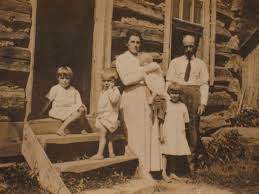
towns in West Virginia with her husband; it is not unusual to imagine a story of abuse and desperation. Not quite a story of poverty, when you had a woman like Emma but finances were plucked away because her husband was just a really bad man. I am not putting too much emphasis on him because it is a typical jerk of a husband story. You can read the book to find more. These types of stories are so compelling and what old country music tried so hard to explain to us. She would have eleven children, 24 grandchildren, 30 great-grandchildren and one great-great when she died at the age of 85.

Ben creates a rich experience of the trail that you feel as if you are walking right along with her. Thanks to her journals, newspaper articles, and letters written home, he was able to piece together what life on the trail was actually like for her, on a daily basis. In the meantime, his research uncovered one of the largest hurricanes of that time “Hurricane Connie.” He was able to show us the devastation in towns she had already left behind as well as how it affected the path in front of her. He spoke of civil unrest of the times while talking about the night she spent with two opposing gang leaders from New York, unaware yet sensitive to her surroundings. His story created a depth by showing us her own trials and tribulations on the road and yet, no matter what, she persevered and kept moving forward “one foot at a time.”

Her Gear

Her Gear

Reading this book, I kept thinking to myself “Wow, the Gods sure wanted her to be the one.” I also kept imagining the pain she must have been in with a simple pair of tennis shoes. I imagined what her feet must have looked like. As a smaller hiker myself (up to 15 miles), I have seen my own feet after wearing hiking boots. If they aren’t just right, you can get callouses, blackened toe nails, and bloodied heels – all of which I have had. I heard about the throbbing pain she suffered toward the end – with her knee beginning to give out. I have, at 54, problems with my legs which give me trouble if I walk too much on sidewalks or in shopping centers. I could imagine what it was like after her glasses broke (also toward the end) and she could barely see ahead of her. What amazed me most was that a 67 year old woman, having birthed eleven children, was able to sleep on a bed of leaves or hot rocks to warm her back. I have only had one child and my back does not allow me to sleep on anything but a mattress and this is not for vanity. I certainly would have a hard time getting off the ground after an eventful night’s sleep (her sleeps outside were rarely good ones due to nature, not her back).  The bitter icy temperatures up in the final mountain range, any of us who live in cold weather climates – such as Ohio – know far too well what it would have been like wearing a rain coat and a few layers of clothes.  But she made it and is now a legend.

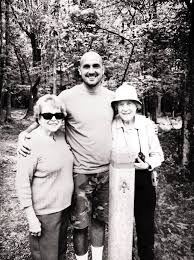
The Writer with Louise (L) and Lucy (R). On the trail.

The Writer with Louise (L) and Lucy (R) on the trail.

As you can imagine, I am not racing to get to the trail and step in place behind her. I’ll keep walking my 6-10 miles with my local meetup group. I wouldn’t mind walking the Grandma Gatewood trail again (I didn’t know I had been on it when I was at Old Man’s Cave). The writer, Ben Montgomery did walk the majority of her trail and did so by tracing the original path she would have taken, thanks to her notes.  This is because the trail she took was much more intense and less user friendly than the well-paved and marked trail of today. I was impressed by his dedication to doing so. He was definitely not a wimpy writer, hiding behind his computer.

So, very sadly, I must put this story behind me as I do with all the women that I have begun to research for this blog and begin to search for another amazing tale. After finishing each woman’s article, I feel as if they have just died for the first time. I tend to be on the verge of tears as I finish the book and write the article as I know I must say goodbye and move forward. I have gotten to know some amazing women that no one really has much intimate knowledge about, with the exception of what little is there to read. When I went about bringing this website to people’s attention, I had no idea just how few resources there would be about Ohio Women’s History. It is important to showcase their lives and make sure that young women have heroines, someone to look up to and imagine being like. Important that they understand, women have done so much more than get us the right to vote – which is all most people seem focused on. We are in a generation of slackers, people who would have the same physical problems I have from sitting at their desk for hours in a day staring at a CRT. Ben’s book talks about an article a man wrote which addresses the laziness of society (back then), due to the invention of automobiles. It mentioned people driving for only two blocks to get a bar of soap. I can’t imagine what that man would think of today’s society. His story was telling and a bittersweet call to arms before life became as it is right now.

The story of Emma Gatewood is the tale of many strong farming women who were capable of accomplishing multiple tasks in one day. My own research into women’s history reminds me of the book, “They Saw the Elephant,” which are diaries and stories about women crossing the country with their families, to find Gold in the hills of California, around the time of 1849. Unless these women documented their experiences or someone decided to walk a trail, these other women, unsung heroines, are people we will never know. Except of course if our grandparents made sure to put them in our heads – and we listened and paid attention to those stories. Otherwise, they are long ago and forgotten because now, in their place, are the modern vamps of our time who can sing a song or look pretty on the screen.


Note: Below is the Grandma Gatewood Trail at Old Man’s Cave, where a placard is there mentioning this. This trail was her favorite hike.

Grandma Gatewood Trail map at Old Man's Cave

Post script 8/26/18 https://nyti.ms/2N35h7L

Erma Bombeck – Bellbrook Ohio

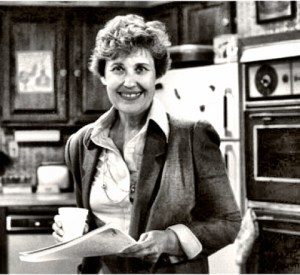
erma-bombeckErma Bombeck (February 21, 1927-April 22, 1996; Pisces and Demeter).

I remember reading Erma’s writings in Good Housekeeping, because I read anything my mom had on the bookshelf or lying around on the coffee table. She was writing for housewives which I was far from becoming but I still found it funny. I could imagine those things happening to women because I did a lot of housework, cooking and taking care of younger brothers myself. I wasn’t much into reading newspapers but I did follow her on occasion when she would appear on television from time to time or there would be an interview with her. Recently I thought about her again, though I can’t recall where I had read her name. It is so difficult to find books written exclusively about Ohio Women but I knew there would be one about her. And so I read, “A Life in Humor,” by Susan Edwards 1997.

If you ever wanted to understand the struggles of being a writer, than this is the book for you. While celebrities, big and small, seemed to have easy lives’ to a young woman like myself hers was certainly not one of them. Losing her father at a very young age of nine and having to live with her mother and grandparents. She might have been a “famous” tap dancer had she not been so keen on being a writer. She wouldn’t have been a writer either had she been the type to give up easily; practically failing out of college her first time out. Instead, she chose another college which appeared to be the right fit for her both academically and matrimonially. It was at the University of Dayton that she began her career at a newspaper office and met the man who would spend the next 47 years with her.

After a struggle to become pregnant and the stress of suburban housewifery, begging to look like them; she decided to adopt after two miscarriages. Then as fate would have it, no sooner had the little girl been brought into their lives, she successfully carried a child to term and then another. In the meantime she and Phil Donahue, a neighbor from across the street, began to have burgeoning careers.

Erma’s career was a struggle, partly because she was a woman and because she was dedicated to being a mother. Yet no matter what choices she made, the artist was a natural and eventually she would become a syndicated columnist writing three articles/week that would be seen around the country. This led to magazine articles such as the one I saw in Good Housekeeping.

She was approached by Doubleday to create a book which was a collection of her articles and the entry into published book writer began. Though Doubleday was not so keen to take her up on her fiction ideas, a salesperson there by the name of Aaron Priest was a great fan and saw the potential. It was through him that she began her career as an author. Before she died, she would pen eleven books and all from a typewriter. One book was made into a movie which starred Carol Burnett but unfortunately did not do well at the box office. Below is a four minute segment of this movie and I also began watching the movie on YouTube and easily saw what happened. It had funny lines (very good actors) but in between a lot of work had to be done to carry the long scenes. While it perfectly shows a typical family of the late 70’s early 80’s it is like a reality show without a producer creating conflict between the characters. Just a typical long day in the life of… It would be something I might download and watch on a Sunday; when it is raining outside.

Her first movie debut didn’t do to well but suddenly she was approached to write a play and then a TV show. The TV Show was called “Maggie” but this didn’t make it past the eight week pilot season. There is a trailer for this on YouTube but no dialogue, just credits and scenes of the opening bit for the show. It had a lot of actors who later became much larger on screen, but this wasn’t their big debut.

I found it ironic that fate put her into the hands of a kids camp for cancer survivors, in Arizona where she and her husband had moved after his retirement. The woman who ran this camp wanted her to bring some humor to the children. It wouldn’t be too much longer before she herself was claimed as a cancer survivor by having a mastectomy. Shortly after surviving this a kidney disease which she had inherited from her father began to show its ugly head. After waiting a few years to get a transplant, she died from complications that occurred after the surgery in a San Francisco hospital.

I found a quote from her that I especially loved, which was noted in this biography by Susan Edwards.

I get people who tell me they want to write, too, but that they have this house, and they have these kids, and they have that car pool. Listen, the priority has to be this, right at the top. People can’t put their dreams in a little box and take them out and play with them from time to time. These are people who are afraid to put it on the line.

If you are a writer, there is a writer’s conference annually called the Erma Bombeck Writer’s Workshop at the University of Dayton.

The most important thing to take from this book was the level of modesty shown by this great lady. While she had a bug in her that just wouldn’t stop her from writing, she never let it go to her head. As I once learned years ago at a writer’s workshop in California, and I don’t know that I have the quote word for word, “Your only as good as the last book you have written.” She was an Ohio woman who never took one day for granted.


Sarah Ann Worthington (King-Peter) – Chillicothe, Ohio

worthington3At my visit to Adena Mansions, I was told by the guide that Sarah was what we would call a feminist today, as she was a champion of women’s and children’s rights. I learned there was one book written about her In Winter We Flourish by Anna Shannon McAllister (1939), and I set about to find it and read it to learn more about this great woman. Some heralded her as an American Queen, though she only wished to be known as a queen in Heaven.

Sarah Ann (May 10, 1800- February 6, 1877; Taurus – Demeter) was the second daughter and child of Thomas Worthington, sixth governor of Ohio, also known as “The Father of Ohio,” and Eleanor Swearingen. She grew up at Adena Mansion with nine other children and a whole system of laborers to monitor the estate but who were also thought of as family. Her parents were devoted to each other and to their faith.  A precocious young girl who enjoyed having fun yet she was also studious and appreciated rules and order. She was a linguist and would come to speak Italian, German and French. Her early beginnings in the arts were as an accomplished pianist who was often invited to give recitals during social gatherings.  As a woman she was pious beginning her spiritual pilgrimage as an Episcopalian and later converted to Catholicism in 1855. She was a good woman, a good wife and mother and later a patron of the arts, as well as a philanthropist, in general, who not only gave to charities, began them.

Firstly, she became a wife five days after her sixteenth birthday and this was to Edward King who became an attorney and opened his own firm in Cincinnati. He was also twice the Speaker of the House of Representatives and he founded the Cincinnati law school (now known as the University of Cincinnati, College of Law). While she would have a wonderfully devoted marriage as her parents, there was great disappointment in her attempts at child bearing. She gave birth to five children but only two survived. This would be Rufus and Tom but by her death, only Rufus would remain as Tom only lived to be thirty-one.

While married to Edward, she began utilizing her time and money to help those less fortunate. This started in 1832 when she helped aid families during a flood in Cincinnati. During that same year there would be a cholera outbreak and Sarah would help nurse the sick and even opened a portion of her home to house some of the worst cases. This was a bit surprising as her husband, from all his travels, was in another part of the home suffering from malaria. In 1833 she opened the Protestant Orphan Asylum which by 1939 was located in Mount Auburn (It is assumed this is now closed, as there is only a reference to another establishment built in 1849 online).

The passionate love of 20 years would end on February 6, 1836. Sarah, being a strong woman, used her period of mourning to follow her sons to Cambridge and opened the upstairs of her home to other young boys also attending the university. After graduation from Harvard, one son, Rufus would follow in his father’s footsteps and open a law office in Cincinnati. Tom began a practice in Philadelphia and his mother remained there as she was not yet ready to return to the home of she and her late husband. Both her sons would marry within two years’ time.

Eight years after the death of her first husband, she would marry William Peters. She was now forty-four years old and he was considerably older than she. They would stay married for almost 10 years until his death in 1853. It is through this marriage though when she begins to flourish more in her contributions to women and children. She was devoted to helping women acquire skills so that they may be able to have economic independence. Her first attempt to start an organization for seamstresses failed, for unknown reasons, noted by the author in the biography. Incapable of giving in she went on to open a home for delinquent girls, Rosine Association for Magdalens (a Quaker society home), which appears to be what might be called a trade or vocational school today.

Her next project was to begin the Philadelphia School of Design in 1848. Here the women created domestic creations through textile design of wallpaper, carpets and other household needs. This was significant, not just for helping create careers for young women but because, at this time, most of these items were imported. It also gave special meaning to these women, who, at this time could not own property or have the rights to their children. This college is now known as Moore College of Art and Design and continues to be a woman only school. It is the first and only visual arts college for women in the United States. Below is an excerpt from her biography (page 142) which explains, in her words, the reason for founding this school.

Having for a number of years observed with deep concern the privation and suffering to which a large and increasing number of deserving women are exposed in this city and elsewhere for want of a wider scope in which to earn their living; and after bestowing much through and enquiry with reference to the means of alleviating their miseries, I resolved to attempt the instruction of a class of young girls in the practice of such of the arts of design as were within my reach. I selected this department of industry, not only because it presents a wide field, as yet unoccupied by our countrymen; but also because these arts can be practiced at home, without materially interfering with the routine of domestic duty, which is the peculiar province of women. Sarah Ann Worthington Peter

After tackling these projects, this is when her son Tom died. To deal with her grief she set about to sail for Europe, with his wife and children assuming her husband William would join her. This did not happen. After she returned from her trip, which lasted over a year, he would die a few months later.

Before returning to Europe the second time, she would start the Ladies Academy of Fine Arts in Cincinnati where she had now moved back to. This does not appear to still be in existence. A bust of her likeness was placed in the Cincinnati Art Museum (however a return email has not occurred to verify as to whether it is still there). Sarah would end up touring Europe six times and spent much of this time procuring art for the museums here in the U.S., meeting with several popes and other church leaders, and soon began to become a bit of celebrity whose name could be seen in various newspapers wherever she might travel. The latter aspect she did not enjoy very much. Through these travels and the delight she would take in the rites and rituals seen amongst the Catholics, as well as her conversations with these holy men, she converted to become one of the followers herself.

Toward the end of her life, she had given quite a bit of money to various convents and to the church itself. She also established some of the orders in the United States. At the age of 77 she was surrounded by her son Rufus and his wife Minnie, Sisters Martha and Antonia and a local priest. The final portion of her Eulogy found on the last page (381) of her biography and given by Reverend Edward A. Higgins, S.J., and Rector of Saint Xavier’s College was distributed as a leaflet to those amongst the funeral mass.

Nature had indeed been generous in bestowing on Mrs. Peter qualities seldom found united in the same person: a bright, keen intellect, a warm, loving heart, untiring energy, and a soul utterly devoid of selfishness. Her mother’s heart was filled with the tenderest love, the most touching solicitude, for her children and relatives. She had the kindliest and a generous relief for every form of distress. ‘God gave her largeness of heart as the sand that is on the seashore.’ All will cherish her memory, and profit by the beautiful example of her virtues. May she rest in peace.  Amen.


There are many other projects and duties that Sarah took on and if you would wish to read further, I would recommend obtaining a copy of this very old book (Abe Books or at a library or other used book store). Having read the majority of this book, it is not very entertaining as it is all factual rather than story, I found her to be quite a woman. It is ladies like these that you can’t imagine ever doing anything wrong and certainly making no enemies. She walked a path of servitude that seemed to increase with age. While her father is the one who is revered in our state, women like Sarah should not be forgotten. It continues to astound me as to how little has been written about these great women. We can find so much written about royal ladies but so little about the contributions of women in history, of lesser but certainly not without means. Of course even those with little means at all, we have abandoned even more as their letters and other writings have not been set aside for posterity as would a woman’s like Sarah.

If you love history and happen to be in Ohio, or visiting, make plans to visit the Adena Mansions and tour their grounds. I believe there continues to be a couple hundred acres left so there is more than enough room to take a stroll around the property.

The Women of the Hungarian Church – Columbus, OH

Growing up, I was on the south side for a great majority of my childhood (1967-1980). This is because my step-father (later adopted father) was Hungarian and he took his new family to the Hungarian Reformed Church off of Woodrow Road. My parents became very active in the various groups and events surrounded and indirectly involved with the church. The ladies and the gentlemen of the church became a second family to me. When I left to live in California in 1980, over the years, they began to pass away and soon the church became what it is today, a few remaining members. I decided to write a memorial to the women specifically for their hard labor and fond memories that they created for me and hundreds of other people since the time this church was erected in 1906.

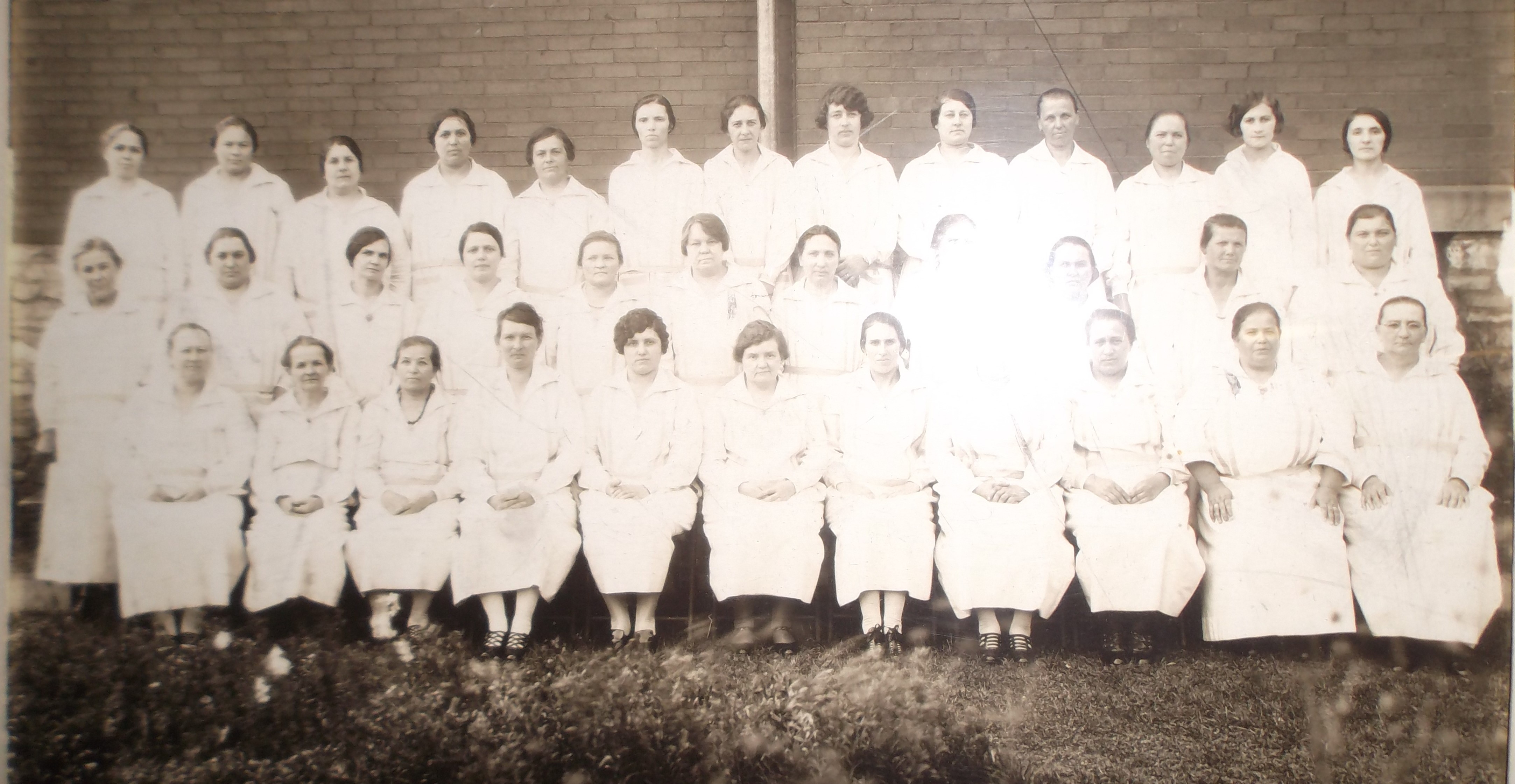
The first church organization was the Lorantffy Zsuzsanna Ladies Aid Society, which was founded in 1921 with 17 members. These ladies spoke Hungarian as their primary language and in some cases their only language. I have no connection or memories of this group at all, as I never learned to properly speak the language and my mother was not a member. Instead, I identify with these women through my father who often went to their homes after church to pay his respects (and eat!). While they were conversing in their native language, I was entertained by langos (fried bread) and 7up, which seemed to be the soda of the Magyars! Being a nosy person as well, I was also entertained by the sights and smells of their kitchens. Old Hungarian women (and German women I knew) had that distinct scent that permeated their homes since they were forever cooking.

Loranttfy Zsuzsanna Ladies Aid Society c.1928

Loranttfy Zsuzsanna Ladies Aid Society c.1928

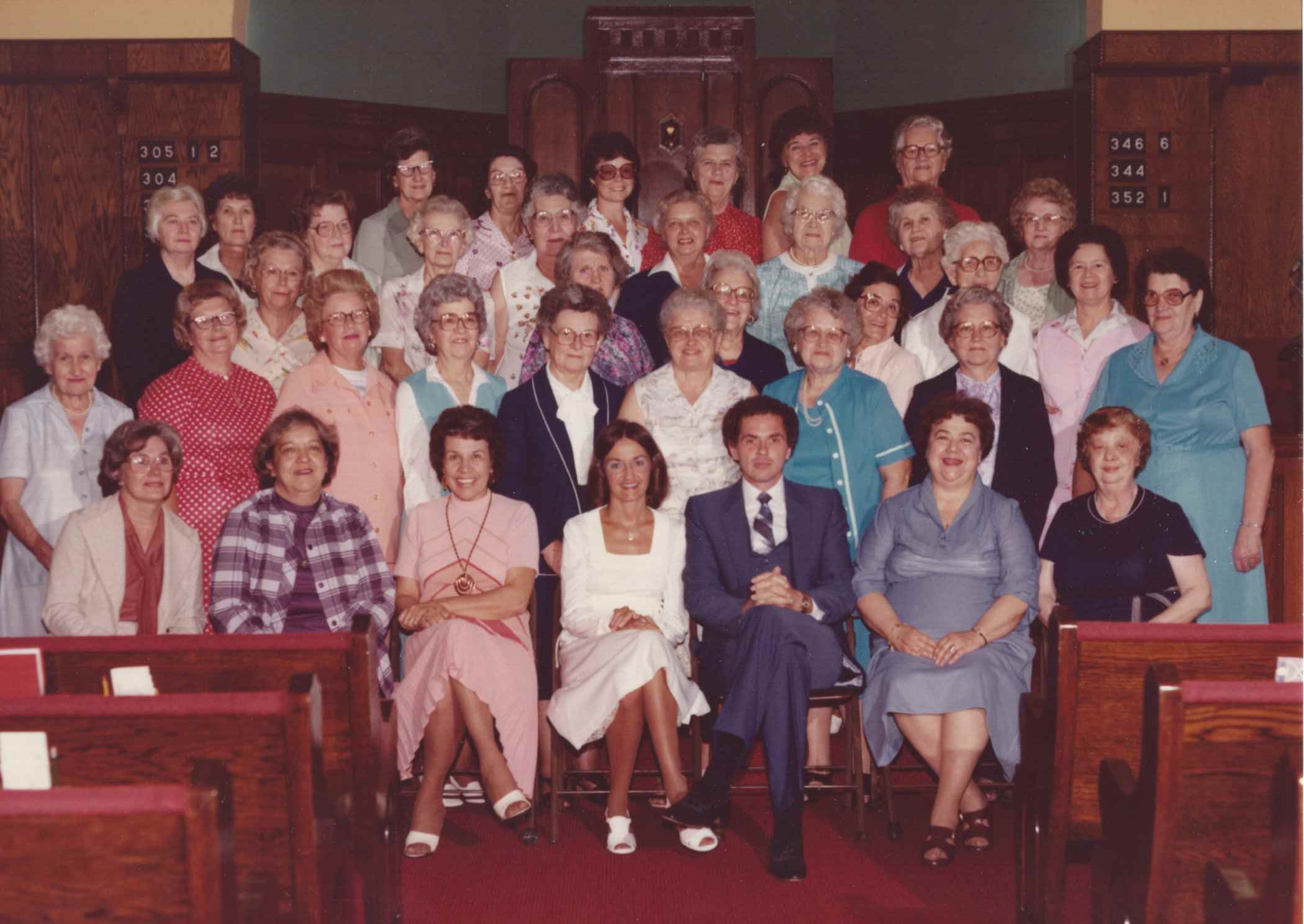
Loranttfy Zsuzsanna Ladies Aid Society c. 1981

Loranttfy Zsuzsanna Ladies Aid Society c. 1981

One funny story was of a very old woman named Claraneni, whose son was often at the church. She was what you would call a hoarder in this generation, though not to the extreme as people are now. As a result, she could not allow us to leave without giving us things to take home. Hungarians are generous people and would give you the shirt off their back. She had her “trinkets” to offer. Often it was a cigar box with things she had taken home from a restaurant (i.e., plastic silverware but she seemed to also have an endless supply of wet wipes from Kentucky Fried Chicken). On one occasion, she offered my dad a pair of white men’s shoes (Pat Boone style) that her husband had once worn. We would laugh tenderly on the way home at this little old lady with such a big heart.

The Women’s Guild came together in 1940, and it was originally called the Needle and Thread Guild.  This was a place for the church women to gather and be responsible for producing and directing many of the events that took place in the church. We all looked forward to the events which almost always included delicious Hungarian food. My favorite was Easter morning breakfast. While I was sitting in church, my nostrils were gently caressed by the aromas that were rising up the stairs into the sanctuary.  After service as I descended the stairs, the scent became stronger and stronger. I couldn’t help salivating with impatience. My ears took in the clinking of the cutlery against the plates, from those who were quick to sit down at the tables. Standing in line for the eggs made especially for us, I couldn’t wait to be allowed to make my choice. And then finally it was my turn, and I heard “How would you like them?” I had already heard the different selections from those in front of me. This was my first time to hear the words “Sunny Side Up” and I chose this every year because it sounded like a fun choice. These bacon, eggs, and toast were well worth the wait after having to be at Sunrise service at 6:00 am. After eating breakfast of course you would be treated to jelly beans and chocolates.

The Women’s Guild also hosted the making of the kolbacs (sausages) each year, to sell, from a recipe that was made from taste not instructions. At other times they made and sold cabbage rolls and kifli’s (cookies). A cookbook entitled “Our Favorite Hungarian  Recipes,” has been one of their most successful fundraisers. I am not aware of too many Hungarian women in Columbus that do not have a copy of this book. In trying to decipher the origins of this book, now in its 13th edition, the current Consistory President of the church, Ilona Isaacs, discovered that the address in her book said Columbus 7, Ohio which puts this book somewhere in between 1943 and 1963, as postal zones were instituted during World War II and zip codes replaced them on July 1, 1963. Contact the church to find out about purchasing a copy as it is still in production and under $10.00 for costs and shipping!

Another special event was the mother/daughter luncheon each May. I really treasured this time and looking back now, I know it was the value of those moments. I recall looking out across the room one year (it was a small two-story house turned into a restaurant) and seeing who had arrived, which girls went with which mothers. Some were older daughters, who didn’t attend church, so I only knew their mothers. I am a visual person and often fancied myself taking a photograph with my eyes that I swore I would never forget. While I did not forget, I wish I had a photo to show you now.

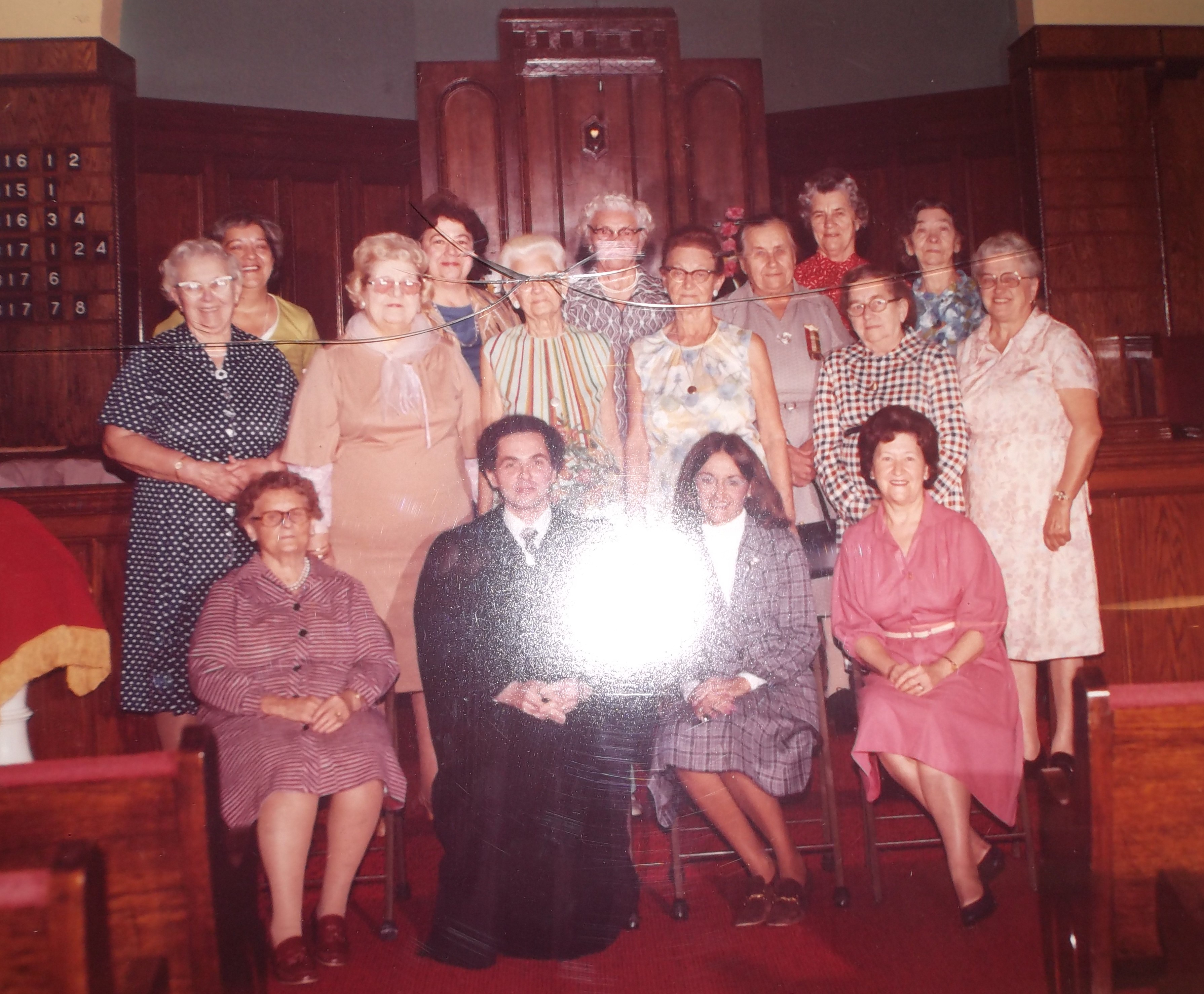
The women’s guild held an annual Big Bear luncheon to raise money for the church. One year in particular, a lady who became Bethel Nagy (I don’t recall her maiden name) arrived from Big Bear, as the caterer and left to become the future wife of our then minister. You will see the two of them side by side in both of the photos I have of the women’s groups from 1981. They are not too hard to spot in the front row.

Sometimes the younger girls, such as myself would show up for these culinary events to be put in charge of peeling potatoes or setting tables and other such duties needed for the preparation.  This was always an exciting opportunity to take in the ladies in their aprons working diligently together around the huge island which housed two sinks and prep area counters in the middle, along with stoves, cabinets and more counter space on the edges of this large kitchen. They always seemed to have it together as a team. It was well organized and functioned smoothly each year. At one time, there were 56 women involved. I recently purchased an apron I found at a local antique store. When I saw it, it reminded me of the Hungarian women in the kitchen. I imagined I could still smell the scent the onions and garlic emanating from the fabric. When I tried it on, it was a little small but I didn’t care. Wearing it while I cook now gives me the most amazing sense that I am being guided by those women.

Womens Guild c. 1981

Womens Guild c. 1981

Many women were involved with the women’s guild, so I have attached a photo here from 1981. I can’t recall all of their names yet when I look at their smiles, many memories come to mind. Perhaps you might recognize your great grandma, grandma or mother. Of course this would be Edesanya, Nagymama or Anya. Please note my photos, with the exception of one of them, were taken of a photo behind glass. I tried turning some lights off to get rid of the glare. Keep in mind the photo that you see here is better than it would have been. The glass could not be removed as you will note in one photo, the last time they did, it broke.

One woman, Rose Komives, hosted her own event whenever she would go travelling around the world. I recall a couple of Asian countries, which ones I don’t remember. We would all show up downstairs in the basement, where most of our events were held and she would give us a slide presentation. Afterward she would have a display of all the beautiful items she had purchased while there. Of course her display was never absent of a few doll selections, which I admired the most. This was an interesting occasion as we didn’t get much experience with other cultures, growing up, with the exception of the United Nations festival at the Lausche building each October.

In 1976, the Mary Szanto memorial scholarship was put together on behalf of Mary who came to America in 1921 with her sister. She was very active with the Lorranttfy Zsuszanna Ladies Aid Society and the church. This scholarship has sent many Hungarian young adults to Ohio State University.

I can’t forget the two ladies who played the organ for 40 years or more. One was my own mother, Janet Vegh (now Lawton) the other was Florence Bokoros. Florence played for Hungarian and my mother played for English services. They were also on hand for weddings which they would take turns attending depending on their busy schedules. Both sang in the choir and my mother performed solo parts on holidays.  She also played for a men’s quartet at one time, though this was after I had already left.

I also want to make a note of the Sunday school and our annual Vacation Bible School which were manned by the women of the church as well. Erma Pache recently died but she had taught the kindergarten ages for hundreds of children. Until her passing, if one of her former students happened to be at the church she made a point of reminding the people she was with who we were. She cherished these years as I always imagined she valued her own children and grandchildren. Vacation Bible School also included a little Hungarian lesson, when we all merged together in the basement (after our separate age groups met for class) and were having our snack. Then we would all go out to the backyard of the parsonage and play Hungarian children’s games. These were all conducted through songs that I can still manage to sing correctly after all these years.

The women of the Hungarian church were very kind and nurturing to all the children who attended. On top of all of their duties as church women, they also supported us with our school activities as well. If we sold Girl Scout cookies or chocolate bars for school and band fundraisers, you could bet you would make your quota when you showed up at the church. If you achieved some merit or got your first job, they would be delighted with your progress.

It is sad walking in the church basement and adjoining kitchen now because I am no longer greeted by at least a dozen women, in aprons, who are happy to see me and offer me a hug. These ladies were a part of a generation that once was. This generation provided us with elders that you were anxious to learn from, look up to but most of all to earn their respect. Of course your parents instilled this value which no longer appears to be present in our current society with very watered down values. It is for this reason, I have put together this website, to honor and cherish my elders, ancestors who brought all of us to where we are today. I don’t want people to forget and I hope to remind people the importance of respecting their elders.

 ***Special thanks to Sarah Glowa who invited me over for lunch to talk about these old memories. I also want to remember her late husband Paul who put together a wonderful 100th anniversary booklet which she allowed me to borrow. It gave me so much information about dates and the actual history of the church which I did not know. This booklet was almost finished when Paul died and before it was taken to be printed, the church made sure to make a note of his hard work and dedication in the production of its contents.

Opal Dunn McAlister – Minerva Park and Marysville, Ohio

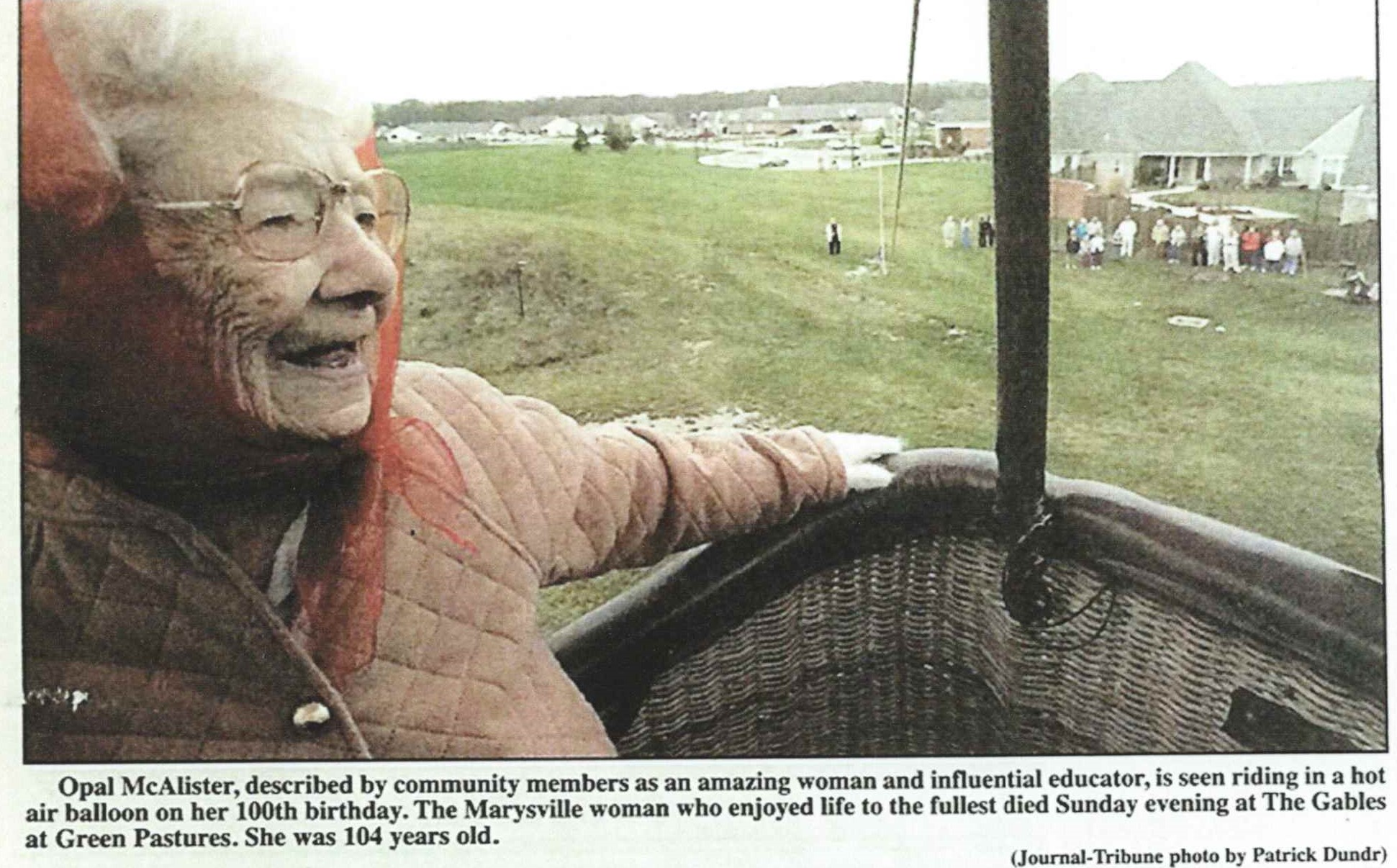
Opal Dunn PhotoOpal Dunn McAlister – November 16, 1904 to May 10, 2009 (Scorpio and Athena Archetype).

Opal lived to be 104 years old. She was not a famous woman though after coming to learn of her history, after purchasing my home, I was intrigued by her story. She was a first woman to accomplish quite a few things in her life and so it is important to note this unsung hero (as I hope to do with other women), here on this blog.

I knew that she was the first woman to live in my home but I did not realize, until I received the Auditor’s assessment list (Franklin County) that she purchased this home as a single woman in 1930 at the age of 26! On March 3, 1930, Opal L. Dunn is listed as purchasing this home for the first time from the Minerva Realty Company. At that time, Minerva Park was not an incorporated area and had only been known as an amusement park from 1895-1902. However, in 1928, the Minerva Realty Company purchased the land and put up a few homes. Not until 1940 would the area be incorporated and officially recognized as its own community. By this time, Opal and her husband Daniel D. McAlister (married later in 1930) had moved on and another couple had moved in (1939). She and her husband lived here for 9 years, though for some reason the deed only lists Opal L. McAlister changing her name on November 9, 1936.

While researching her information I was able to find an obituary from 2009 in the Marysville Journal-Tribune. They never mentioned her early time here in Minerva Park but they mentioned so many other wonderful tributes. She was “described as an amazing woman and an influential educator,” in the article. For 52 years she worked as a teacher and principal. During her time as a teacher, she taught at Watkins Public School from 1923-26 (around Obetz Ohio) and was head coach of the Varsity Boys Basketball team. From 1927 to 1942 she began teaching in a town called Flint, which was a village that housed the Westerville Railroad station but is actually in Worthington now. I looked this up and it appears that the abandoned school is still standing on Flint Road and Park Street.

During World War II Opal had entered the Army voluntarily in 1942 at the age of 38 in Des Moines, Iowa. She was part of the Women’s Auxiliary Army Corps and earned the rank of Second Lieutenant at graduation whereby she was given the task of training women for work overseas. At the end of her career in 1946 she held the rank of Captain. In 2007 she was asked to give a speech during the dedication of the Union County Veteran’s Monument, on the courthouse lawn. She gave this presentation from memory.

After her term of service with the military, she moved back to Ohio and served as teacher at Ostrander School a town inside of Delaware County. By 1964 she had risen to the rank of first female principle of Ostrander Elementary School. She took a temporary early retirement in 1967 as her husband was very ill, returning to school after his death (1969) but not until 1970. She then remained a teacher until 1975.

She was also the president of the Delaware County Teacher’s Association for 20 years. Later she would hold a position in the Retired Teacher’s Association for the same county for 15 more years. The Journal-Tribune states that “She was honored for her teaching in Lessons of the Century: A Teaching Gem by Robert C. Johnston in Education Week magazine in September 1990.”

As you can see by the photo above, Opal celebrated her centennial by flying in a hot air balloon. When I saw this photo, it really said a lot about the former owner and first woman of many great things. I wish I had known her and would love to see some historical photos of my home and what it looked like when she actually lived here. In the meantime, I cherish owning a home that was originally purchased by a single woman, in a time when women just did not do these kinds of things.

Elizabeth Richter – Dayton, Ohio

The following article was found on the Dayton History Books Online Website. I thought the story was interesting as it talked about the work of some women in Dayton, Ohio at the end and into the beginning of the 20th century. I have edited it a little bit to clean it up.

The [original] article appeared in the Summer 1967 edition of the Montgomery County Historical Bulletin

MRS. HEDGES’ HOUSE

By Roz Young

 It makes a sensitive person heartsick to see the wrecking ball of progress reduce a fine old building to rubble. Regret for what once was and cannot be again is no stranger to any of us.

But when the area known as the Haymarket was bulldozed into crushed stone and splinters and finally open land by the progress of urban renewal not long ago, nobody shed a tear or raised a protest even though many a once splendid mansion of an early day was among those reduced to wreckage.

There was a time in the last part of the previous century and the early part of this one when one of the tree-lined streets in the Haymarket was as well-known as Main Street or Third. Pearl Street ran for three blocks from 1100 East Fifth to Wayne Avenue, intersected by McLain and Howard Streets. Thirty-eight houses, most of them large, red, brick, Victorian structures, lined the street besides a cigar factory, a livery stable and the city haymarket and weigher’s office.

Most of the houses were ornately trimmed; each had the name of the proprietor, a single woman posted in the door glass or permanently etched there, and at night, in the window on a table sat a red lamp, spreading its cheery invitation to all. Within the houses many women followed a profession dignifies only by its extreme age.

Pearl Street, while admittedly the most sinful spot in town, was generally a cheery place. On warm summer evenings, strollers along the sidewalks noted that every room in the commodious houses was lighted, and from the open windows came the sprightly tinkle of player pianos and the bacchanalian shouts of the happy customers.

The houses along Pearl Street, as well as a few others in town, flourished under police control. The women who pursued their calling- there were about 150 of them altogether- had first to register with the police, be photographed and take a physical examination. No known criminals or diseased persons were permitted to work in the houses; in this the police tried to preserve the city’s reputation as being a “nice, clean town.”

Through good times and bad, the houses of the red light district kept open and prosperous. Finally, however, the religious and some civic elements in the city, after a long and wrathful campaign, forced the end of legalized prostitution. The once elegant houses fell into shabbiness, disrepair and decay until at last the bulldozers moved in. Today, not a scrap of Pearl Street remains and grass grows where once some of the most elegant men in Dayton hurried with light foot toward a favored house in which to spend an evening.

In every town in every profession, a few persons enjoy the reputation of being the best. Lawyers pridefully point to their top men; doctors defer to a handful of their finest.

On Pearl Street, the queen of all the madams was an imposing individual known as Lib Hedges. She kept a house for 39 years and in all that time, no one denied that Mrs. Hedges had the finest house, the prettiest girls, and the most genteel clients. To her pleasure palace came not only, the sporty young men of the city, but also men of maturity, judges, lawyers, city officials. They came confidently, knowing that she never talked and that their exits and entrances through the back room would forever remain a secret. And they did, too. Once when one of the girls came down with diphtheria and the health department clamped a quarantine on the house, the mayor, himself, was rumored caught there for 10 days, but which mayor he was, not even the most persistent reporter could find out now.

She was born Elizabeth Richter in Germany in 1840. The details of her early life have vanished into the mists of the swirling years. But somehow, she came to Dayton and married a no-good chap who shortly left her to make her own way in the world.

She was 36 years old, a tall, striking woman with piles of red hair on top of her head, strong features and much given to frilled shirtwaists and long, billowing skirts for daytime wear and elaborate brocades and velvet for evening. She opened a saloon on South Main Street opposite the Fairgrounds in 1876, where she sold beer in the front rooms at five cents a glass and dispensed other attractions in the back rooms at considerably higher prices.

Elizabeth had flair; her customers came again and again. She soon added to her staff, recruiting only girls from out of town, being canny enough to avoid the entanglements that local girls might bring on.

For seven years she ran the South Main Street Saloon. By then she had saved enough money to build an impressive place of red pressed brick trimmed with white carved stone at 30 Warren Street near the canal. She took a partner, too; this was her younger sister who for business purposes adopted the name of Louisa La Fontaine. Louisa was 26.

Three years after expanding into the Warren Street house, Mrs. Hedges set her sister up independently in a fine house on the corner of Howard and Pearl. A red brick, also, it had on the first floor a front and back reception room, a front and back parlor, a piano parlor, dining room and kitchen. The second floor was given over to seven bedrooms. The house was richly furnished and embellished with draperies, pictures, statuary, ornamental vases and other art objects.

Oh, how the money rolled in! Lib invested her surplus in stocks and real estate; at one time she owned over 100 pieces of property in the city. She was generous. She set a fine table for the girls and personally saw to it that each one had a bank account. If any girl decided to marry and leave her establishment, Elizabeth gave her a lovely wedding and set the couple up in one of her properties. If one died, as happened a few times, she gave her a fine funeral and a resting place in Woodland cemetery.

After one of the girls died and was buried, Mrs. Hedges decided to purchase a family plot in Woodland. She bought a corner lot on the hilltop with room for 16 graves. She then had the bodies of her parents, Herman and Elizabeth Richter, reinterred there, as well as that of the girl, whose marker reads only “Lora, 1856-1883.”

Louisa’s house was also happy and thriving. But in 1893, she fell ill, a victim of stomach cancer and after a long illness during which Elizabeth stayed with her constantly, she died May 23, 1894.

She was buried on the hilltop next to the spot Elizabeth had chosen for herself, and she erected an imposing granite shaft topped by a seated figure of a weeping goddess, done in the Greek style. It is one of the finest monuments in the cemetery.

Lib was executrix of Louisa’s estate and received all her property with the exception of one special bequest which proved to be a great embarrassment to the recipient and a source of much gossip among the townsfolk.

William, Moses, Lee and Ralph Wolf were four prosperous brothers who lived with their widowed mother Sarah on Jefferson Street not far from Warren. William and Moses operated a business under the name of Wolf Brothers, General Bill Posters and Distributors. The other two, operating as Lee Wolf and Brother, were manufacturers of cigars and dealers in tobacco and confections. They also sold books, music and operated a news depot. Both companies worked out of 100-104 South Jefferson.

Whether the Wolf brothers patronized the houses of Elizabeth and Louisa, we shall never know. All are long gone. But one of the brothers certainly made a spot for himself in Louisa’s heart somehow, for the second item of her will read:

“I give, devise, and bequeath to my friend, Moses C. Wolf, of Dayton, Ohio, the sum of one thousand dollars; also my horse and phaeton and the set of harness belonging to same…I make this bequest to my said friend as an expression of my appreciation of his uniform kindness to me.”

Of her sister, Louisa said in her will: “I give, devise and bequeath all the rest and residue of my estate, real and personal, to my beloved sister, Elizabeth Richter, formerly Elizabeth Hedges, she to have, hold, and own the same in fee simple, absolutely and forever. I make this bequest in favor of my said sister and to the exclusion of my other relatives because of the intimacy, love and affection that exists between us, and because of her kindness to me in sickness and distress.” The will was witnessed by her physician, D.M. Scheibenzuber, and John M. Sprigg, her attorney.

Shortly after Louisa’s death, Elizabeth leased her Warren Street property to Clarence Gebhart, an insurance man, and moved to the Pearl Street address.

She had an eye for business. On Sunday afternoons she went for long drives in her phaeton, accompanied by several of the girls, up one shady Dayton Street and down another. They were met with uniform cold stares by the more moral women on the avenues, but it was not their glances she was interested in. It was the husbands, she had in mind, and she got them.

On Monday evenings she closed the house to take her girls to her box at the theater, usually causing as much diversion in the audience as the show on the stage. When the city fathers organized a parade to celebrate the city centennial in 1896, Elizabeth considered for a time taking a float. But she thought better of it and probably relieved a number of worries by doing so.

She permitted no coarse language or unseemly behavior in her house. Rumor has it that the only time John L. Sullivan was knocked out was in her place. While visiting there he committed some indiscretion which Elizabeth would not abide. She indicated her displeasure, so the story goes, by hitting him over the head with a beer bottle.

Another time, so it is said, one of the local patrons, in speaking of Ollie Brown one of her girls to die in service, used a coarse word to refer to her profession. Elizabeth overheard him. Picking up a fireplace poker, she marched him into the parlor where the girls had assembled and after giving him a public lecture that would make a convert out of the roughest sinner; she threatened to spill his brains on the rug if he did not get on his knees and apologize to every girl in the room. He elected to follow her request.

One evening, the girls were entertaining their young men in the front parlor. Elizabeth was reading in the front reception room. For amusement, the girls tried to see which one could kick the highest by taking turns aiming at the chandelier. One of the girls threw herself into the project with such abandon that she made an unintentional noise.

Elizabeth, tall, costumed in floor length, plum velvet, appeared in the archway, peering into the parlor through her lorgnette.

The girls congealed in their tracks; so did the young men, their laughter dying in their throats. Her gaze slowly swept the room. “What lady,” she demanded, “done that?”

Elizabeth was generous with her contributions to charity. In 1913 Dayton was struck by the worst flood in its history. Both her houses as well as 50 other pieces of real estate she owned were in the destructive waters. To clear out the mud and filth, to replace damaged siding, foundations and furnishings, to paint, plaster and otherwise restore the buildings were herculean tasks and very expensive.

An earnest worker for the flood relief committee called on her for a subscription. “Flood relief!” Elizabeth shouted. “Why come to me? I need flood relief myself, not to be asked to donate to a subscription fund!” Then she launched into a detailed account of all the damages she had suffered.

Finally she ran out of steam. “At that, I guess I’m better off than a lot of people, the poor devils.” She fixed her sharp brown eyes on the committee member who had hoped for 500 dollars but was quite willing to take even 10. “I’ll give you something,” she growled, “but it’s not going to be much. I’ll give you two thousand dollars and not another God damned cent.”

In 1915 the police ordered all bordellos in the city to be closed. Elizabeth was outraged, as were all the other madams, but since she was ever a law-abiding citizen, she closed her place at once. The others hung on for four or five years longer, in constant trouble with the police, but finally they too, closed.

She continued to live at the Pearl Street house, but in 1918 when the city directory man came around, she told him her name was Elizabeth Richter, and from that time on she used her maiden name. In 1922, she moved back into her Warren Street home. There she continued to live surrounded by her treasures of the years, her lamps, mirrors, clocks, sewing cabinet, velvet rugs, her oak furniture, her china closets filled with Havilland, her cut glass, and her Herrick Ice Machine.

On the afternoon of April 12, 1923, the following story appeared in the newspaper:

Mrs. Elizabeth Richter

is DEAD.

The funeral will be private and will be held

Saturday morning at 9 o’clock at the residence.

Burial will be in Woodland cemetery.

The death of Mrs. Elizabeth Richter, 83, a life-

long resident of the city occurred at 8:30

Thursday morning at her residence, 30 Warren St.

She was a large holder of property and owned

stock in several Dayton corporations. Her death

followed a protracted illness.

Thus, Elizabeth Hedges finally found a quiet resting place on the hilltop along with Louisa, her parents, and three of her girls, Ollie Brown, 1843-1893, Mary Anschutz, 1877-1899, and Lora, 1856-1883.

In her will, witnessed by Roy G. Fitzgerald and William K. Marshall, she left a trust fund to the cemetery trustees to beautify and keep her family plot in good condition. She left her diamond solitaire, Louisa’s diamond locket, pictures of Louisa and her own personal belongings to a nephew along with the bulk of the estate.

Cash bequests of $1,000 each went to two other nephews and her emerald ring to Charme Wright, the daughter of her dressmaker.

She left $25,000 in war stamps, 555 shares of City Railway Company, 100 Dayton Street Railway, 24 Dayton National Bank, 140 Reliable Insurance, 300 American Rolling Mill, 100 Procter and Gamble, 100 shares Fleischmann’s Yeast and $7,000 in building and loan accounts.

She left eight vacant lots and buildings located at 16 Brown St., 13 Joe, 28-30 Warren, 610 Hickory, 1601 East Third, 101 McLain, 411-413 Montgomery, 263 Chestnut, 334-340 Sherman, 323 Troy St., 38 Horton, 612 Wayne, 623-625 Wayne, and 253 South Pearl.

The appraisers valued her estate at $202,546.17.
 

Victoria Woodhull – Homer, Ohio

Victoria Woodhull – September 23, 1838 – June 9, 1927 (Libra and Aphrodite archetype)

A woman who was seen as a controversial figure in her time, was of course way ahead of her peers. She began her start in life with a family who had less than good intentions or you could spin the story by saying their way of surviving wasn’t exactly ethical or legal. She was a spiritualist, polyamorous, started a commune, in fact lived a pretty wild life. You can imagine that as a women’s suffragist, she would eventually be ostracized by Susan B. Anthony and Elizabeth Cady Stanton’s world. Today, she would have just been a normal modern day woman.

What is significant about Victoria Woodhull is that she was the first woman to run for President announcing her candidacy in 1870. Her party was known as the Equal Right’s Party and she was accepted by them as a candidate in 1872. Frederick Douglass, a former slave and abolitionist leader, was her candidate for Vice President. What is also significant is that Victoria Woodhull spoke before the House Judiciary Committee and argued that women had the right to vote, under the demand that the constitution did not say women were excluded. There was nothing new to write, they just needed to realize this. Of course by this point she had already been ostracized by the suffragist’s who certainly did not want her going down in history for something they had worked so hard for. As a result of this, while the men were in favor of Victoria’s speech and thought her argument made perfect sense to them, they were deluged with an onslaught of wives and sisters who were telling them that she was nuts and they should not listen to what she had to say. Before too long they were laughing at her instead.

This last fact is the most difficult to fathom, in this time period, as it would be 47 years, from when she spoke, before women actually did get the right to vote. It also shows how women can be vindictive and ruthless toward other women and certainly are not the “better” sex for any position of authority as they are no better than men. What you can also see is that the suffragists had developed quite a large ego. What difference would it have made who got us the right to vote, as long as we had it?

Other amazing feats are that Victoria and her sister Tennessee were the first women stockbrokers to open shop on Wall Street. She ran a newspaper, which was how the suffragists ended up going against her. Victoria ran an expose on the brother of Harriett Beecher Stowe about his infidelity. She focused on him because he was a minister preaching to his flock against her beliefs on free love. What she was doing was showing the hypocrisy of his lifestyle, no different than say a Jim and Tammy Faye Baker story (or plenty of other ministers, priests, and other spiritual men you can think of in history).

Interestingly, while she had these fiercely liberal attitudes, she did no believe in abortion. However, she felt people needed to be responsible which is not something you can really disagree with. She believed in sex education and like Margaret Sanger, in this same time period, were both talking about family planning. Also like Margaret Sanger, believed in eugenics which has to do with improving the quality of human beings. Many people will fault both of these women for this thought process however, it is not wrong to believe in something that was popular in your era. From an intellectual standpoint it makes sense and for these brilliant women, who had good intentions to feel this way, you really want to know more about why they felt this was a good idea.

My introduction to Victoria Woodhull came in my Women’s History class in the early 1990’s. I was so fascinated by her because she had accomplished so much in her time period, yet was scorned by many women for her beliefs. I could relate to her story and wrote her name down so that I would remember it while out shopping for books. The book I read was Notorious Victoria by Mary Gabriel. Of course I was quite fascinated to learn that her life began right here in Ohio, not too far from where I myself grew up and went to High School. There is a non-profit organization now that is set up to continue her beliefs for family planning, education and other topics she might have been interested in called Woodhull Freedom Foundation.

**A new documentary is being made that has come to my attention via Twitter. Check out this website Clarinet Marmalade.

7/20/16 Guardian article: Notorious Victoria: The First Woman to Run for President